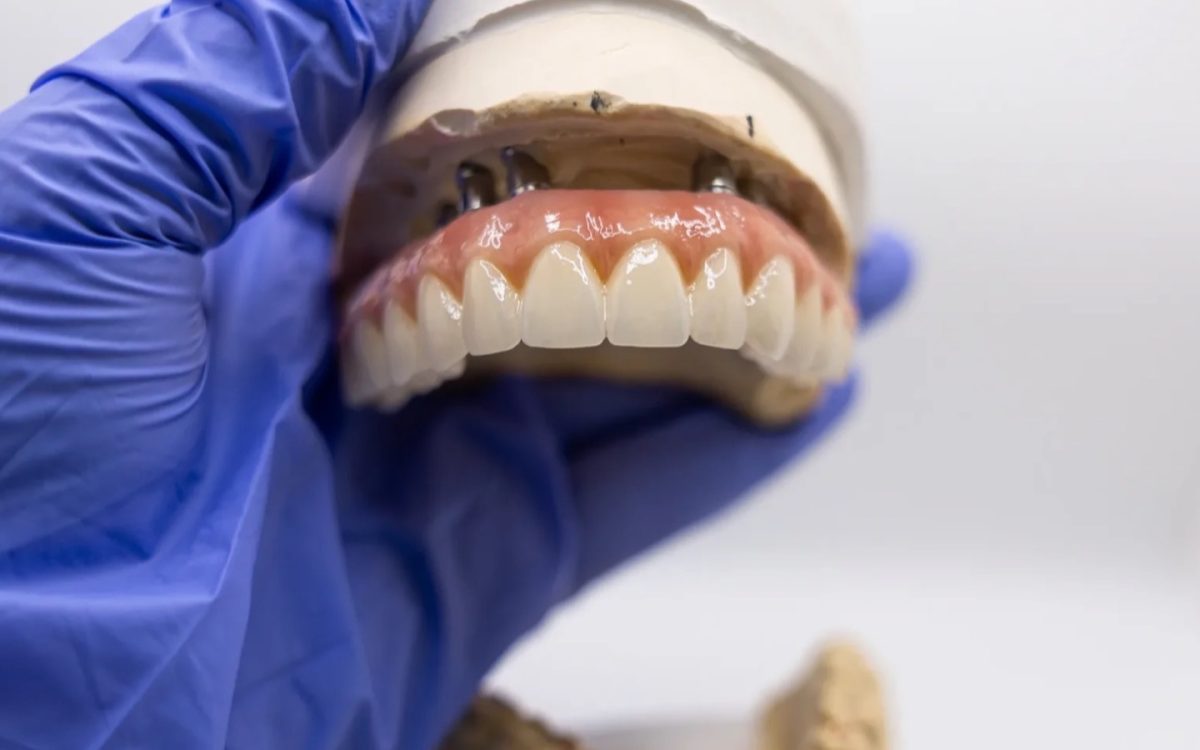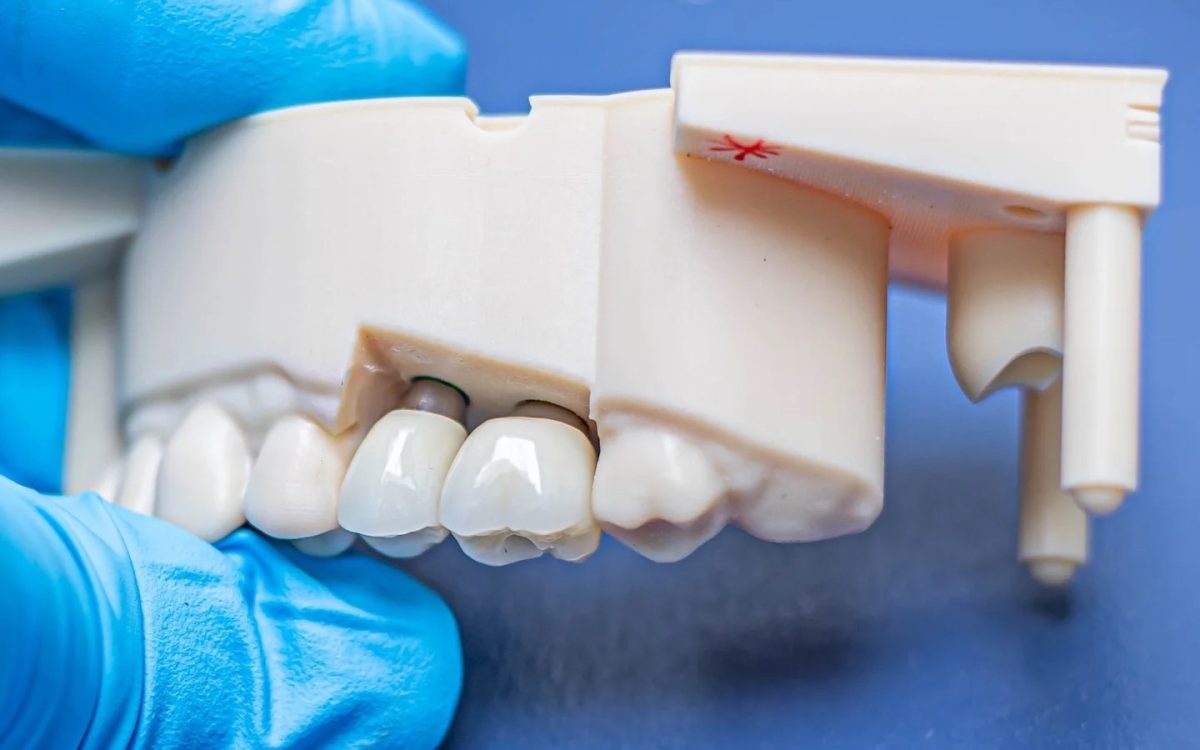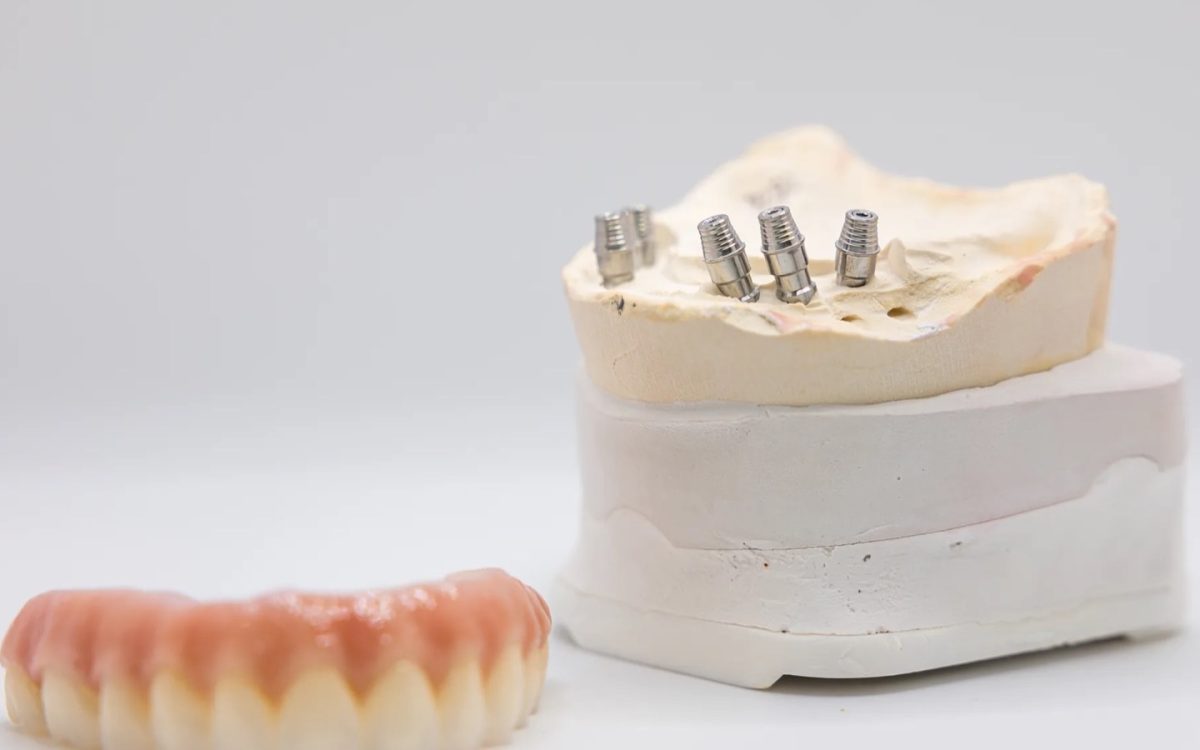
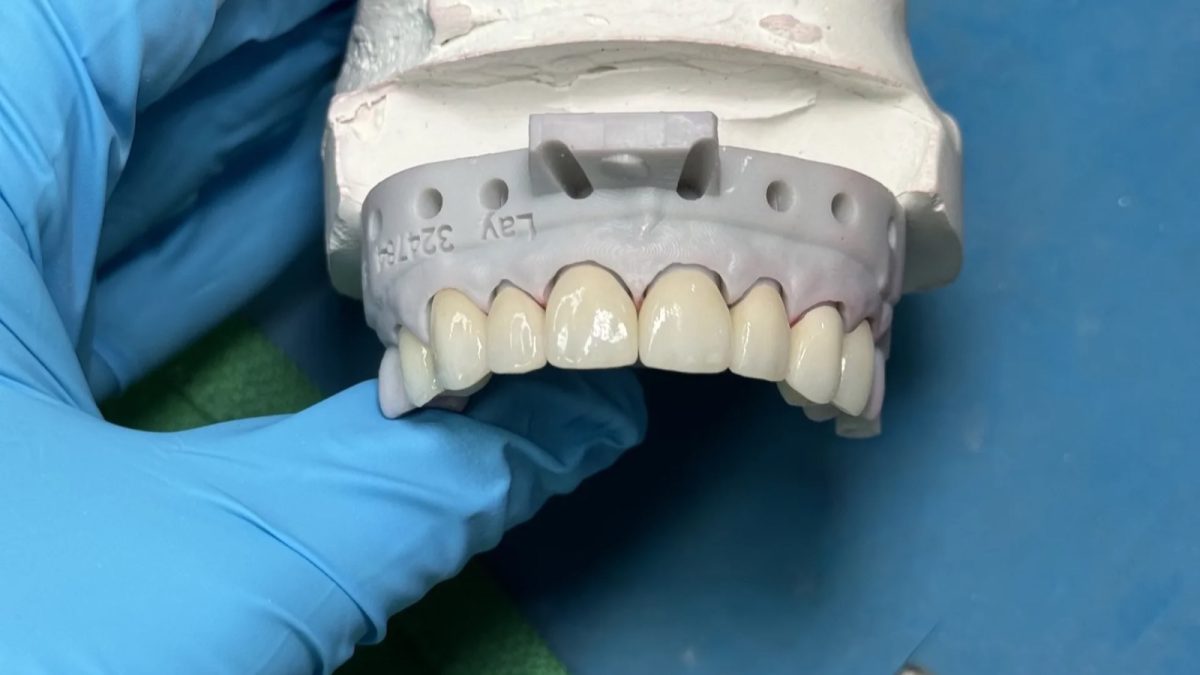
A chamfer margin is the curved finish line most crowns are prepared to today, and the chamfer versus shoulder argument has been running for as long as all ceramic crowns have existed. The evidence has moved on enough to settle part of it. It has also made clear that the shape of the finish line matters less than whether the lab can see it.
Here is what the reviews actually found for zirconia, how the choice changes with Emax and PFM, and the margin details that decide whether a crown seats on the first try.
What is a chamfer margin?
A chamfer margin is a tooth preparation finish line that meets the external tooth surface in a concave curve, giving the crown a margin of gradually increasing thickness rather than a flat ledge. A heavy or deep chamfer carries the curve deeper into the tooth to give the restoration more bulk at the edge.
The alternatives sit on either side of it. A shoulder is a flat ledge at roughly a right angle to the long axis, and a rounded shoulder softens the internal corner of that ledge. A feather or knife edge has almost no ledge at all. International Dental Arts builds zirconia, Emax and PFM crowns to all of these for dentists nationwide, which is why we care less about which one you choose than about how clearly it is cut.
- Chamfer. Concave curve, the general default for full contour ceramics.
- Heavy chamfer. A deeper curve for more ceramic bulk at the margin.
- Rounded shoulder. A flat ledge with a rounded internal angle.
- Feather edge. Minimal or no ledge, a conservative option with a less defined margin.
Chamfer margin vs shoulder: what the reviews found
Two systematic reviews of zirconia fit point in slightly different directions, and both are worth knowing because the headline in each is narrower than it sounds.
Ahmed and colleagues, in Clinical and Experimental Dental Research in 2020, screened 637 articles and evaluated 46. They concluded that shoulder finish line preparations had slightly better marginal fit than chamfer finish lines, and that crowns made from digital impressions had comparable or better marginal adaptation than those from conventional impressions. The full review is open access.
Sengottaiyan and colleagues, in the Journal of Prosthetic Dentistry in 2025, looked only at digitally fabricated zirconia and included 27 in vitro studies, 17 of them on finish lines. They found clinically acceptable marginal fit and internal adaptation across the designs studied, with marginal fit favouring the rounded shoulder and internal adaptation favouring the chamfer. A planar occlusal reduction combined with a chamfer finish line gave better marginal fit. The abstract is on PubMed.
On strength, a smaller in vitro study by Gavara and colleagues in Cureus in 2023 tested 30 zirconia copings on three designs and found the highest mean fracture resistance with a heavy chamfer, followed by no finish line and then the shoulder, with a significant difference between heavy chamfer and shoulder (p equals 0.004). One study of 30 specimens is a pointer, not a rule.
Our reading, and it is the stance we would defend to any dentist: the fit differences between a well cut chamfer and a well cut rounded shoulder are small enough that both reviews call them clinically acceptable. The finish line shape is not where crowns fail to seat. Readability is.
Matching the finish line to the material
The finish line still has to suit the material, because each one handles a thin edge differently.
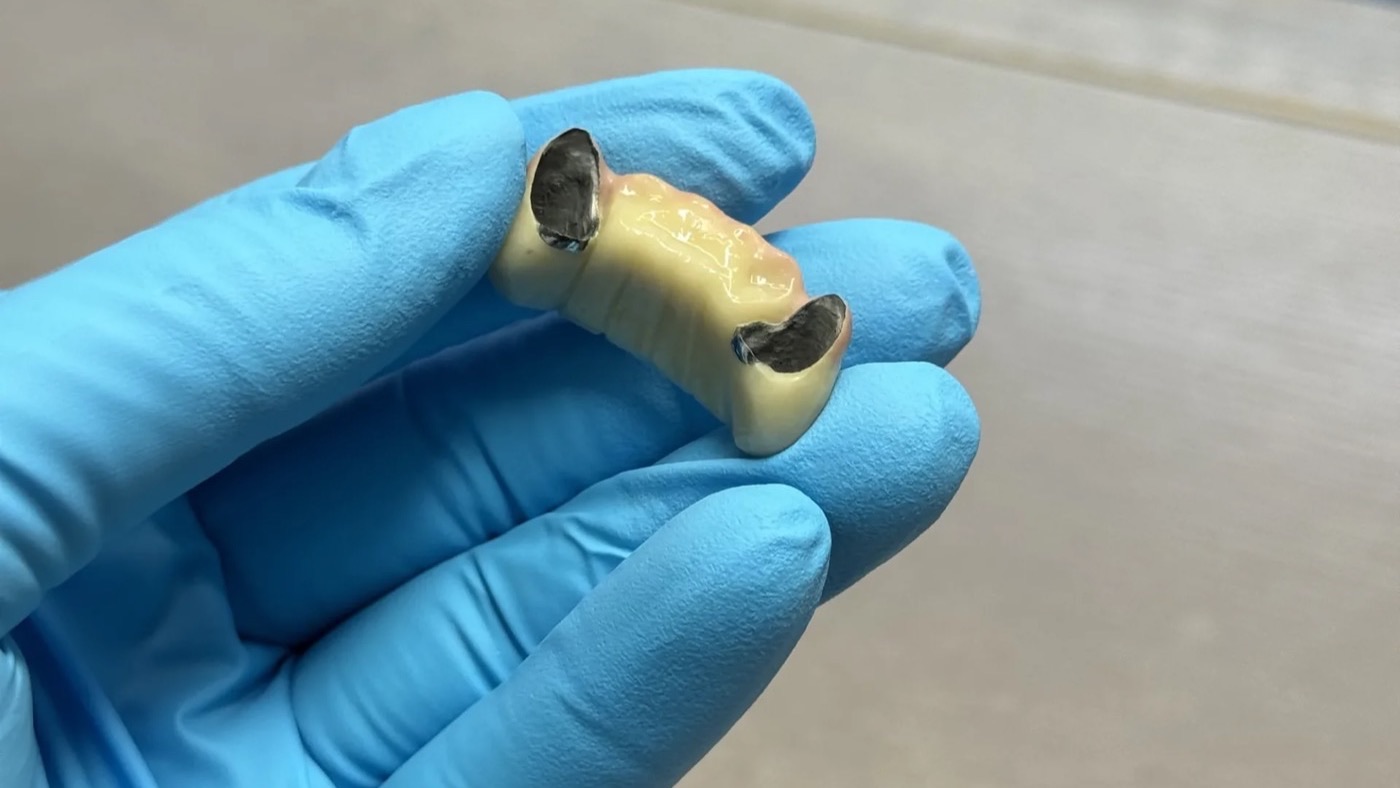
- Monolithic zirconia. A chamfer is the natural fit. Full contour zirconia does not need a wide ledge to survive at the margin, and a shoulder cut deeper than the material needs removes tooth for no gain.
- Layered zirconia. A heavy chamfer or rounded shoulder gives room for the porcelain over the core at the margin.
- Emax. A rounded shoulder or a heavy chamfer. Lithium disilicate wants a defined margin with no sharp internal angle.
- PFM with a metal collar. A chamfer for the metal margin.
- PFM with a porcelain butt margin. A shoulder, because porcelain at the margin needs the ledge to sit on.
For the crowns themselves, see our crowns and bridges range. Prep dimensions by material are set out on our zirconia crowns and Emax crowns pages, and the PFM version on PFM crowns.
What makes a margin readable
A readable margin is one the technician or the design software can trace as a single continuous line, all the way around, without guessing. Whatever finish line you choose, these are the things that decide whether we can.
- Continuity. One line, no steps, no breaks where the bur changed direction.
- No lip of unsupported enamel. A thin flange beyond the finish line chips on the die or in the mouth and leaves a margin we have to guess at.
- Retraction and capture. On a scan, any part of the margin hidden under tissue or fluid is simply not in the file. On an impression, a torn or pulled margin is the same problem.
- Smooth internal angles. Sharp internal line angles concentrate stress in ceramics and are hard for a milling bur to reproduce.
- A margin that matches the chosen material. A feather edge under a layered crown leaves no room for porcelain.
When a margin is not readable on the file, we would rather stop and call you than design to a guess. Guessing at a margin is how a crown ends up long, short or open in one spot, and that is the remake nobody wants.
Will you tell us if a margin isn’t clear before you build?
Yes. You can talk to a technician about a case before it is designed and while it is in production, and a margin we cannot trace is exactly the kind of thing that conversation is for. It is quicker to rescan or re-impress a margin than to remake a crown.
On turnaround, our lab time on full contour zirconia and Emax crowns is 4 working days, layered zirconia 7, and PFM 10. Across IDA and Brewer Dental Lab, our combined remake rate for the first half of 2026 was 2 percent. All of our crown and bridge work is on that same range page, and when you want to send one, you can start a case with us here.
Crown and bridge
Unsure the margin will read?
Send the scan or impression and tell us the material. A technician will check the margin before anything is designed.
Questions from the prep
Is a chamfer or shoulder better for zirconia crowns?
Both are clinically acceptable. A 2025 systematic review in the Journal of Prosthetic Dentistry found marginal fit favoured the rounded shoulder and internal adaptation favoured the chamfer. For monolithic zirconia, a well cut chamfer is the more conservative choice.
Can I use a feather edge for a zirconia crown?
On monolithic zirconia, sometimes. On layered zirconia, Emax or a porcelain margin, no, because those need room at the edge.
What is the difference between a chamfer and a heavy chamfer?
Depth of the curve. A heavy chamfer cuts deeper into the tooth to give the crown more bulk at the margin, which helps layered and pressed ceramics and, in one 2023 in vitro study, gave higher fracture resistance than a shoulder on zirconia copings.
Does the finish line affect a digital scan?
Indirectly. The scanner records whatever is visible, so a clearly defined, fully exposed margin of any shape scans well, and an indistinct one scans badly. A chamfer is often easier to capture cleanly than a feather edge because it gives the margin a visible boundary that the design software can trace. Retraction does more for scan quality than finish line shape does. If tissue or fluid sits over part of the margin when you scan, that part of the margin is not in the file, and no finish line design brings it back. Ahmed and colleagues, in their 2020 review, found crowns from digital impressions had comparable to superior marginal adaptation compared with conventional impressions, so the scanner is not the weak point. The capture is. Check the margin on screen at the chair, all the way around, before you send.
Written by Dorothy Faas, Clinical Specialist, with 35 years in dental laboratory work specialising in high-precision crown and bridge, at International Dental Arts. IDA has been a family founded dental laboratory in Tulsa since 1984, working with independent practices across the country. If you want a case reviewed before you commit, get in touch.