The open tray vs closed tray impression question has a cleaner answer than the debate suggests. For a single implant with decent access, both techniques give the lab what it needs. For multiple fixtures, divergent fixtures and full arches, the open tray earns its extra steps. The skill is knowing which case you are holding before you load the tray.
Here is how we would make the call from the lab side of the case, what the research actually supports, and the one tray decision that changes more than the technique does.
What is the difference between an open tray and a closed tray impression?
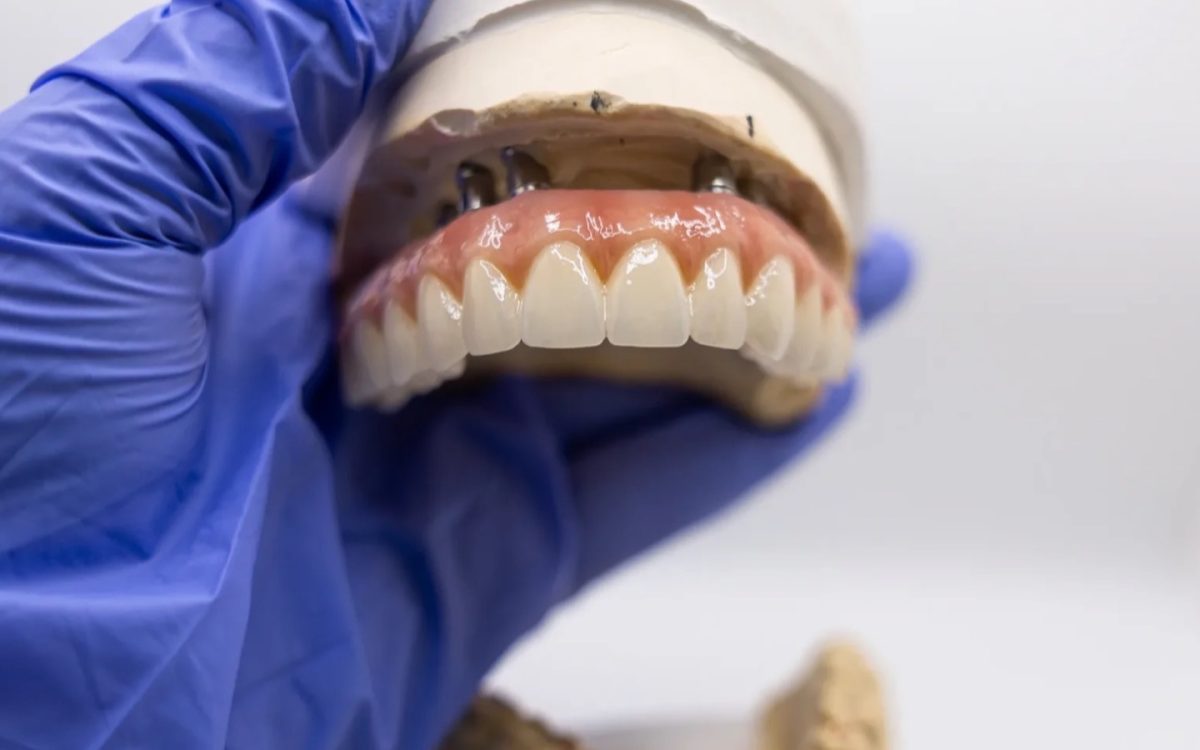
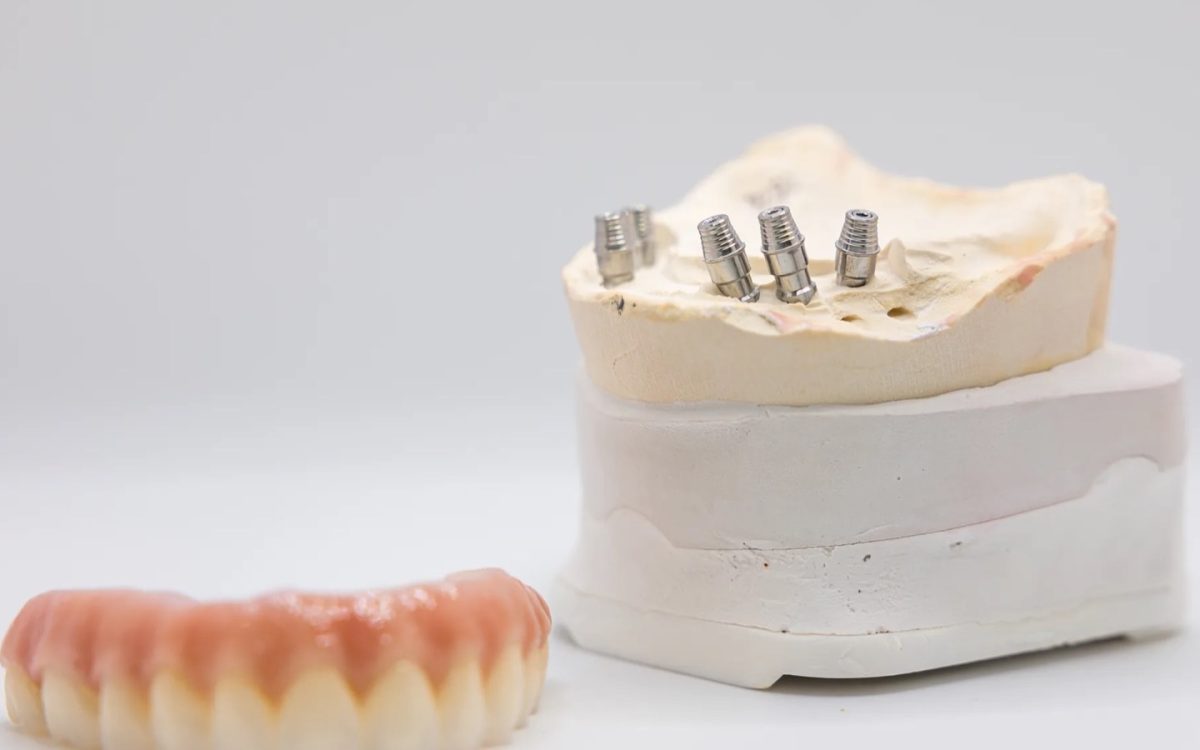
An open tray impression uses a tray with a window over the implant so the long guide screws of pick-up copings can be undone through the set material, and the copings come out locked inside the impression. A closed tray impression uses an unmodified tray over shorter transfer copings that stay on the implants when the tray is removed, and are then unscrewed and placed back into their imprints by hand.
Both record the same thing, the position and rotation of the implant connection, so every open tray vs closed tray impression choice comes down to where the risk sits. The open tray risks are a tray window that is too small or a guide screw that will not release. The closed tray risk is the hand reseating of the coping, and the parts themselves are covered in impression copings. International Dental Arts restores implants from both techniques for dentists nationwide, so the choice is yours to make by the case.
- Open tray. Copings come out in the impression, so nothing is repositioned by hand.
- Closed tray. Quicker to take, but every coping has to go back into its imprint exactly.
- Open tray needs access. The guide screws have to reach through the tray, which takes opening and room.
- Closed tray tolerates less divergence. Angled copings can drag or distort the material as the tray comes off.
Open tray vs closed tray impression: what the evidence says
The most cited source on the open tray vs closed tray impression question is the 2014 systematic review by Papaspyridakos and colleagues in the International Journal of Oral and Maxillofacial Implants, built on 76 studies. Its tray findings split cleanly by the type of case.
For completely edentulous patients, one clinical study and half of the in vitro studies found the open tray more accurate, with 10 studies favouring open tray, 1 favouring closed tray and 10 finding no difference. For partially edentulous patients, most in vitro studies favoured the open tray, but the only clinical study reported no difference, and the review concluded that there seems to be no difference for those patients. The abstract is on PubMed.
Read that carefully and it supports a simpler rule than the one most practices follow. The open tray advantage is real where the arch is edentulous and the fixtures have to relate to each other across a span. On a partially edentulous single unit, the evidence does not separate the two techniques. Angulation is the other variable worth weighing: the same review found that implant angulation affects impression accuracy, which is where the closed tray’s hand reseating and its tendency to drag on removal start to cost you.
A 2021 in vitro study by Abduo and Palamara in the International Journal of Implant Dentistry adds a detail that matters once you have chosen the open tray. With one of two implants tilted at 15 degrees, nonsplinted open tray copings showed significantly worse angular deviation than splinted ones (p below 0.01), while on parallel implants the two conventional techniques performed similarly. So the open tray vs closed tray impression decision is really two decisions on divergent cases: open the tray, and splint the copings. The study is open access.
When a closed tray impression is the right call
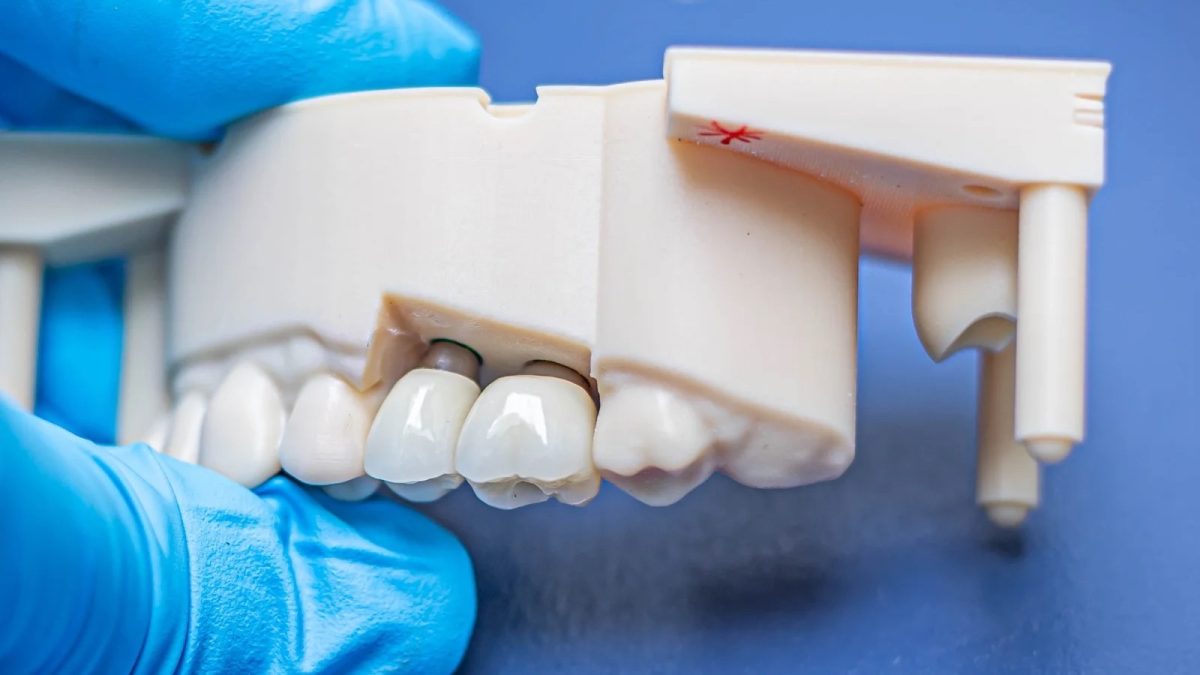
The closed tray impression gets talked down more than it deserves, and this is the position we hold, built on the same review and on what our implant crowns need from a model. On a single posterior implant in a partially edentulous arch, reasonably parallel to its neighbours, a carefully taken closed tray impression gives us everything we need, in less chair time, with less for the patient to tolerate.
It is also the honest answer when the patient cannot open far enough for an open tray guide screw to clear, particularly at second molar sites. A closed tray taken well beats an open tray that could not be seated properly. The conditions that make it work are small: the transfer coping matched to the system, the anti rotation feature reseated exactly into its imprint, and a firm, deliberate reseat rather than a hopeful one.
When we would ask you for an open tray
- Two or more implants that will be joined. A bridge or bar has to seat on all of them at once, so their relationship is what the impression must hold.
- Full arch cases. This is where the review’s open tray advantage sits.
- Divergent fixtures. Angled copings drag on a closed tray removal, and angulation is a named accuracy variable.
- Deep or subgingival platforms. A coping that stays in the impression avoids a difficult blind reseat.
For multi fixture and full arch cases, splinting the copings is the other half of the decision, and the same review found splinting more accurate in both partially and completely edentulous patients. On full arch cases we will also discuss verification, or a photogrammetry record, before the definitive framework, which we cover alongside scanning in implant scan body accuracy.
On full arch work, choose the tray before the technique
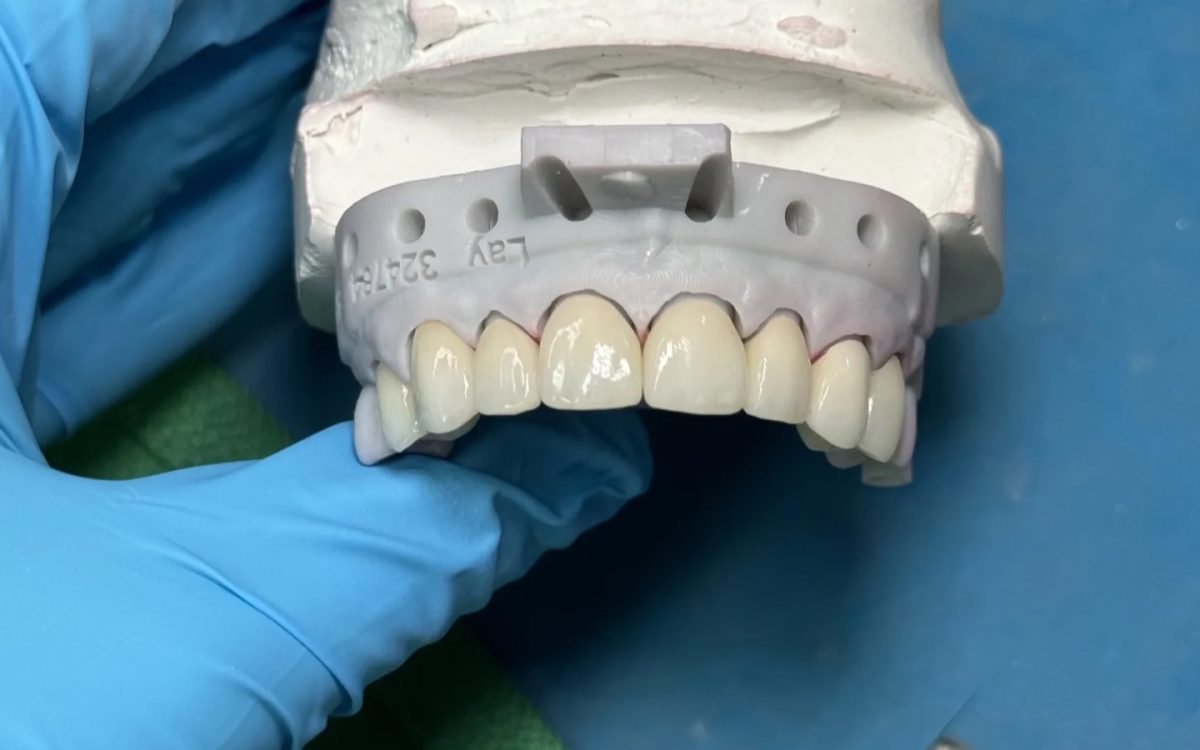
An open tray impression is only as good as the tray it is taken in. A stock tray with a window cut chairside can flex, leave uneven material thickness, or put the window in the wrong place, and then the guide screws fight the tray instead of passing through it.
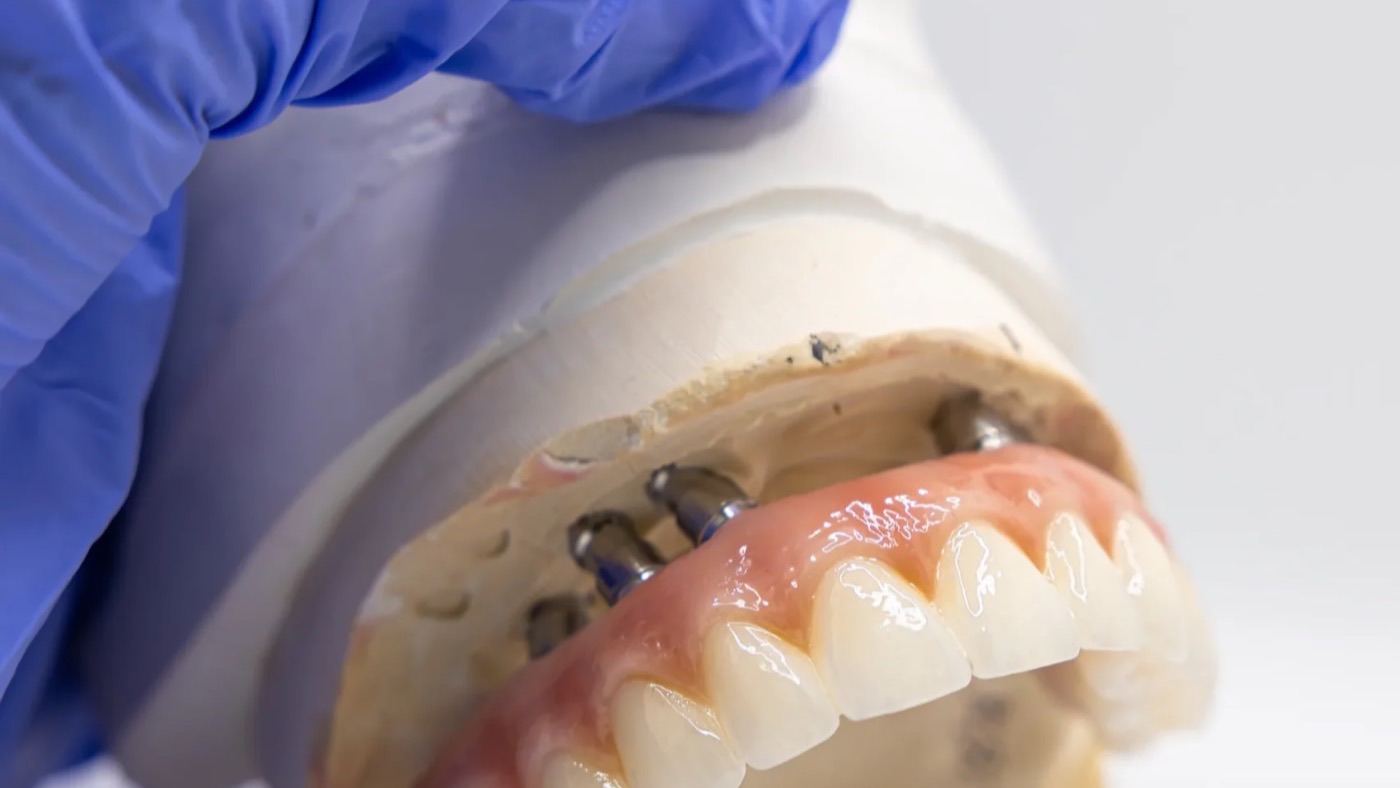
That is why full arch open tray impressions belong in a custom tray, made with the window placed over the fixture positions and enough relief for the copings. A custom tray from us is 2 working days of lab time on an analog case, so it fits inside a normal appointment sequence rather than delaying it. Ask for it when you send the preliminary model.
Do I need to switch to scanning to work with your lab?
No. We take open tray and closed tray impressions, splinted or not, and scans from iTero, TRIOS, Medit and Primescan, and we would rather you use the technique your team executes well than change it for us. What helps most is the case detail on the prescription: implant system, platform, and whether the impression is at implant or abutment level.
For timing, our lab time on an implant crown with a custom abutment is 10 working days, and you can speak to a technician about the case before it is poured and while it is in production. Single units are on the implant crowns page and multi fixture work on screw retained restorations. To send a first case, start with us here.
Open or closed tray
Not sure which technique this case needs?
Send the span and fixture angles before you book the impression. A technician will tell you which tray to use.
Questions from the prep
Is open tray always more accurate than closed tray?
No. The 2014 Papaspyridakos review found open tray more accurate for completely edentulous patients, and no clear difference for partially edentulous patients. For a single implant crown in a partially edentulous arch, a well taken closed tray impression is a sound choice.
Which impression material should I use for open tray?
The same review found no accuracy difference between polyether and polyvinylsiloxane. Use the one your team handles best.
What if the patient cannot open wide enough for an open tray?
Use a closed tray, and take extra care on the reseat. If the case has multiple fixtures that will be joined, call us before the impression, because that combination of limited opening and a splinted restoration is where planning the verification step in advance saves a remake. Depending on the case, that may mean a verification jig at try-in, a scanned record, or a staged appointment sequence, and the right answer depends on the span and the fixture angles more than on the opening alone. A short closed tray handle, or a tray trimmed at the distal, can buy enough room to seat the tray without forcing the patient, and that matters because a tray that was rocked into place records the rocking.
Can I take an open tray impression in a stock tray?
For a single unit or a short span, yes, if the window is in the right place and the tray is rigid. For full arch work we recommend a custom tray.
Written by Adam Brewer, General Manager, with nearly two decades in the dental implant industry, at International Dental Arts. IDA has been a family founded dental laboratory in Tulsa since 1984, working with independent practices across the country. If you want a case reviewed before you commit, get in touch.