An implant analog is the replica of your implant that sits in the lab model. Every implant crown, custom abutment and bar we make is designed and fitted on it, never on the patient. If the implant analog sits a fraction off where the fixture sits in bone, the restoration fits the model perfectly and the mouth slightly less well.
Most dentists never see the analog, because it lives on our side of the case. It is still worth understanding, because the move from poured stone models to printed models with digital analogs has changed where accuracy is won and lost, and the evidence on it is more specific than most people assume.
What is an implant analog?
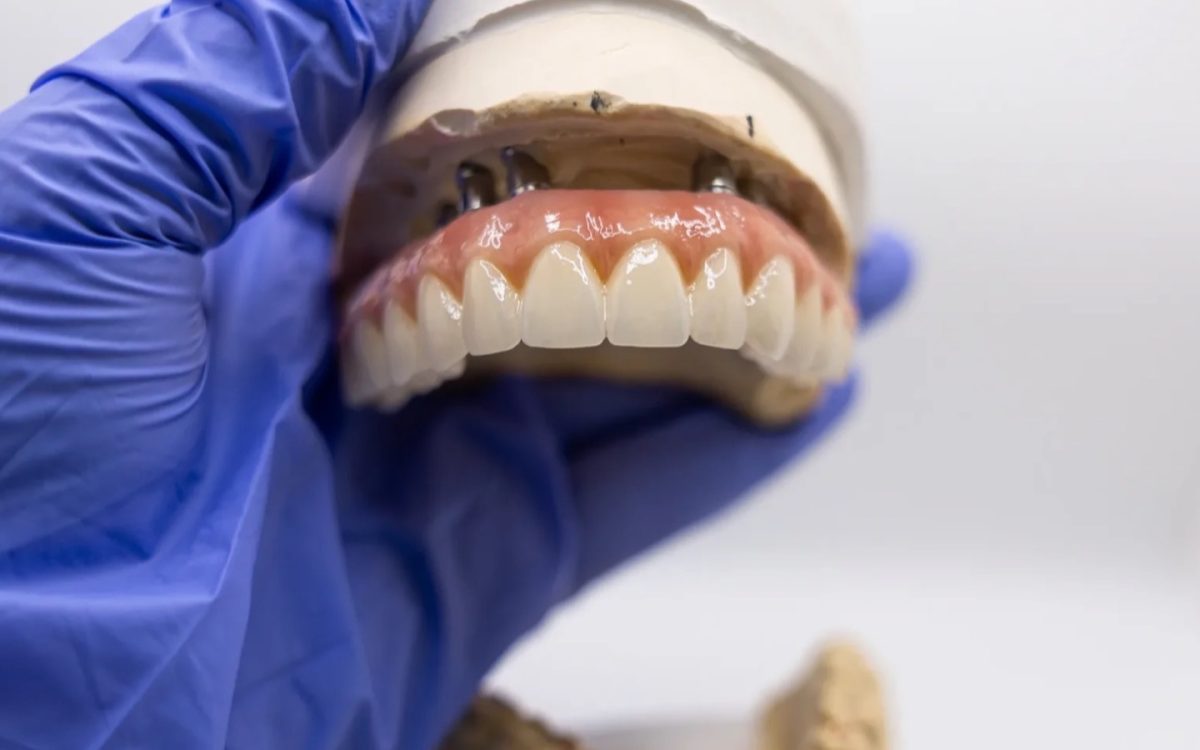
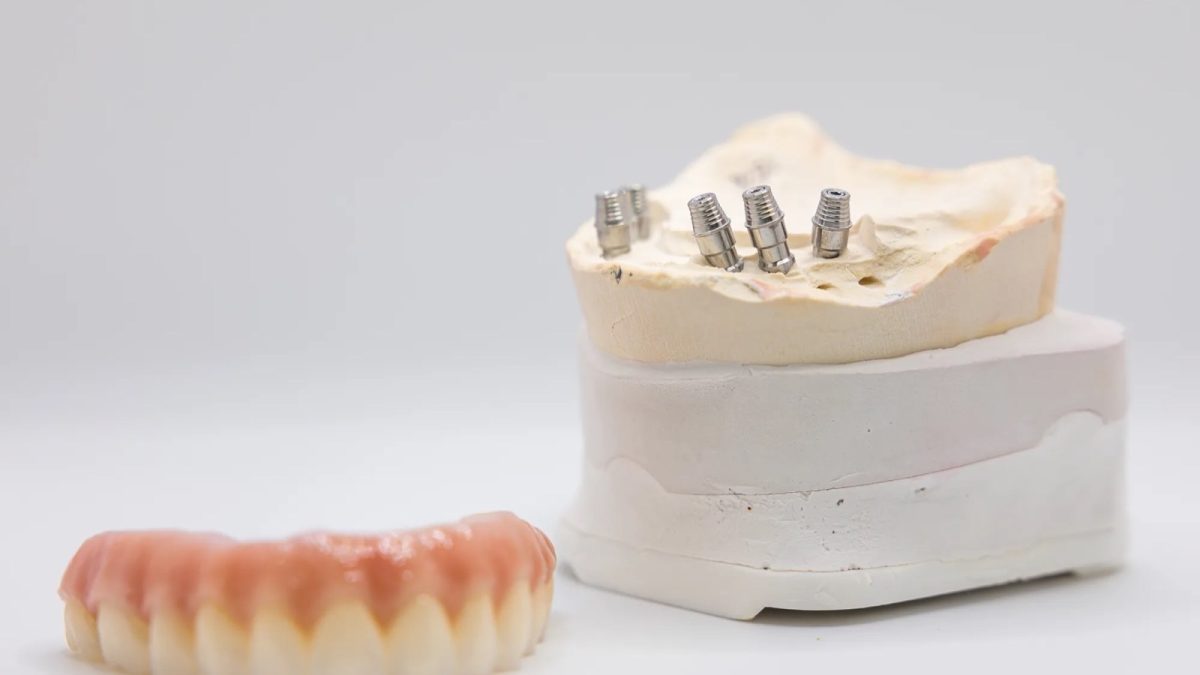
An implant analog is a metal or polymer replica of an implant’s connection and platform, embedded in a dental model so that the laboratory can build and test fit restorations in the exact position of the patient’s implant. Manufacturers also call it an implant replica or a lab analog.
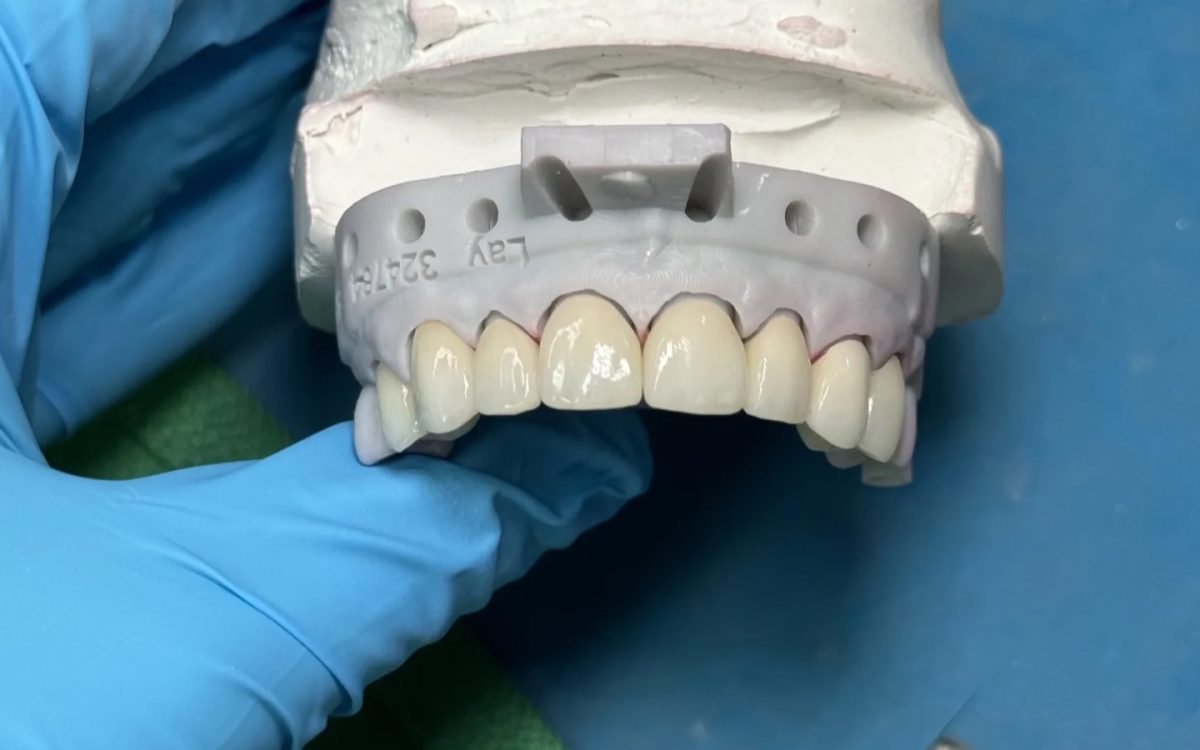
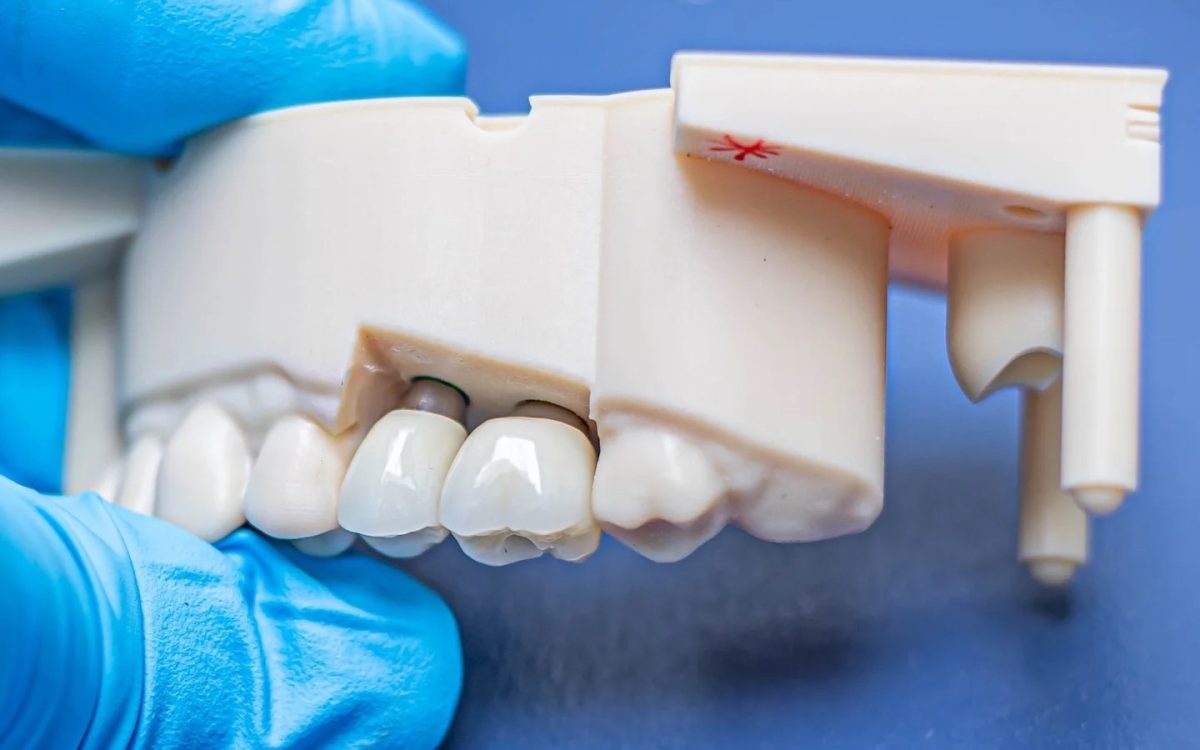
There are two ways one ends up in a model. In a conventional case, the analog is screwed onto the impression coping inside the set impression and stone is poured around it. In a digital case, the design software places a digital implant analog in a model file, the model is printed with a holder for it, and the physical analog is pressed or screwed into that holder. International Dental Arts builds implant restorations on both, for dental practices nationwide, from our lab in Tulsa.
- Conventional analog in stone. Position comes from the impression coping and the pour.
- Digital analog in a printed model. Position comes from the scan, the design file and the print.
- Abutment-level analog. Replicates a multi-unit or other abutment rather than the implant itself.
- System-specific geometry. Every analog has to match the connection of the implant it stands in for.
Stone or printed: where the implant analog position comes from
The implant analog in a stone model is only as accurate as the impression coping that held it during the pour. Any rotation, lift or movement of the coping is copied into the stone. That is why the seating and splinting decisions at the chair matter so much on conventional cases.
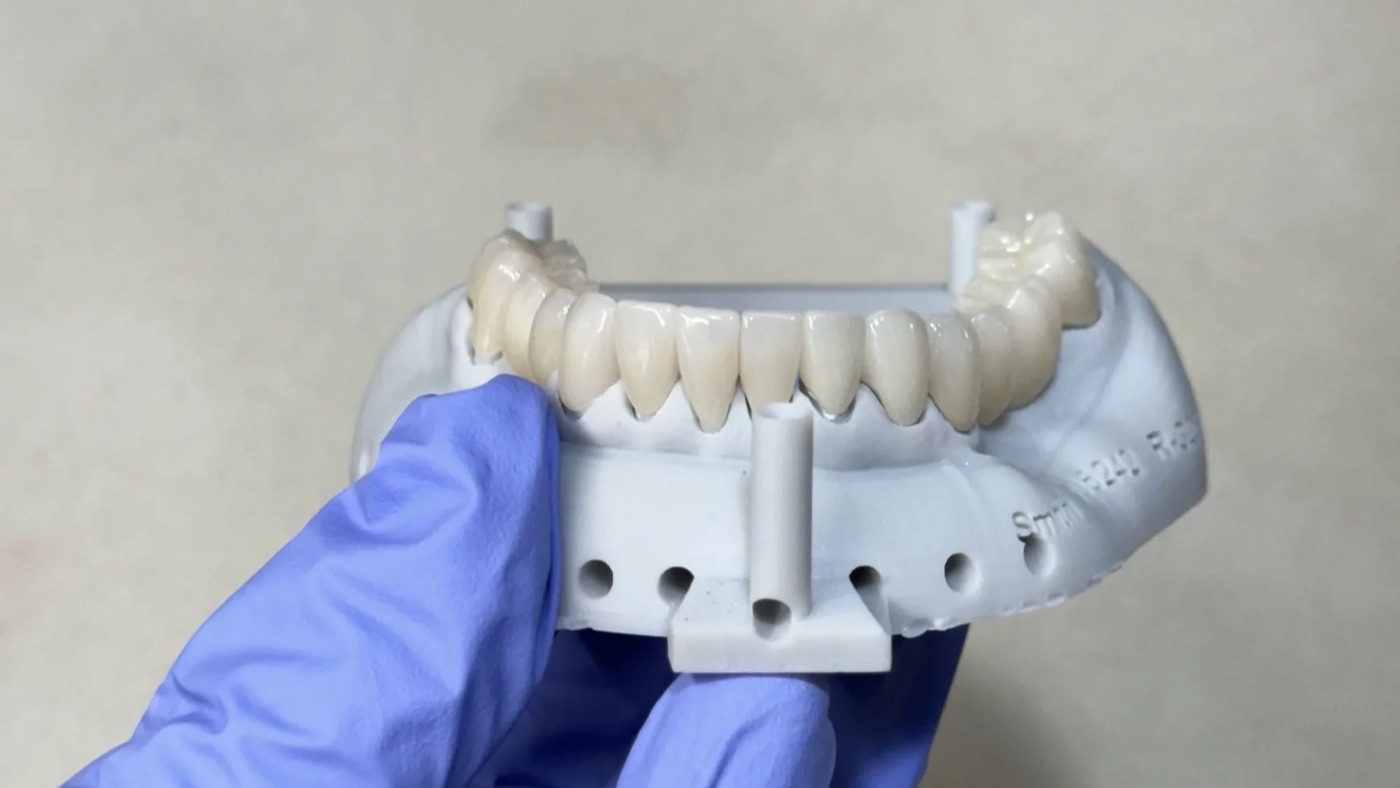
In a printed model, the analog position is set by three things instead: the scan, the digital analog library used in the design, and how accurately the printer reproduces the holder the analog sits in. The impression coping drops out of the chain. New variables come in.
What the research says about digital implant analog design
The digital implant analog is not a neutral part. Its design changes how accurately it sits in a printed model, and that is the finding we think matters most and is least discussed.
Mata-Mata and colleagues, publishing in Clinical Implant Dentistry and Related Research in 2022, compared a conventional analog in a stone cast against three digital analog designs in printed models, using 12 specimens per group. Analog design affected the trueness of the analog position. The proprietary press or friction fit digital analog had higher linear trueness than both a screw-retained digital analog and the conventional analog in stone, and the highest angular trueness of the digital analogs tested. The study abstract is on PubMed.
A second in vitro study, by Jin and colleagues in the Journal of Dentistry in 2022, printed 12 groups of models and changed one setting at a time. Positional accuracy of the implant analog was significantly higher with a holder offset of 0.04 or 0.06 mm than 0.08 mm, with a hollow inner structure than a solid one, and with a 100 micron layer thickness than a 50 micron one. The abstract lays out the groups.
Two things follow, and the first is the stance we hold most firmly. A printed model with a well designed digital analog is not automatically a downgrade from stone, and in that 2022 comparison it beat the conventional analog on linear trueness. The second is less comfortable: the result depends on choices the dentist never sees, including which analog design the lab uses, how the holder is offset and how the model is printed. Those are lab decisions, and it is fair to ask your lab how it makes them.
The same study points at the part itself. Of the digital analogs tested, the implant manufacturer’s own design outperformed the two third party designs on angular trueness in the buccolingual plane, so the analog designed for the implant system is the safer choice than a generic replica. It is a small cost on a part the patient never sees, against a restoration that has to seat on a real fixture.
What tells your lab which implant analog to use
Your lab picks the implant analog from what you write on the prescription and what it can see in the impression or scan. It cannot pick the right one from a guess. The details that decide it are short.
- Implant system and platform diameter. The analog has to match the connection exactly.
- Implant level or abutment level. A multi-unit abutment case uses a multi-unit analog, not an implant analog.
- The scan body used, on digital cases. The digital analog is placed from the scan body library, so the two have to belong together.
- Anything unusual about the system. A less common or discontinued system is worth a call first, so we can confirm the analog and components before the case arrives.
The analog choice then carries straight into the abutment, because a custom abutment is designed to fit the connection the analog reproduces. Multi-unit cases have their own logic, which we cover in when you need a multi unit abutment. On digital cases, the scan body side of this is in implant scan body accuracy.
Will a printed model be accurate enough for my implant crown?
For single units and short spans on a properly designed and printed model, yes, and the 2022 analog design comparison above is part of why we are comfortable saying it. For long span and full arch work we will talk about verification before we build the definitive framework, whichever model type is used.
The practical side, which is what most dentists actually want to know: our lab time on a custom abutment is 5 working days and on an implant crown with a custom abutment it is 10. You can speak to a technician before the case is designed and while it is in production, which is the point to raise anything about the system or the components. Our implant work is on the implant restorations page, and custom abutments are covered above. When you are ready to send one, you can open an account with us here.
Implant restorations
Unusual system or a long span?
Tell us the system and platform before you send it. A technician will confirm the analog and components first.
Questions from the prep
Do I need to send an implant analog with my impression?
Usually not. In most cases the lab supplies the analog, which is why the system and platform on the prescription matter. On an uncommon system, ask first.
What is the difference between an implant analog and an impression coping?
The impression coping is used in the mouth to capture the implant position. The implant analog is used in the model to recreate it. In a conventional case the coping is in the impression and the analog is screwed onto it before the stone is poured, so the two work as a pair and an error in one is carried straight into the other.
Are digital implant analogs less accurate than stone?
Not as a rule. In the 2022 comparison by Mata-Mata and colleagues, a proprietary press fit digital analog in a printed model was more linearly accurate than a conventional analog in stone, while a screw-retained digital analog design did not do as well. Design and printing settings decide the result. The 2022 Jin study showed that holder offset, inner structure and layer thickness each changed analog position on their own, which means two printed models from the same scan can differ if they are printed differently. So the honest answer is that a well designed and well printed model is at least as accurate as stone, and a poorly printed one is not. If you are comparing labs, it is a reasonable question to ask which analog designs they use and how they validate their printed implant models.
Can an implant analog be reused?
Only if the connection is undamaged. A worn or damaged connection changes the position it transfers, so it is a fair thing to ask your lab about.
Written by Adam Brewer, General Manager, with nearly two decades in the dental implant industry, at International Dental Arts. IDA has been a family founded dental laboratory in Tulsa since 1984, working with independent practices across the country. If you want a case reviewed before you commit, get in touch.