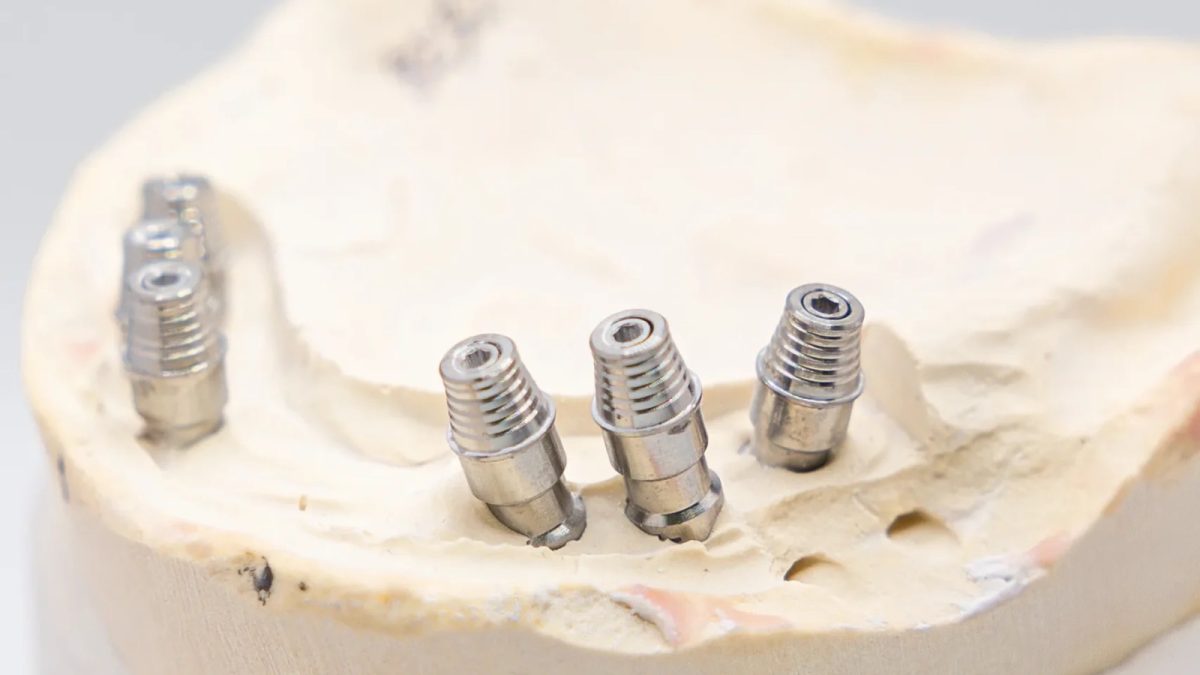
A multi unit abutment is the component that turns a set of implants into something a laboratory can build one prosthesis across. It does three jobs at once. It lifts the restorative connection up above the tissue, it corrects the angle the fixture was placed at, and it gives every implant in the arch a common path of insertion so a single framework can seat on all of them.
Written multi-unit or multiunit depending on the manufacturer, it is the same component. This is when the case needs one, what the evidence says about leaving it alone once it is on, and which codes the finished work belongs under.
What a multi unit abutment actually does
Take the three jobs one at a time, because practices tend to think of it as an angulation part and it is doing more than that.
- It moves the connection above the soft tissue. A prosthesis that seats at abutment level rather than fixture level is one you can actually verify. The margin is visible, cement is not in play, and the seating surface is somewhere a hygienist can reach.
- It corrects angulation. Angled versions are commonly supplied at 17 and 30 degrees, which is what stops a screw access channel exiting through the labial of an upper central.
- It creates one path of insertion. This is the one that matters most for a full arch. Divergent fixtures cannot receive a rigid one piece framework. Multi unit abutments bring the platforms into alignment so the framework can seat passively rather than being forced.
- It makes the prosthesis retrievable. Everything above the abutment comes off with a driver, which on a full arch case is the difference between a repair and a remake.
That last point is why we ask about them on almost every full arch prescription. The decisions above the abutment are prosthetic and we can influence them. Our screw retained restorations page covers the retention side of that argument.
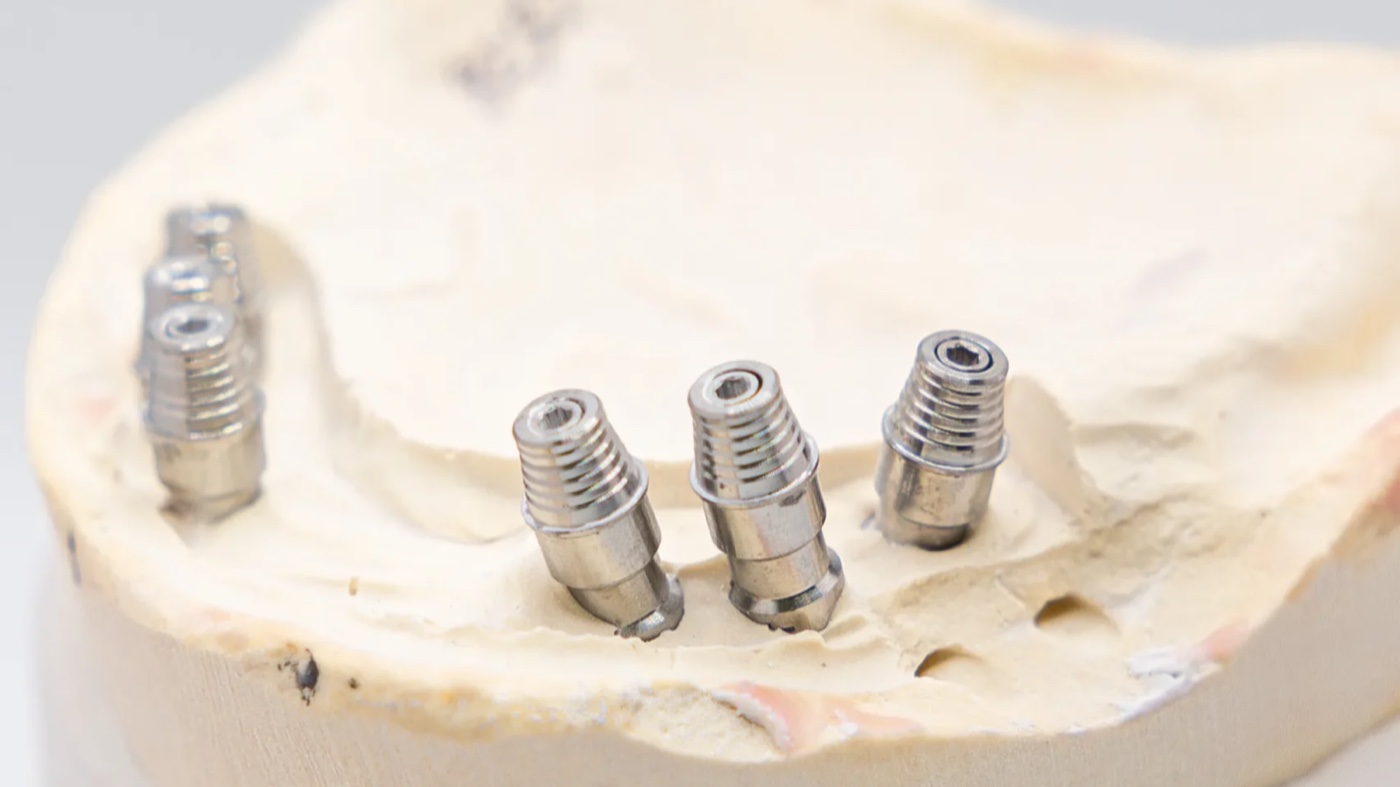
Angulation, and the screw that exits in the wrong place
The most visible failure in full arch work is a screw access channel coming out through the facial of an anterior tooth. It is an esthetic problem, it weakens the tooth it passes through, and it is almost always avoidable at the component stage rather than the design stage.
Angled abutments at 17 and 30 degrees redirect the access channel palatally or occlusally. Torque values are system specific and commonly run up to around 30 Ncm, so check the manufacturer figure rather than assuming. The important thing from our side is that the correction happens in metal at the abutment, not in the framework design, because a framework asked to compensate for a badly angled fixture ends up with thin sections exactly where it needs bulk.
Where the angle has not been corrected and the case is already built, the remaining option is an angulated screw channel in the restoration itself. That works, and it is a second best. The comparison between access routes is in screw retained versus cement retained.
One abutment one time, and what the data actually shows
There is a real body of evidence behind the instruction to place the definitive abutment at surgery and never take it off. Repeatedly disconnecting and reconnecting an abutment disturbs the soft tissue seal, and the argument is that it costs marginal bone.
A meta-analysis of four controlled clinical studies found significantly greater bone loss where abutments were disconnected and reconnected multiple times against a single definitive abutment placed once, with a weighted mean difference of 0.4 mm. A three year study comparing definitive multi unit abutments connected at surgery and left alone against healing abutments disconnected 3 to 5 times during the prosthetic phase recorded marginal bone loss of 0.35 mm against 0.57 mm, a statistically significant difference.
Now the honest part. Those differences are small, and the authors of that work raise the question of clinical relevance themselves. A fifth of a millimetre over three years is not the difference between success and failure on most cases. It is a reason to prefer the protocol where it is practical rather than a reason to panic about a case where the abutment came off twice. We would rather give you the number and the caveat than sell the protocol harder than the evidence supports.
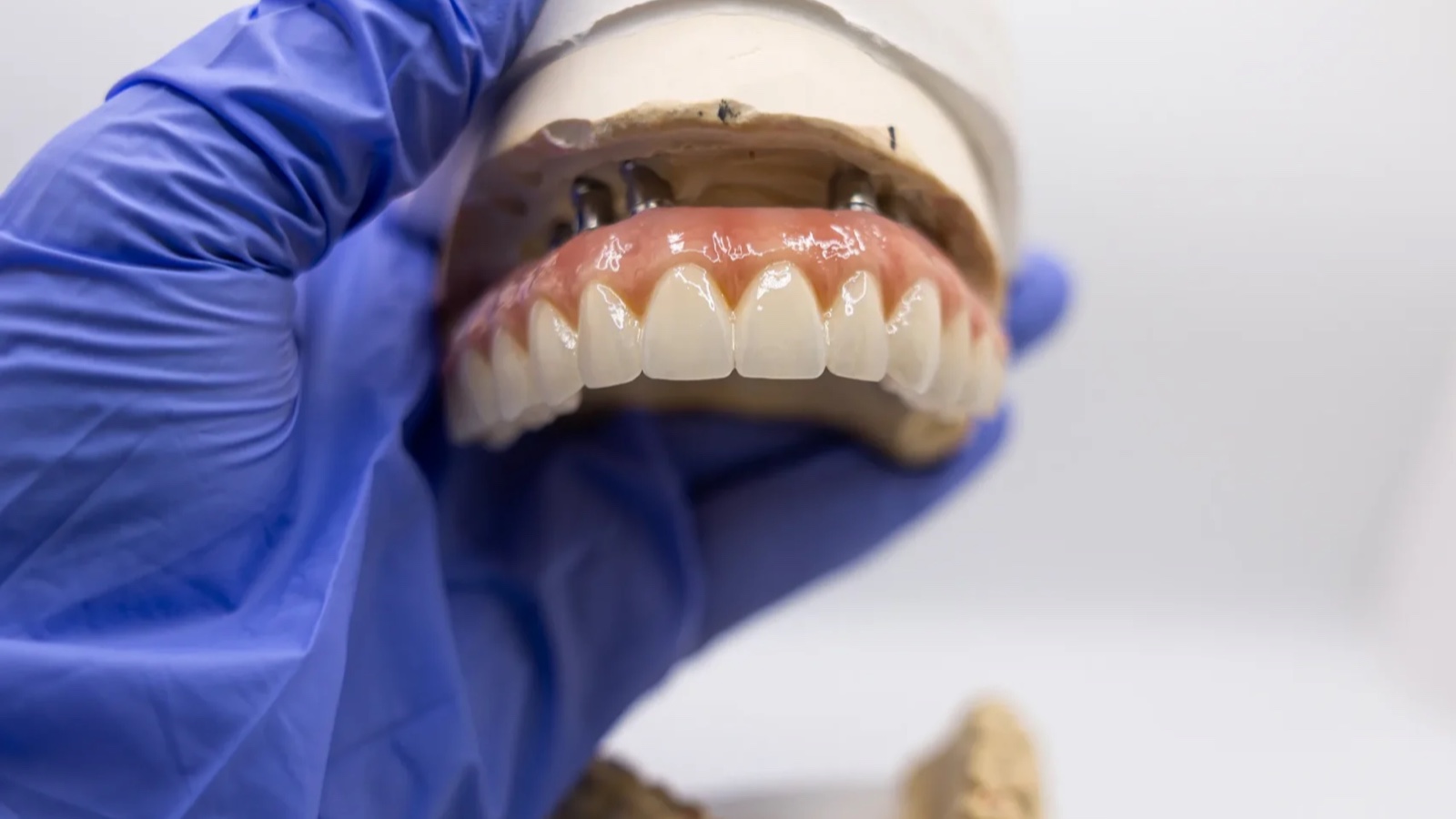
One practical check belongs here because it is the thing that separates a framework that seats from one that looks like it does. Tighten a single screw at one end of the arch and look at the opposite end. If the far side lifts, the framework is not passive and torquing the remaining screws will simply pull it down and load every fixture in the arch permanently. That test costs thirty seconds and it is worth running before the case is finally torqued rather than after.
Multi unit abutment or restoring direct to the fixture
This is the practical question and the answer is mostly about how many units are joined together.
- Single crowns. Usually no. A single unit does not need a common path of insertion with anything, so restoring at fixture level with a titanium base or a custom abutment is simpler and cheaper.
- Two or three splinted units. Depends on divergence. If the fixtures are close to parallel and the tissue is not deep, fixture level works. If either is untrue, abutment level saves the case.
- Full arch, four fixtures or more. Effectively always. Getting a rigid framework to seat passively across four or six divergent fixtures without abutments is a fight you do not need to have, and passive fit is the thing full arch longevity depends on.
- Deep tissue. Where the fixture sits well below the mucosa, abutment level lifts the connection somewhere you can see and clean regardless of how many units are involved.
Where this differs from a titanium base
These get confused because both sit between the implant and the restoration. A titanium base is a bonding platform for a single ceramic unit, and the failure mode you are managing is the cement joint between the base and the superstructure. A multi unit abutment is a prosthetic platform for a joined restoration, and the thing you are managing is fit across multiple fixtures.
One is about a bond and one is about alignment. They are not alternatives on the same case, and a full arch framework can perfectly well seat on multi unit abutments while individual crowns elsewhere in the mouth sit on titanium bases. The bonding side is covered in the Ti base abutment guide and the custom milled route is on our custom abutments page.
Coding the case
A multi unit abutment is a manufactured stock component rather than something designed for the individual site, so it codes as D6056, prefabricated abutment including placement, rather than D6057 which is the custom abutment code. The distinction between those two is set out in custom versus stock abutment.
For the prosthesis above it, the full arch codes are D6114 for an implant supported fixed denture in the maxilla and D6115 for the mandible. The interim versions are the ones that get billed wrong most often, because the numbering runs against expectation. D6118 is the interim fixed denture for the mandibular arch and D6119 is the maxillary one. That is the reverse of the pattern in the definitive pair, so it is worth checking rather than assuming. A single implant supported ceramic crown remains D6065, and the surgical placement of the fixture is D6010.
Reference values only. Confirm against current CDT and expect carrier interpretation to vary, particularly on interim prostheses.
What we need on the prescription
- The implant system, platform and connection for every fixture. Multi unit abutments are not cross compatible between systems and the wrong component is a lost week.
- Whether abutments are already placed, and if so at what angulation and collar height. If they are not placed yet, tell us and we will advise before anything is ordered.
- An abutment level impression or scan once the abutments are on. A fixture level record on a case that will be restored at abutment level is the wrong record.
- Tissue height at each site, because collar selection depends on it and a collar that is too short buries the margin.
- Whether the case is interim or definitive, since it changes both the material and the code.
- Any fixture you already know is divergent, so we can flag whether an angled component solves it.
Scanning workflows are on our intraoral scanners page, case planning is on for dentists, and the wider line sits under implant restorations, implant crowns and zirconia bridges.
Questions from the prep
What is the difference between a multi unit abutment and a regular abutment?
A regular abutment supports one restoration. A multi unit abutment is designed for joined work, so it is built to bring several fixtures onto a common path of insertion and to carry a screw retained prosthesis above the tissue. On a single crown the difference rarely matters. On a full arch it decides whether the framework seats.
Do you need them for an All-on-X case?
In practice yes. Four or six fixtures placed at working angles will not accept a rigid one piece framework without them. The full arch decision itself, fixed against removable, is covered in full arch dental implants, and the material choice in acrylic or zirconia.
Should the abutment come off between appointments?
Preferably not, and the evidence above is why. Where it has to come off, it has to come off. The bone loss difference reported in the literature is real and small, so treat it as a preference rather than a rule you cannot break.
Can angulation be corrected after the abutments are placed?
Only within the restoration, using an angulated screw channel, and only up to a point. Correcting at the abutment is cleaner and gives the framework better section thickness. If the abutments are not on yet, that is the moment to get it right.
How do I know which collar height to order?
Measure tissue height at each site at the time of placement. Too short and the margin sits subgingival where nobody can clean it. Too tall and it shows. Send the measurements and we will confirm before the components are ordered.
Full arch planning
Send the case before the components are ordered
Tell us the system, the angulation and the tissue heights and we will confirm the components and the path of insertion before anything is bought. No charge for the review.
Written by Adam Brewer, General Manager, who has completed more than 2,500 full-arch conversions at International Dental Arts. IDA has been a family founded dental laboratory in Tulsa since 1984, working with independent practices across the country. If you want a case reviewed before you commit, get in touch.