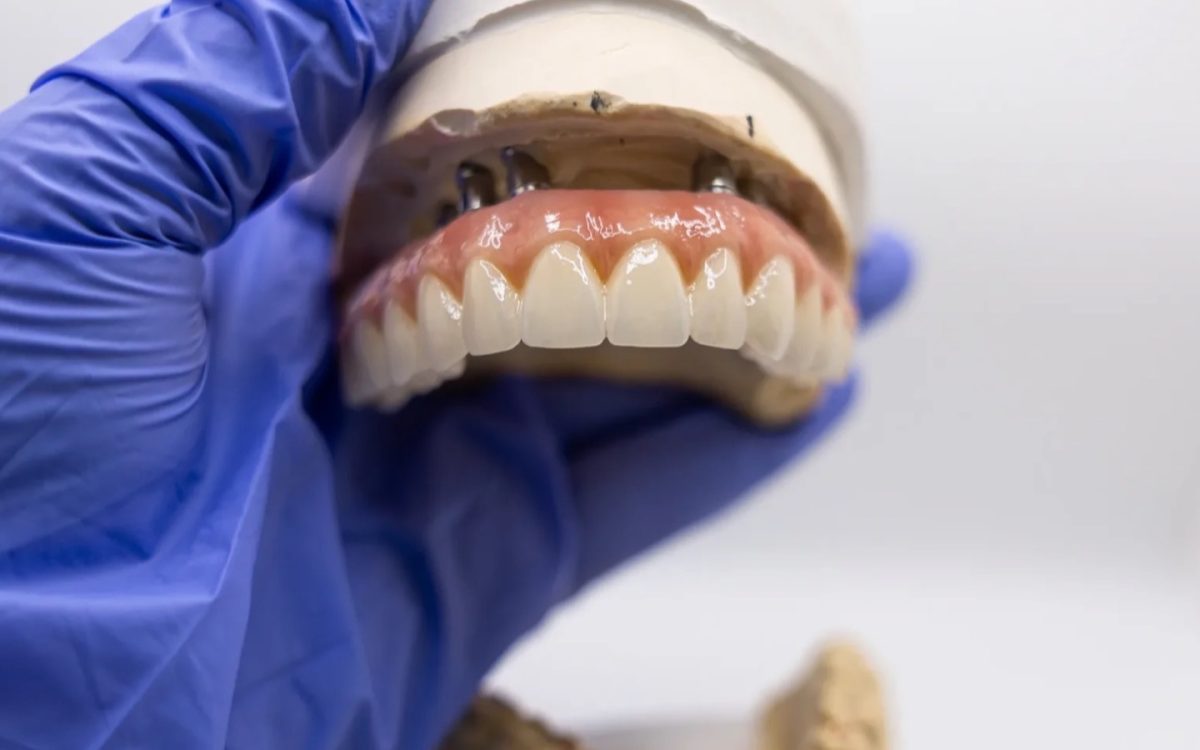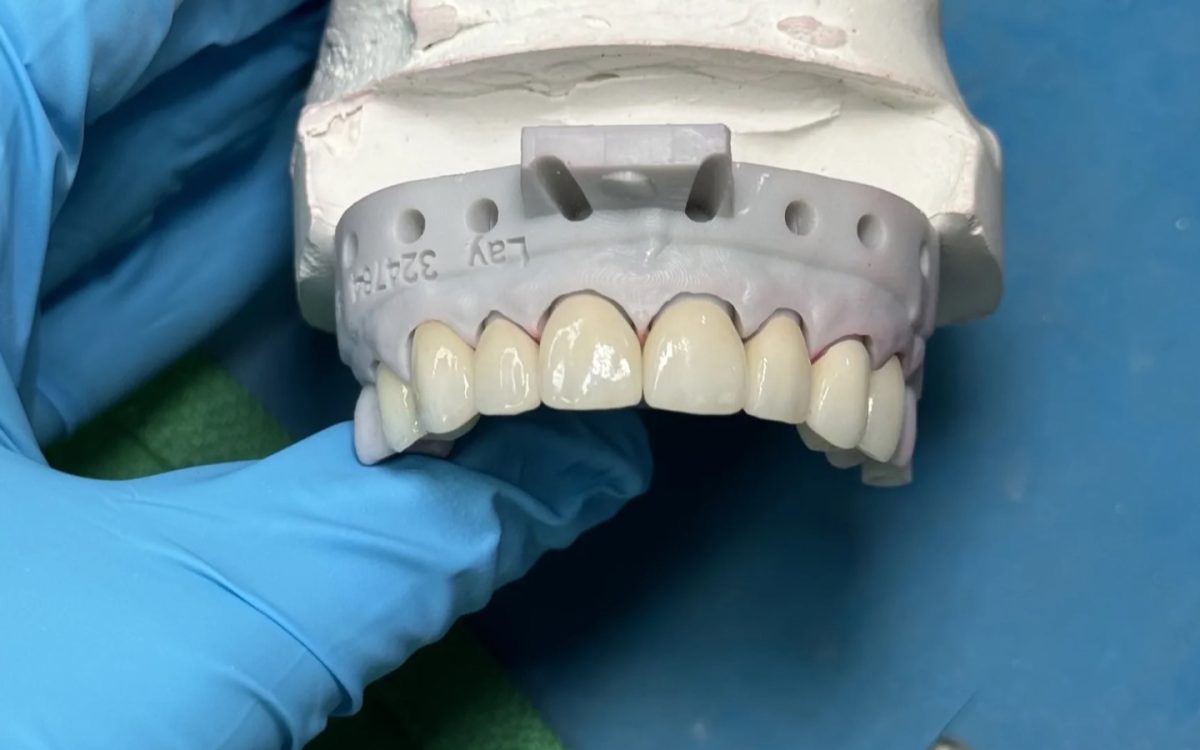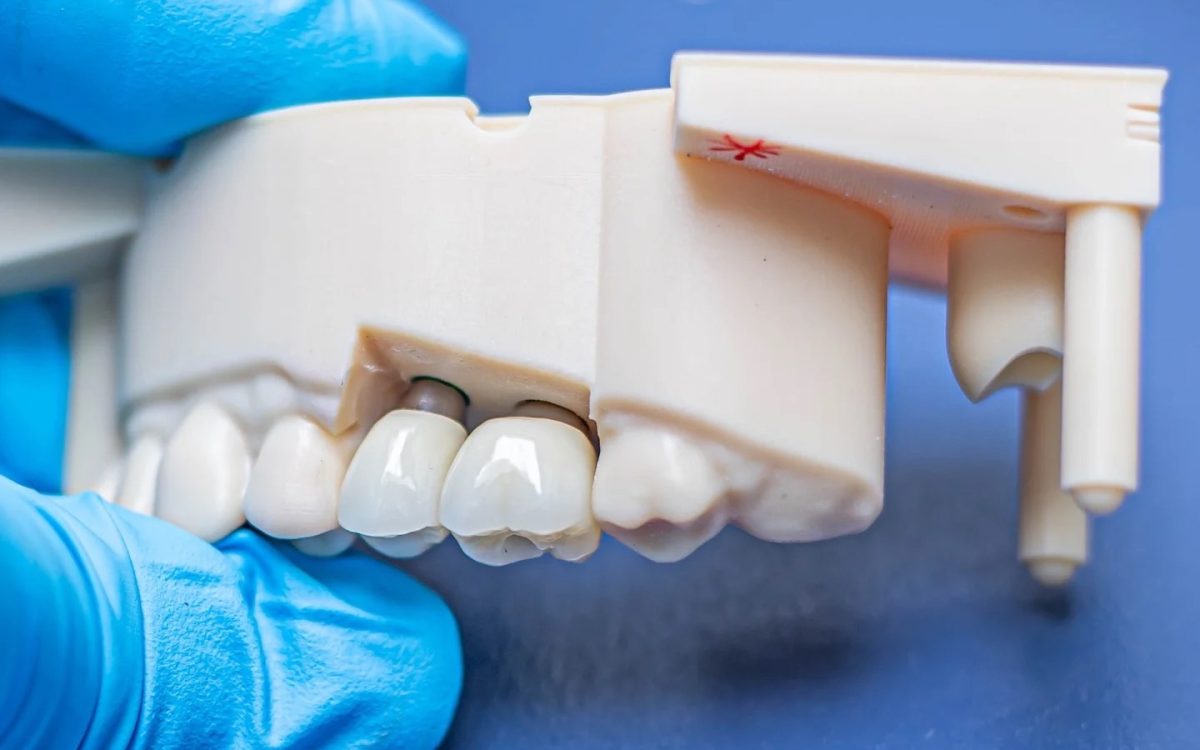
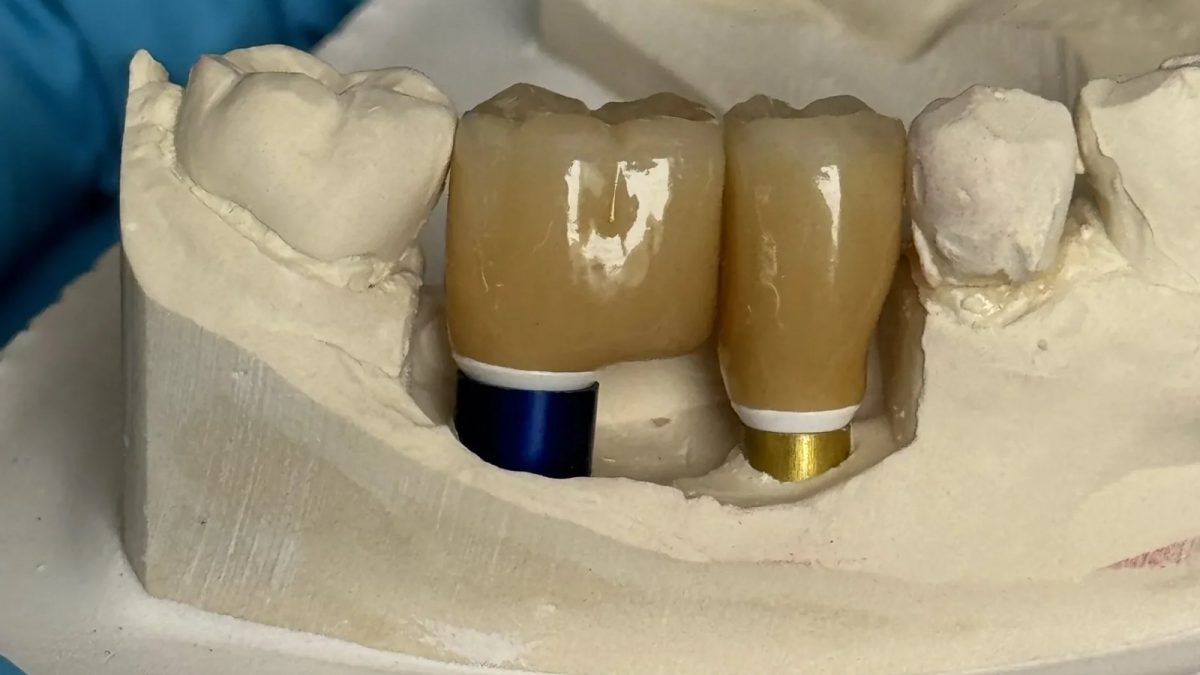
The CDT nomenclature for D6057 is “custom abutment, includes placement”, and its sibling D6056 is “prefabricated abutment, includes placement”. Two codes, one decision, and the difference between them is not quality. It is whether the part was designed for this implant in this site or selected from a range of standard geometries.
Every lab website, including parts of ours, will tell you custom is better. The published evidence is more interesting than that, and more useful. In routine esthetic-zone cases the soft tissue outcomes are statistically indistinguishable. In cases where the site is a long way from standard, the difference is large and measurable. Knowing which case you have in the chair is the entire decision, and it is worth more to you than a blanket recommendation either way.
What the code actually pays for
D6057 pays for a patient-specific part: the emergence profile, the margin position and contour, the screw-channel orientation, and the retention surface all designed to this case. D6056 pays for a stock part, modified and placed. The stock part is not a cheap part. It is a part manufactured to a standard, and standards work when the case is standard.
What that means practically is that the question “should this be custom” is a question about how far the site is from standard, in three specific dimensions: the angle the implant came in at, how deep and how evenly the tissue sits around it, and where the screw needs to come out. None of those three is visible on a prescription form.
Does a custom abutment give better soft tissue than a stock one?
On the routine case, the honest answer from the evidence is no, or at least not measurably.
A 2023 systematic review and meta-analysis in the Journal of Clinical Medicine (Lops et al., registered with PROSPERO) pooled three randomised controlled trials and three controlled clinical trials covering 230 patients and 230 implants in the esthetic zone, with follow-up from 12 to 36 months. It found no significant difference between prefabricated and CAD/CAM customised abutments on midfacial mucosal recession, interproximal papillae, or pink esthetic score at 12 months. The authors’ own conclusion is worth quoting to any rep who tells you otherwise: the use of customised CAD/CAM abutments in everyday practice should be based on a careful case-by-case evaluation.
Now the other side. A 2025 randomised controlled trial in Dentistry Journal (Robaian et al.) took a much harder case type, immediate implant placement into Class II extraction sockets, and randomised 48 patients evenly between customised CAD/CAM titanium abutments and stock titanium abutments. At 12 months the custom group showed shallower probing depth (1.75 mm versus 2.60 mm mesial, 1.69 mm versus 3.20 mm distal), a higher pink esthetic score (12.21 versus 10.41), and less crestal bone loss (1.75 mm versus 2.33 mm). Every one of those reached p less than 0.0001, with large effect sizes.
The authors are candid about the limits: 48 patients, one year, one surgical team, no formal examiner calibration. Do not read it as settled. Read it as a signal about which cases the custom part is doing real work in.
Put the two studies side by side and they are not contradicting each other. A standard part performs where the site is close to standard, and stops performing where it is not. The evidence is telling you to sort your cases, not to pick a default.
The four situations where we will tell you to go custom
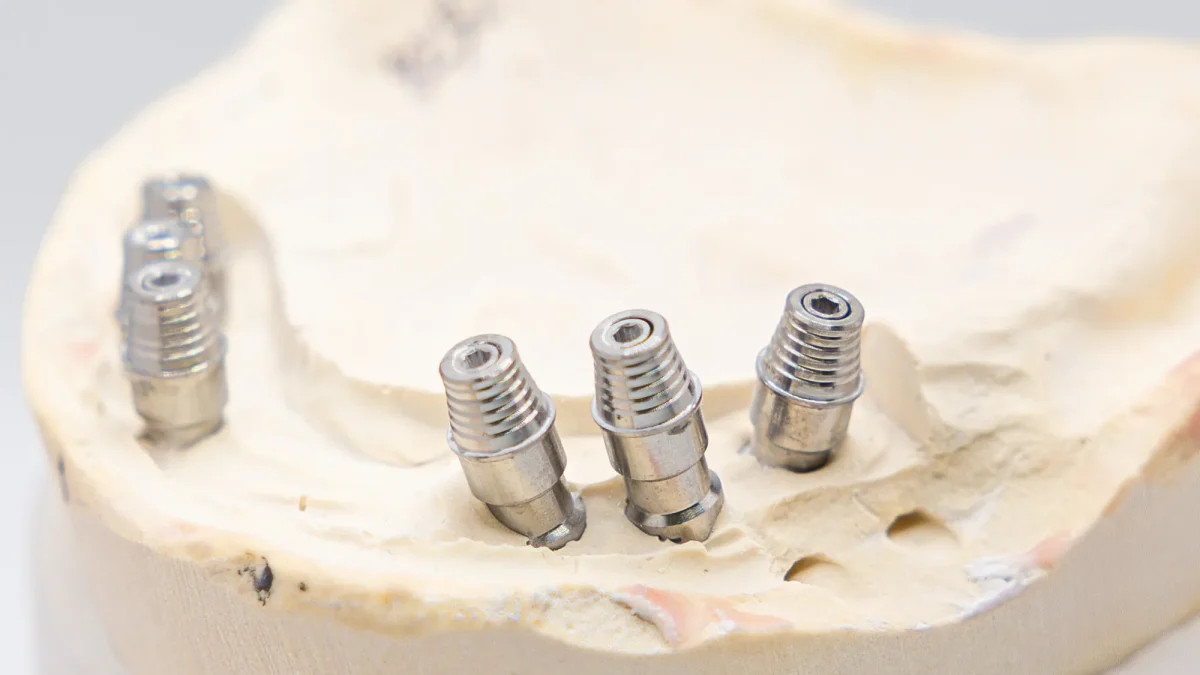
- Divergent angulation. The implant came in off-axis and the restoration has to come out on-axis. A stock abutment cannot correct what it does not know about. This is the most common genuine indication we see.
- Screw access in the wrong place. Covered in its own section below, because it is the one most dentists do not realise is available.
- Deep or unevenly deep margins. Where the tissue height differs materially from mesial to distal, a standard circumferential margin sits too high on one side and too deep on the other. One of those is a cement trap and the other is a visible metal line.
- Immediate placement into a large socket, anterior. This is the exact case type the 2025 trial tested, and it is the one where the geometry gap between the implant platform and the tissue the patient walked in with is widest.
The angled screw channel, and why it changes the retention argument
The cement-retained versus screw-retained decision is usually presented as a fixed trade: cement-retained for esthetics because there is no access hole in the facial, screw-retained for retrievability. On an anterior implant angled to the facial, that reads as a forced choice.
It often is not. An angulated screw channel abutment can redirect the screw access up to 25 degrees through a full 360 degree radius, which on the systems we work with, including Nobel Biocare and Straumann, is usually enough to move the access from the facial of an incisor to the palatal. The case that looked like it had to be cement-retained becomes a screw-retained case, and you keep retrievability without a hole in the visible surface.
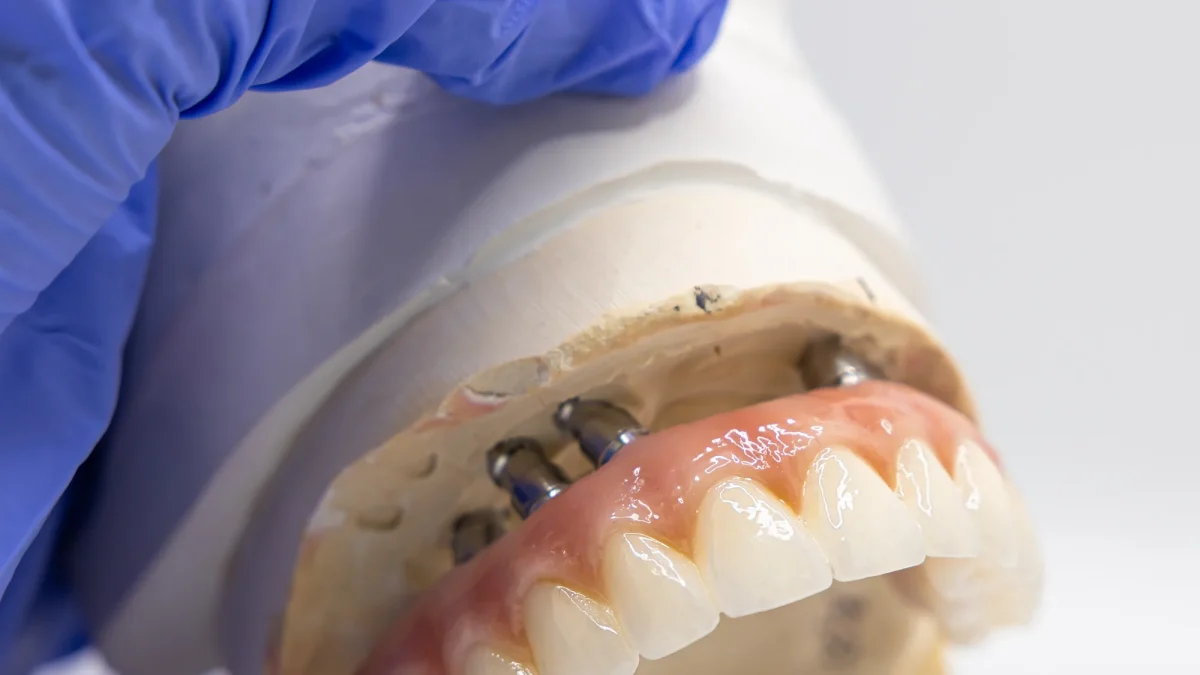
That decision has to be made before the abutment is designed, not after the crown is milled, which is why it belongs on a planning call and not on a prescription form. Our screw-retained restorations page covers the fabrication side.
And the cases where we will tell you stock is fine
A routine posterior single unit, implant placed close to on-axis, tissue height even around the platform, no esthetic demand at the margin, screw access already landing somewhere sensible on the occlusal. On that case a stock abutment is the correct part, the 2023 meta-analysis is the relevant evidence, and specifying custom is spending the practice’s money and the patient’s chair time on geometry the case did not need.
We will say that on the call. We would rather turn down the more expensive line item and keep the account for the next decade than sell a custom part into a case that did not call for one. That is also why our custom abutment page says out loud that stock works on routine posterior cases where soft tissue and angulation are unremarkable.
Custom or stock
We will tell you when stock is right.
Send the scan. If custom is not worth it on this case, fifteen minutes will save you the cost.
The code pairing offices get wrong
This one costs practices real money and it is a two-sentence fix. Reference values, confirm against your current CDT set and the carrier:
- D6056, prefabricated abutment, includes placement.
- D6057, custom abutment, includes placement.
- D6058, abutment supported porcelain/ceramic crown.
- D6065, implant supported porcelain/ceramic crown.
- D6066, implant supported porcelain fused to metal crown (titanium, titanium alloy, high noble metal).
If you report an abutment code, the crown on top of it is D6058, not D6065. D6065 describes a crown that engages the implant directly, as a restoration with no separately reported abutment. So the two clean patterns are: D6057 plus D6058 for a crown on a custom abutment, or D6065 on its own for a crown restoring the implant directly. Material and retention detail for the crown itself sits on our implant crowns page. Reporting D6057 and D6065 together describes a restoration that does not exist, and it is the pairing we hear about most from front desks working a denial.
What we need to design one
From our intake requirements, and all of it takes one scan appointment:
- A digital scan or impression with the scan body or transfer in place. Without it we have the tooth position and not the implant position.
- The implant system and platform. We keep original abutment libraries for Nobel Biocare, Straumann, Astra Tech, Zimvie and BioHorizons, and we have almost certainly worked yours.
- A soft tissue photo. This is the input that decides margin position, and it is the one most often missing.
- A stump shade if the abutment will be visible at the margin.
- Whether you want the restoration screw-retained or cement-retained, or want us to tell you what the angulation allows.
Missing one of those is a reason to call us, not a reason to wait. We would rather start the planning conversation a piece of information short than design to an assumption.
Common questions
What is the dental code D6057?
D6057 reports a custom fabricated abutment, and the descriptor includes placement. It is the abutment itself, designed for the case rather than selected from a stock range, not the crown that seats on it. The crown is reported separately. Confirm against your current CDT set and the carrier.
Can you bill D6057 and D6058 together?
Yes, and that is the correct pairing. D6057 reports the custom abutment, D6058 reports the abutment supported crown that seats on it. The error we see is D6057 reported alongside D6065, which describes a crown engaging the implant directly with no separately reported abutment.
What is the difference between D6056 and D6057?
Both report an abutment and both include placement. D6056 is prefabricated, taken from the manufacturer’s stock range. D6057 is custom fabricated, designed to the case for emergence, angulation and screw access. The coding difference is simply which one was actually delivered.
Titanium, zirconia, or a hybrid abutment?
Titanium for strength and for anything posterior or under load. Zirconia or a titanium base with a zirconia superstructure where the margin is shallow enough that a metal abutment would show through thin tissue. The decision follows tissue thickness and margin depth, and on a thin biotype it is worth a look at the photo before we commit.
Will a custom abutment fix an implant that was placed badly?
Within limits, and the limits are worth being straight about. Up to roughly 25 degrees of screw-channel correction and a reasonable amount of emergence reshaping, yes. Beyond that the restoration starts cantilevering off the implant axis and you are buying a mechanical problem to solve an esthetic one. Send the scan and we will tell you which side of that line the case sits on.
Does custom add turnaround time?
Some, because the part is designed rather than picked. The relevant comparison is not custom against stock, it is custom against the remake, the tissue management and the second appointment that a wrong-geometry stock part can generate. On a routine case that comparison favours stock. On the four cases listed above it does not.
Can you tell from the scan alone?
Mostly. The scan gives us angulation, platform position and adjacent contours, which decides the majority of cases. Margin depth and material choice want the soft tissue photo as well.
New to any of the terminology above? Our glossary of dental terminology covers the implant vocabulary. When you want to open an account, becoming a client takes no contract and no minimum, priced per case.