A dental lab fee schedule is the least useful document in the lab selection process, which is awkward to admit as a laboratory. It is a per unit price list. It tells you almost nothing about what a case will actually cost your practice, because the costs that matter are the ones a schedule does not have a line for.
This is how to read one properly, where lab fees are supposed to sit against your production, and the four or five questions that separate a cheap schedule from a cheap laboratory. We are obviously an interested party here, so where the argument favours labs we have said so.
Where lab fees sit in practice overhead
Start with the benchmark, because it tells you whether you have a lab problem at all. The commonly cited figures in the practice management literature, drawn from the ADA Health Policy Institute Survey of Dental Practice, put laboratory fees at roughly 6 to 8 percent of collections for a general practice, with some breakdowns running the range to 7 to 10 percent. National averages come in a little lower at around 5 to 6 percent, which for a practice at reported average billings is roughly 47,000 to 56,000 dollars a year. Above 10 percent is usually treated as a red flag worth investigating.
For context, the same source set benchmarks healthy total practice overhead at 59 to 62 percent of collections. So laboratory fees are a meaningful line but they are not the line that decides profitability, and squeezing them is rarely where the money is. Practices that systematically manage lab spend report reductions in the region of 10 to 13 percent, which on a 50,000 dollar annual spend is real money and is also not going to save a practice running at 70 percent overhead.
One caveat on all of those percentages before you benchmark yourself against them. They are survey figures rather than audited accounts, and the literature behind them is a repeated annual survey of self reported practice numbers. Treat them as a range to sit inside rather than a target to hit, and expect a prosthetically heavy practice to sit above the general practice band for reasons that have nothing to do with the laboratory.
The more useful diagnostic is what a high number means. Lab spend above the benchmark usually points at one of three things, and only one of them is the fee schedule. Premium laboratory work bought for routine cases. Work outsourced that could be done chairside. Or a high remake rate. That third one is the expensive one and we come back to it below.
What a dental lab fee schedule does not tell you
A schedule gives you a number per code. Here are the things that change your real cost and are usually absent, vague, or in small print at the back.
- The remake policy. Who pays, for how long after delivery, and whether a remake for a clinical reason is treated differently from a laboratory fault. This is the single most important term in the relationship and it is often one sentence.
- Shipping, both directions. Inbound and outbound, and whether it is free above a case value or a case count.
- Digital design fees. Some labs charge separately for design on a scanned case, some do not. On a practice sending a hundred units a year this moves the total more than the headline crown price.
- Model and die fees. Printed models on a digital case are sometimes included and sometimes a line item.
- Rush fees, and what counts as rush. A lab with a slow standard turnaround and a cheap headline price will collect the difference in expedite charges.
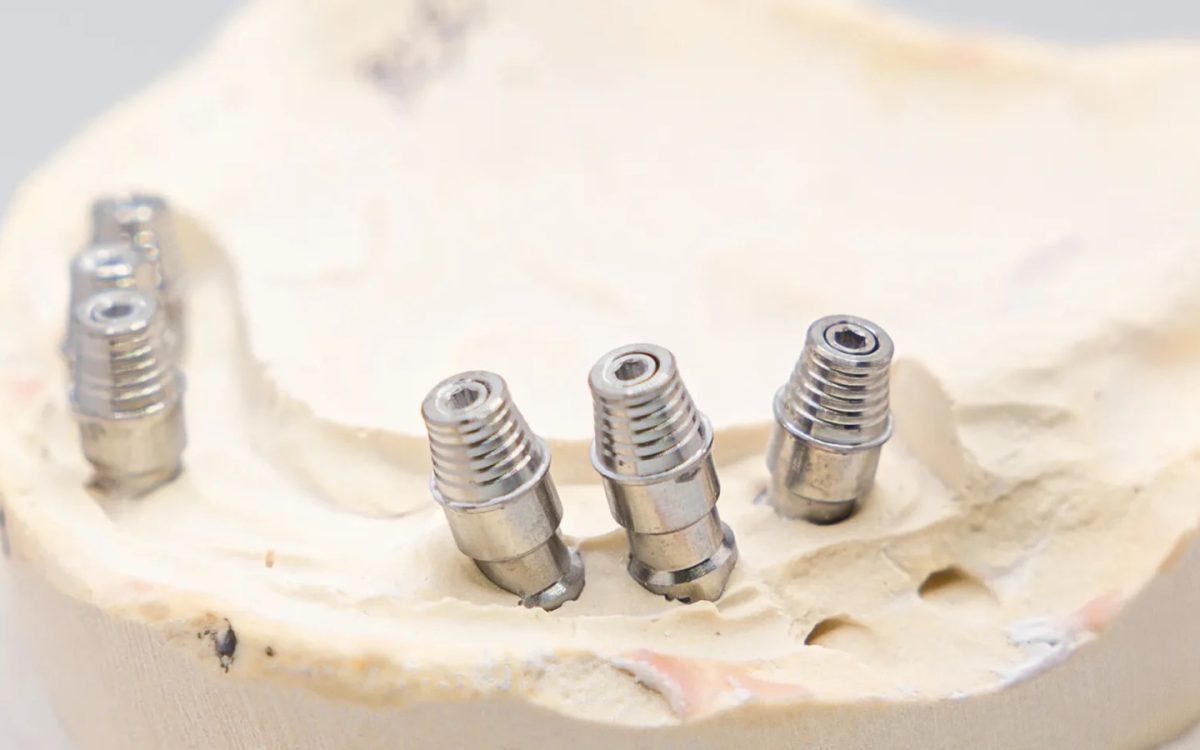
- Implant components. Whether the abutment, the Ti base or the screw is included or billed on. This is where implant case totals diverge most, and the component choice is a clinical decision as much as a cost one, covered in custom versus stock abutment.
- Custom shade and characterisation. Included, or extra, or unavailable.
- Restocking or cancellation. What happens when a patient does not return and the case is already milled.
None of that is sinister. Every laboratory has to charge for it somewhere. The point is that two schedules with the same crown price can produce invoices 20 percent apart, so comparing headline numbers compares almost nothing. A dental lab fee schedule is a starting point for a conversation rather than a quote.
Remake rate is the number that decides real cost
This is where a cheap schedule becomes an expensive laboratory. The commonly reported national average for laboratory remakes sits around 4 percent, with the range across labs running from about 1 percent up to 6 or 7 percent. A survey of dentists found nearly one fifth reporting a remake rate above 4 percent. At 20 crowns a month, a 4 percent rate is around 10 remakes a year. Worth noting that the literature here is thinner than it should be, because most published remake figures come from laboratories and vendors reporting on themselves rather than from independent audit.
Now price a remake properly, because the laboratory fee is the smallest part of it. You lose the appointment, which is production you cannot recover in a booked schedule. You lose the goodwill of a patient who was told the crown would fit. You pay the shipping again. You pay for the temporary again. A practice comparing a schedule that is 40 dollars cheaper per unit against a laboratory with double the remake rate is choosing to save 40 dollars and spend an hour of chair time.
The workflow side of this is measurable. Laboratories commonly report remake rates below 1 percent on digitally initiated cases against 3 to 4 percent on conventional impressions, and at least one laboratory has published 3 percent conventional against under 1 percent digital across its own work. Studies comparing digital and conventional impressions point the same way on accuracy. That gap is not about the fee schedule at all. It is about whether the case arrived with usable information, which is why we spend so much of our time on scanner workflows and what a digital laboratory actually changes.
How to compare two schedules honestly
- Compare your actual case mix, not the price list. Pull your last three months of laboratory invoices, count the units by code, and price that basket against both schedules. A lab that is cheap on a full zirconia crown and expensive on removables is the wrong lab for a denture heavy practice and the right one for a crown and bridge practice.
- Normalise to a delivered case. Add shipping, design, models and components to the unit price before you compare anything.
- Ask for the remake rate as a number. Any laboratory that tracks quality can tell you. A laboratory that cannot produce the figure is telling you something.
- Check the codes you actually send. A schedule organised by code is easier to audit. Ours run per code, so D2740 class crown work, D5110 completes, D5213 cast partials, D5225 flexible partials, D6057 custom abutments and D9944 occlusal guards each carry their own line.
- Price the turnaround. A cheaper unit with three extra days is a scheduling cost, and on a practice that books six weeks out it can be a bigger cost than the fee difference.
- Test with real cases before you move the practice. Send five cases across your normal range. A schedule cannot tell you whether the anterior shade work is any good.
Why our prices are not on this page
Fair question, and worth answering directly rather than leaving you to notice. IDA prices per case and the full breakdown goes out on request rather than being published as a downloadable dental lab fee schedule. Cases are priced per case, there is no written contract for a new account, and there are no volume tiers or annual minimums, all of which is set out on become a client.
The honest trade is that a published PDF is easier for you to skim and a per case quote is more accurate for anything that is not a plain single unit. Where a case involves components, a custom shade, or a design decision that has not been made yet, a list price is a guess and the quote is not. If you would rather just see numbers, ask and we will send the breakdown.
Questions worth asking any laboratory before you switch
- What is your remake rate, and how do you calculate it.
- What is your remake policy in writing, and how does it treat a clinical remake against a laboratory fault.
- What is included in the unit price, specifically design, models, shipping and implant components.
- What is your standard turnaround by product, and what triggers a rush charge.
- Who will actually be working my cases, and can I speak to them about a case.
- What happens if I am not happy with an anterior case.
That last one matters more than the schedule. A laboratory that will remake an esthetic case without an argument is worth more per year than a lower unit price, and it is the thing least likely to appear in any price list. Our for dentists page covers how case planning works, and the full product line sits under crowns and bridges, implant restorations and digital dentures.
Questions from the prep
What should lab fees be as a percentage of production?
The commonly cited benchmark is 6 to 8 percent of collections for a general practice, with national averages nearer 5 to 6 percent and above 10 percent treated as worth investigating. Specialty and heavily prosthetic practices sit higher for obvious reasons, so the benchmark is a prompt to look rather than a target to hit.
Is a cheaper lab actually cheaper?
Only if the remake rate and the turnaround hold. The unit price is the part of the cost you can see. Chair time spent redoing a case is the part that does not appear on any invoice, and it is usually the larger number.
Should I expect a discount for volume?
Plenty of laboratories offer tiers. We do not, and we say so on the pricing page, because a tier structure means the practice sending twelve cases a month is subsidising the one sending eighty. Neither model is wrong. Just know which one you are in.
Why do implant cases vary so much between labs?
Because components dominate the total and labs treat them differently. Ask specifically whether the abutment, the titanium base and the screw are in the quoted price. That single question explains most of the variance you will see.
How often should a fee schedule change?
Annually is normal, and material costs move it. What matters more is being told before it happens rather than finding it on an invoice.
Pricing
Ask for the full breakdown
Per case pricing, no contract, no minimums, no volume tiers. Tell us your case mix and we will send the numbers that apply to it rather than a generic list.
Written by Adam Brewer, General Manager at International Dental Arts. IDA has been a family founded dental laboratory in Tulsa since 1984, working with independent practices across the country. If you want a case reviewed before you commit, get in touch.