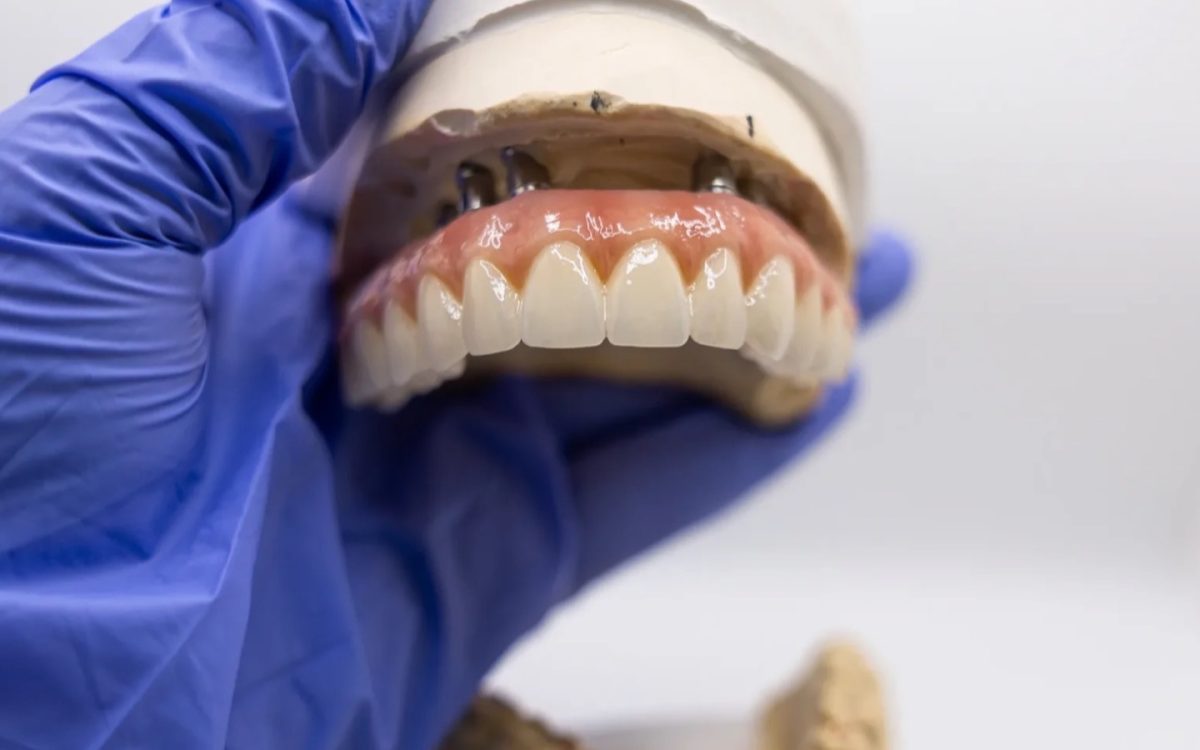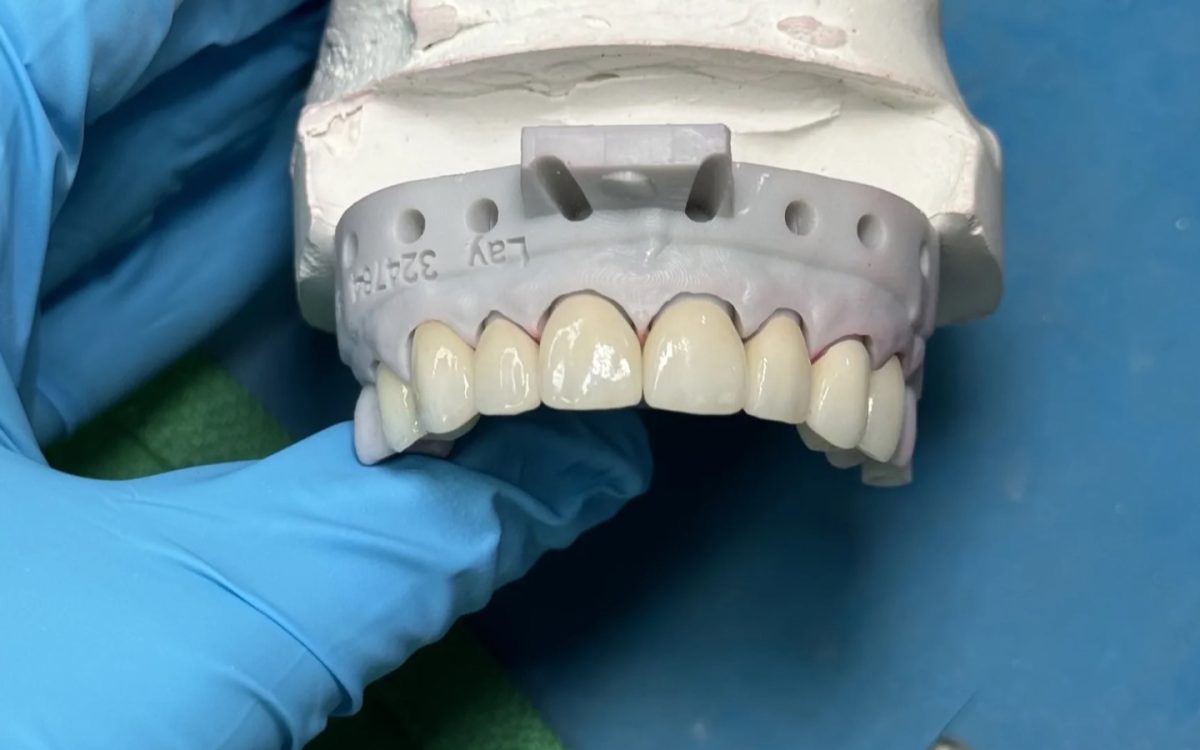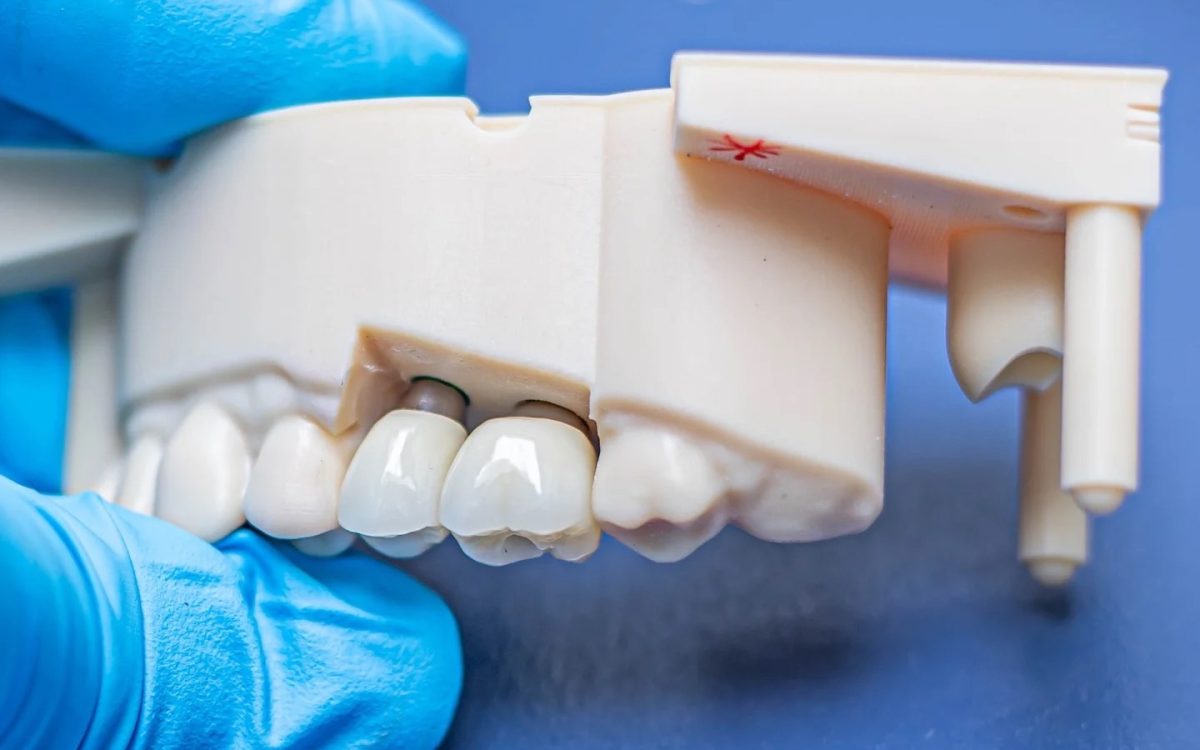
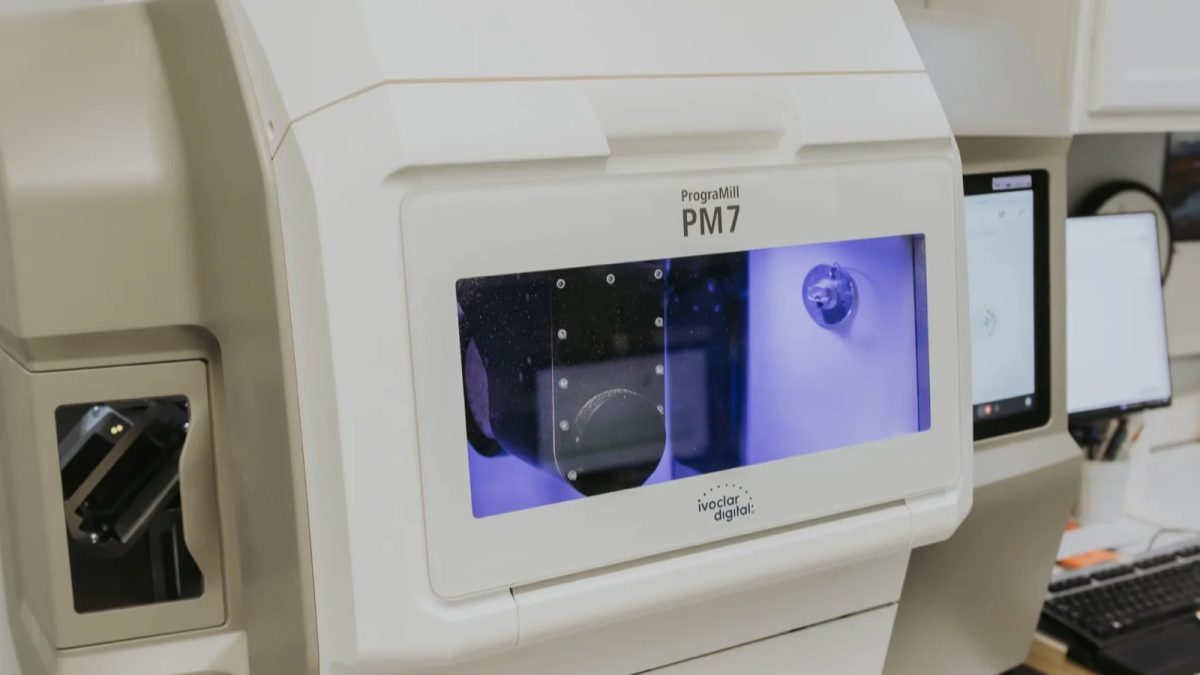
A digital dental lab is not a product a laboratory sells you. It is a change in where the information lives. In an analogue workflow the master model is the only record of the case, and when it is gone the case is gone. In a digital workflow the case is a file, and a file does not shrink, warp, get dropped, or need posting back.
Here is what the evidence says actually changes for a practice, the places digital is measurably worse, and why you do not need a scanner to use one.
The number that matters most is chair time
If you read one figure from the digital denture literature, make it this one. A comparison of digital against conventional complete dentures recorded total chairside time of 154.31 minutes on average for the digital workflow against 218.00 minutes for the conventional one, a difference of roughly 64 minutes per patient. Patients also required fewer post-insertion visits.
That is not a marketing claim about efficiency, it is an hour of surgery time per denture patient, and it is the reason most practices that switch do not switch back. Patients in the same body of work reported preferring the digital route, citing fit and reduced chair time.
Accuracy, and the difference between milled and printed
This is where most conversations about a digital dental lab go wrong, because milled and printed get treated as one thing and the evidence separates them clearly.
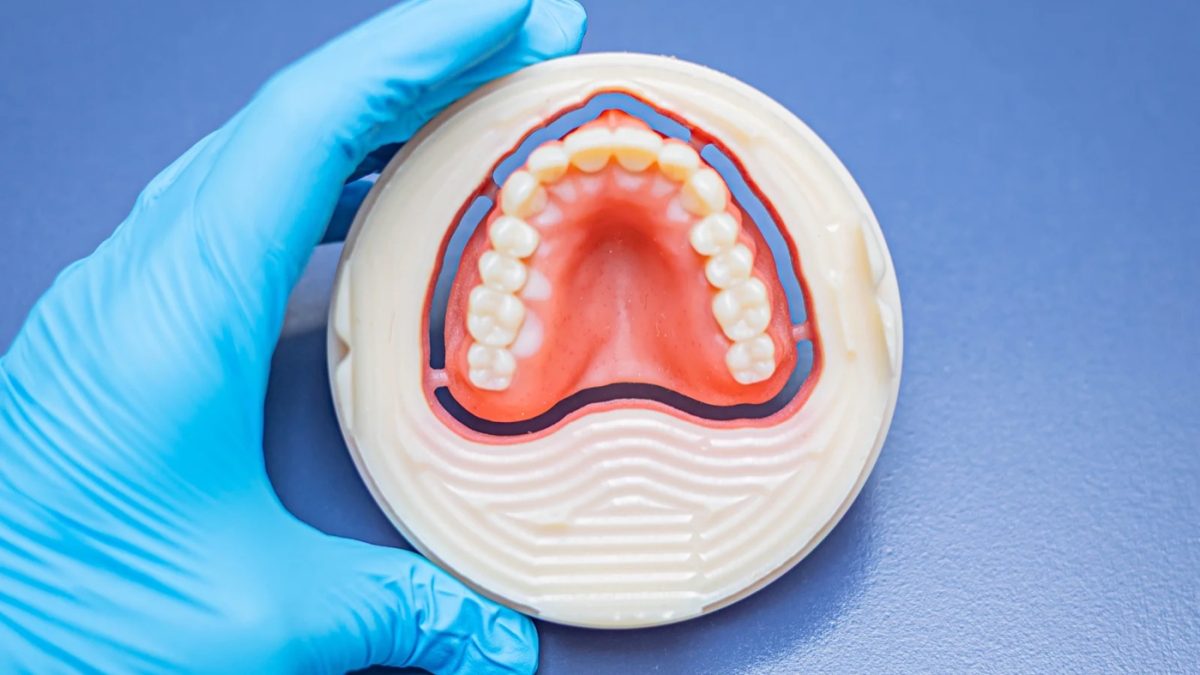
- A milled denture is the accuracy benchmark. Systematic review and meta-analysis work reports milled dentures showing better trueness and fitting accuracy than both 3D printed and conventional dentures.
- A 3D printed denture base still beats conventional on trueness. A clinical study of intaglio surface trueness reported a median of 176.9 microns for printed bases against 342 microns for conventionally processed ones. Printed is roughly twice as true as the analogue process it replaced.
- Conventional is the least true of the three, which is worth sitting with, because it is the process most practices grew up trusting.
Most studies report clinically acceptable occlusal trueness and adaptation for digital complete dentures, with adaptation similar to or better than conventionally fabricated ones. On the mechanical question, digital wins.
Where digital is measurably worse
A laboratory that will not tell you this is selling equipment rather than outcomes. The reported limitations of the digital workflow are specific and they cluster in one place.
- Establishing occlusion and digital tooth setups. Named explicitly in the review literature as a limitation of the digital route. The software will happily produce a setup that is geometrically fine and clinically wrong.
- Printed dentures specifically. Reported problems include poor esthetics, poor retention, inability to balance the occlusion, and printing resolution limits. Printed has a real role and it is not automatically the equal of milled.
- A scan does not improve a preparation. It captures what is there more accurately, which means it captures a poor margin more accurately too. Digital is unforgiving in a way stone is not.
So the honest position is that digital is more accurate at manufacturing and no better at judgement. Shade, characterisation, how an anterior emerges, whether the case wants a try-in. Those are still done by a person, which is what our case planning exists for.
What genuinely changes for the practice
- Reorders stop starting from zero. A lost or damaged prosthesis is remade from the file. No new impression and no appointment to take one.
- The record does not degrade. A stone model chips and a stored impression distorts. A file does neither, and it is still exact in 5 years.
- Consistency across a remake. The second one is the same as the first rather than a second attempt at the first.
- Fewer shipping days. The case arrives the moment you finish scanning it.
- Design review before manufacture. On a case that matters we can show you the design and change it while changing it is still cheap.
You do not need a scanner to use a digital dental lab
This is the misconception worth clearing up, because it stops practices asking the question at all.
A practice with no scanner can work with a digital dental laboratory without changing anything about how it takes impressions. A conventional impression is digitised at our end and the case runs through a digital workflow from that point. Everything above still applies, including the stored file and the repeatable remake.
If you do scan, we accept files from every major system including iTero, TRIOS, Medit and Primescan, with detail on our intraoral scanner page. If you are weighing up a scanner and want to know what actually changes day to day before you spend the money, that is a fair conversation to have with the laboratory receiving the files.
Working digitally
Send one case and see what comes back.
No contract, no minimum, and you can scan it or post it. The point of a first case is that you find out what the fit is like before you commit anything.
Where digital earns its keep first
Four case types where the file being permanent changes the clinical decision rather than just the logistics.
- Complete dentures. The strongest argument, and where the chair time and trueness evidence above is drawn from. A patient who loses a denture is a remake from file rather than a full restart. Our workflow is on the digital dentures page.
- Full arch implant cases. The provisional becomes the blueprint, so tooth position the patient has already approved carries forward rather than being recreated from notes. Covered in fixed or removable full arch implants.
- Anything you expect to remake. A high risk case, a heavy bruxer, a patient with a history of fractures. The second one costs less than the first and matches it.
- Immediate dentures. The pre-extraction tooth position is captured permanently rather than surviving only in a photograph, which is the single hardest thing about that appliance. See immediate dentures.
Against that, a single posterior crown on a straightforward preparation is a straightforward case either way, and nobody should pretend otherwise.
Does digital change the coding?
No, and it is worth stating because practices ask. The fabrication method does not change the code.
- D5110 complete denture, maxillary, and D5120 mandibular, whether the appliance is milled, printed or conventionally processed.
- D5130 and D5140 the immediate equivalents, same rule.
- What does change is the replacement economics. A duplicate or remake from an existing file skips the impression stage, which is where a meaningful share of the cost and the chair time normally sits.
- Relines are still reported separately and still follow the tissue rather than the workflow, as set out in hard and soft denture relines.
What it costs the practice to start
Worth setting out honestly, because the barrier most practices imagine is not the real one.
- Nothing, if you keep taking conventional impressions. We digitise at our end. No equipment, no training, no change to your appointment book, and you still get the stored file and the repeatable remake.
- A scanner, if you want the chair time back. The roughly 64 minute saving per denture case in the literature comes largely from collapsing appointments, and that requires the scan to happen in your surgery rather than ours.
- A short adjustment period either way. The prescription changes very little. What changes is that a poor margin or an unclear finish line comes back to you as a question sooner, which feels like friction and is actually the system working.
- No minimum and no contract with us, which means a practice can test the claim on one case rather than committing to a workflow on the strength of an article.
If you already own a scanner and are not sending cases digitally, the most common reason we hear is uncertainty about whether the laboratory can take the file format. We accept every major system, so that one is easy to settle in a phone call.
Questions to ask any digital dental lab
- Who looks at my case, and can I speak to them? The difference between laboratories is almost never the mill.
- Milled or printed, and why for my case? Given that the accuracy evidence separates them, a laboratory that treats them as interchangeable is not paying attention.
- What happens if I do not scan? A good answer is post it and we will digitise it. A bad answer is a sales pitch for a scanner.
- How long do you keep the file, and can I have it? It is your patient’s data and the answer should be straightforward.
- What do you do when the margin is unclear? The honest answer is that they phone you.
- Can I see the design before it is made? On a full arch or an anterior case this should be a yes.
Questions from the prep
What is a digital dental lab?
A laboratory where the case exists as a file rather than as a model, from design through to manufacture by milling or printing. The practical difference is that the case is stored, repeatable and exact, rather than being a physical object that degrades and is eventually thrown away.
Is a milled denture better than a printed one?
On accuracy, yes. Milled dentures report better trueness and fitting accuracy than printed in the review literature, and printed dentures carry documented limitations around esthetics, retention and balancing the occlusion. Printed has a genuine role, particularly for try-ins and duplicates, and it is not the equal of milled for a definitive appliance.
Do digital dentures cost more?
Not necessarily, and the replacement economics differ. Because the design is on file, a duplicate or remake skips the impression stage. Retrospective work comparing digital and conventional removable complete dentures has looked specifically at cost efficiency alongside clinical effectiveness, and the chair time saving is a real part of that arithmetic for a practice.
Is a milled restoration better than a pressed one?
Different, and it depends on the material and the case. Milling is consistent and repeatable. Pressing still has a place. A laboratory that only offers one will tell you theirs is better, which is itself a reason to ask what else they can do.
How long does the file get kept?
Indefinitely, and that is much of the point. A case sent this year is remakeable in 5 years or 10 without the patient sitting for another impression.
Does going digital change what I send on the prescription?
Very little, and the things that matter stay the same. Shade, opposing arch, what the patient wants, and anything unusual about the case. A file tells us the shape. It does not tell us the intent, and given that establishing occlusion and tooth setup is the documented weak point of the digital workflow, the intent is the part that decides whether the case comes back right.
Written by Adam Brewer, General Manager, with nearly two decades in the dental implant industry at International Dental Arts. IDA has been a family founded dental laboratory in Tulsa since 1984, working with independent practices across the country. If you want a case reviewed before you commit, get in touch.