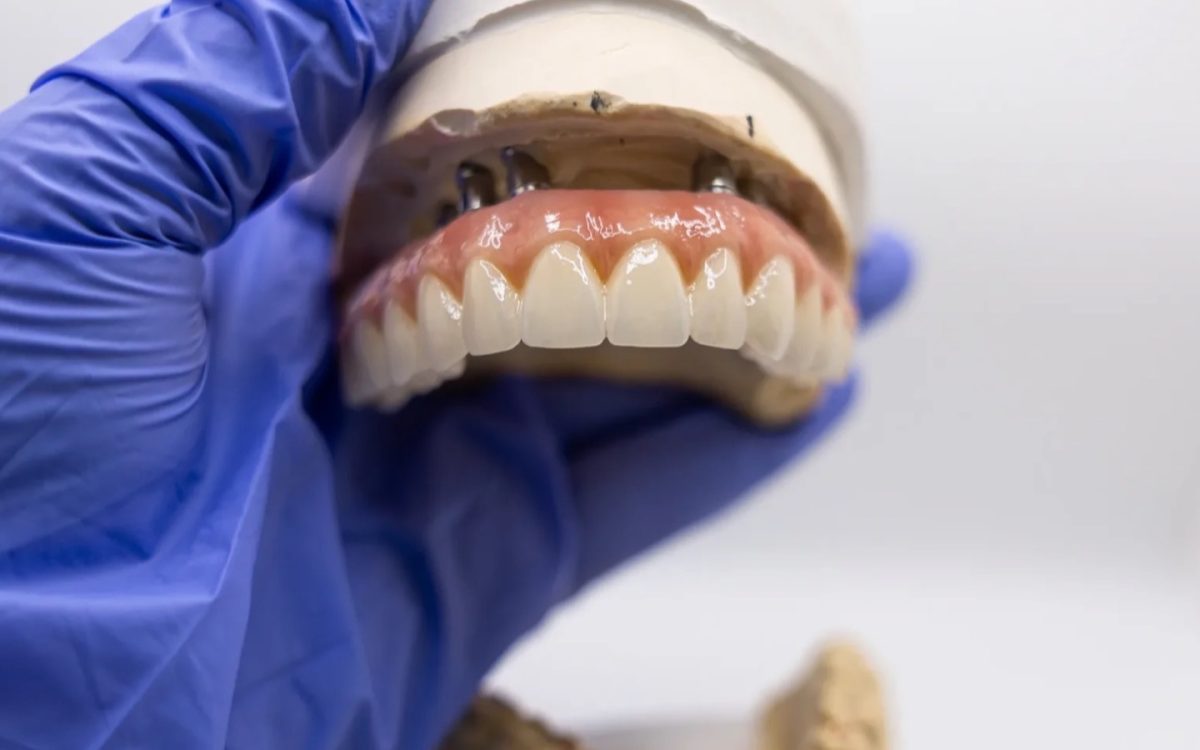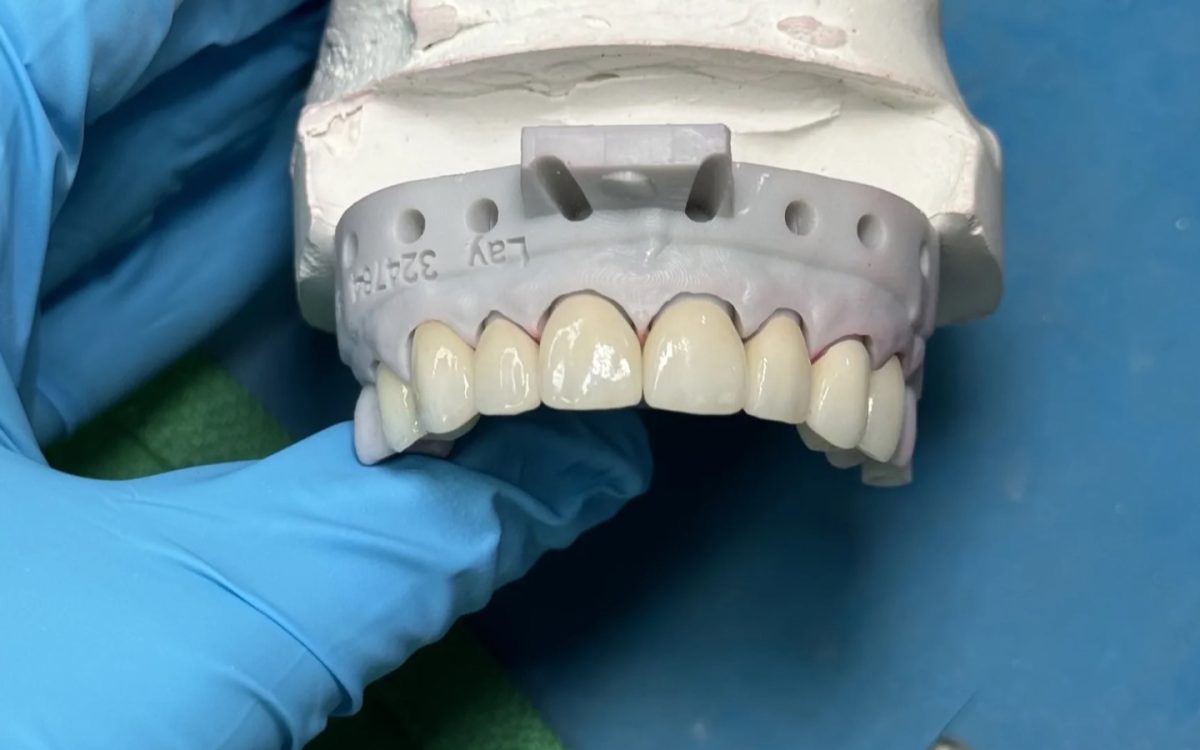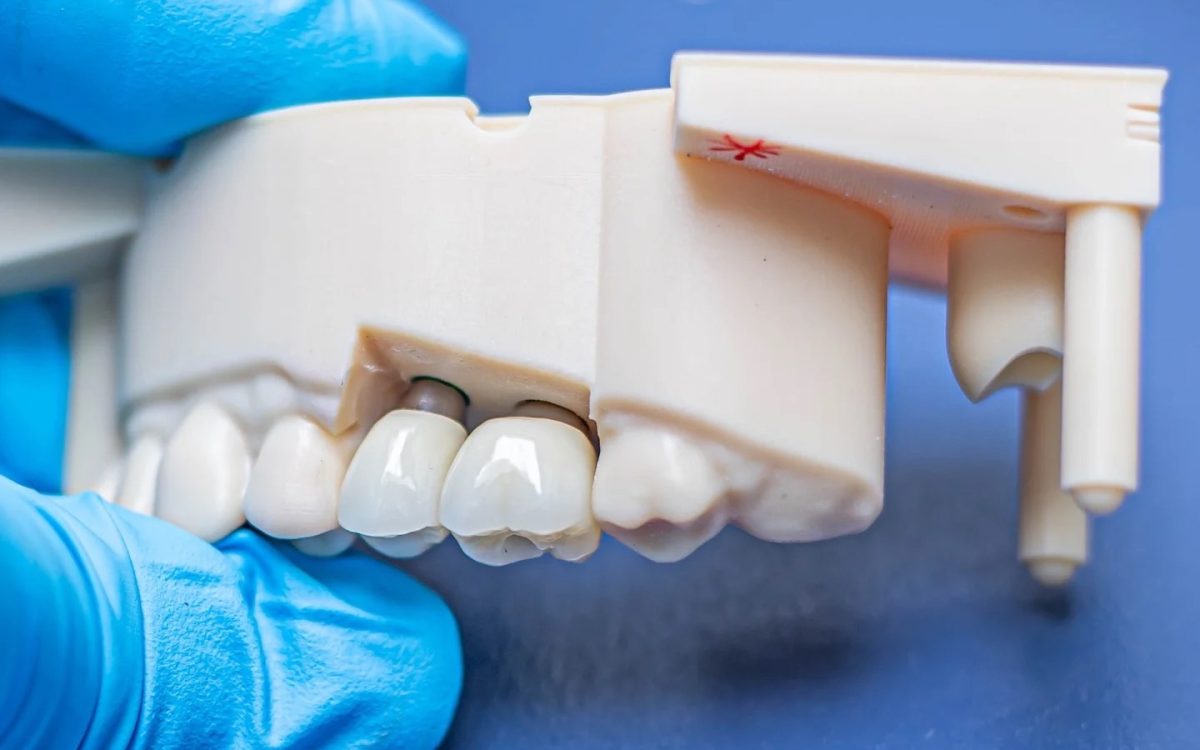
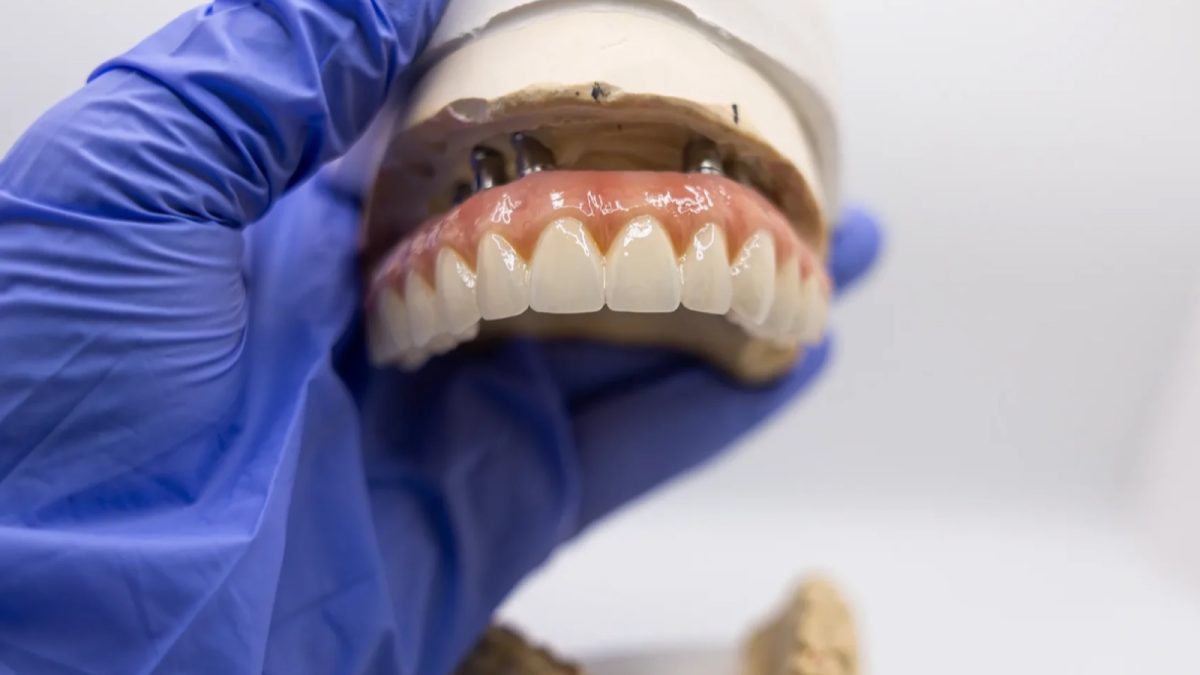
Full arch dental implants end up as one of three prostheses, and which one is decided long before anyone takes a final impression. Fixed and screw retained, fixed and cemented, or removable on attachments. Each asks for a different number of fixtures, a different amount of restorative space, and a different conversation with the patient about maintenance.
Here is how we separate them at the bench, and one pair of numbers from the literature that should change how you plan every one of these cases.
The implants outlive the prosthesis, and it is not close
This is the single most useful thing to know about full arch dental implants, and most treatment plans are written as though the opposite were true.
Implant survival is excellent. Large retrospective work reports cumulative implant survival of 93.3% at 10 years (95% CI 91.3 to 95.3) and 87.1% at 20 years (95% CI 83.4 to 90.8). All-on-4 specific reviews report maxillary implant survival around 94.7% over 5 to 13 years and mandibular survival around 93% over 10 to 18 years.
Prosthesis survival is a different story. Cumulative prosthesis survival in the same body of work runs at roughly 80% at 5 years and 60% at 10 years. Complication-free survival is lower again: about 61.8% at 1 year, 26.5% at 3 years and 14.7% at 5 years, with a median complication-free time of around 3 years. By year six, effectively 100% of prostheses had experienced at least one complication.
So the fixtures hold and the thing we make wears out. The leading prosthetic complication reported is fracture of the acrylic prosthesis, and the design factors named as contributing are excessive cantilever loading, occluso-gingival length, and lack of stability and passive fit. Every one of those is a prosthetic decision rather than a surgical one, which is the honest argument for planning full arch dental implants with the laboratory rather than sending them to one.
The three outcomes for full arch dental implants
- Fixed, screw retained. Held by the fixtures and removable only by you. Retrievable at review, which matters more than most patients realise. This is the usual all on 4 or All-on-X endpoint, and the most common fixed full arch outcome we make.
- Fixed, cemented. Fewer access holes and better anterior esthetics. Harder to retrieve, and retained cement around implants is a serious problem rather than an inconvenience.
- Removable on attachments. The patient takes it out. Easier hygiene, lower fixture count, and it needs the honest conversation in implant supported dentures versus implant retained.
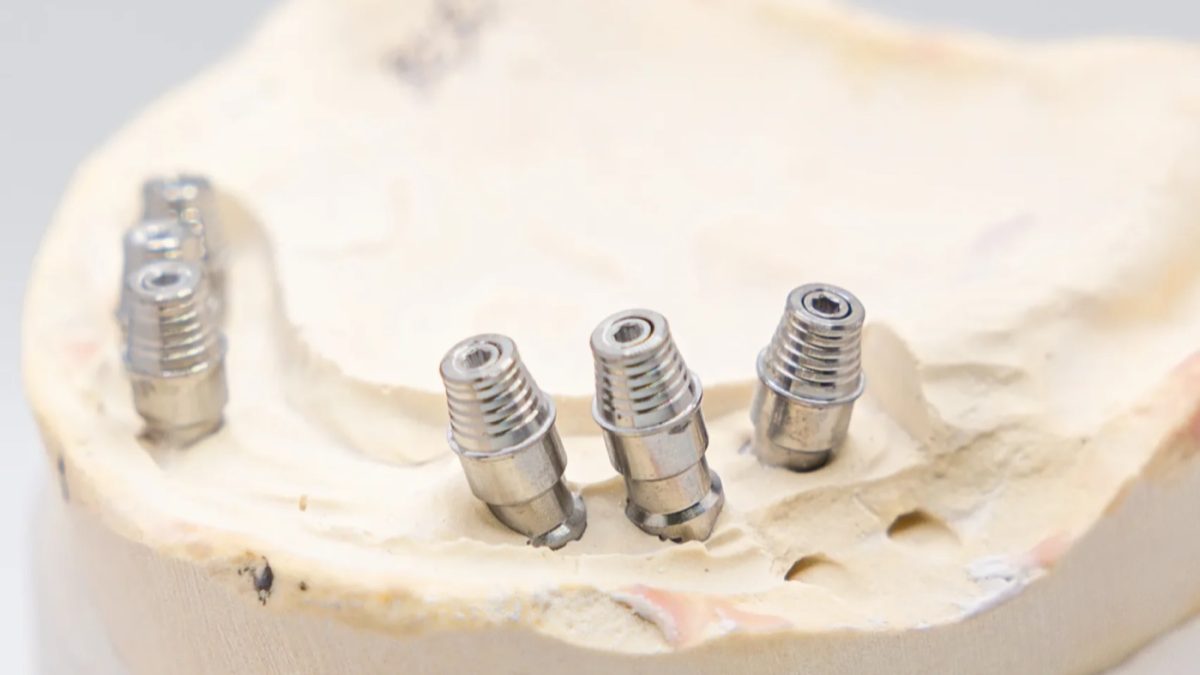
Restorative space decides more than patient preference
The most common reason a full arch plan changes after the scan reaches us is space. A fixed prosthesis needs room for a framework, the material over it, and the screw channels through it. A removable one needs room for attachments and enough acrylic around them to stop it fracturing.
Occluso-gingival length appears explicitly in the literature as a design factor affecting long-term prosthetic success, which is the academic way of saying that a prosthesis built too tall or too thin does not last. Space is a surgical decision as much as a prosthetic one, because it is set by where the platforms sit relative to the opposing occlusion. Once the implants are in, the prosthesis has to work with what it has, and the patient inherits whatever compromise that forces.
Cantilever, and the number nobody wants to hear
Excessive cantilever loading is named alongside passive fit as a contributor to prosthetic failure. On an All-on-4 style case the distal cantilever is doing real work every time the patient chews, and every millimetre you add behind the terminal fixture increases the load on it.
We will tell you what the planned fixture positions allow before the guide is made. Where the cantilever the patient wants is longer than the case will carry, the choices are more fixtures, a shorter arch, or accepting a shorter service life on the prosthesis. All three are legitimate. Discovering the problem at delivery is not.
Implant position, and what screw channels tell you
Screw access channels have to emerge somewhere. On a posterior tooth nobody minds. Through the labial of an upper central, everybody minds, and at that point you are choosing between a cemented prosthesis and an angulated channel.
This is the most useful thing a laboratory can contribute before surgery. Given the planned positions we can tell you where the channels land, and that one piece of information changes surgical plans more often than anything else we say.
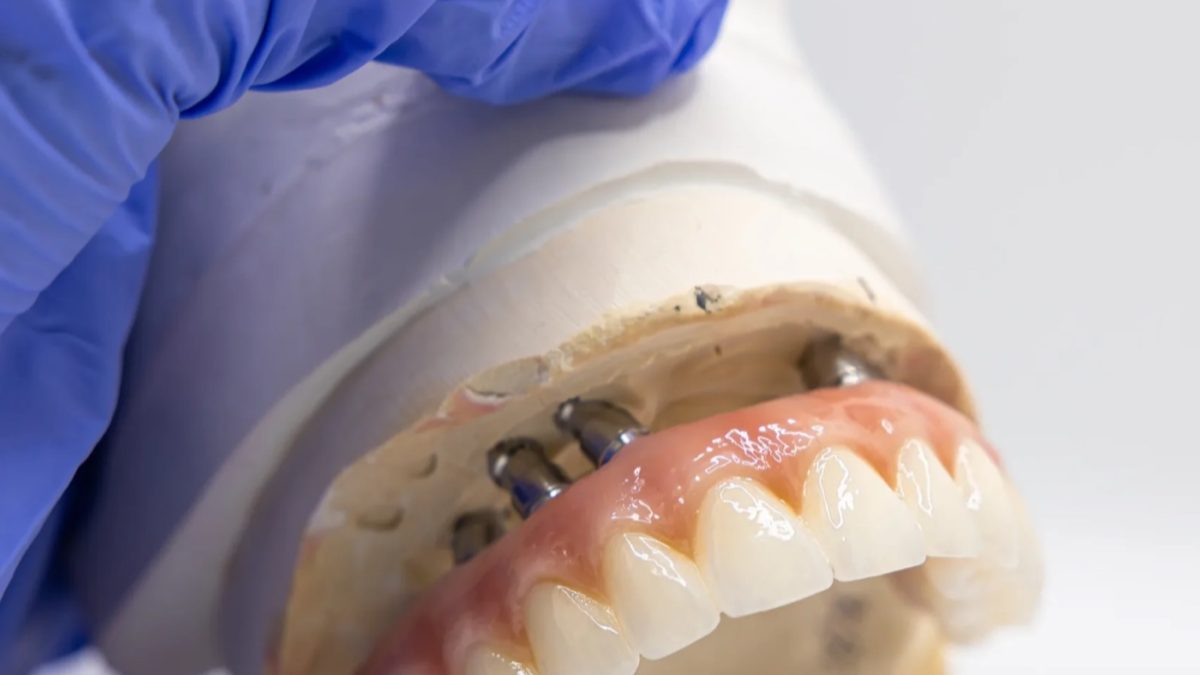
Before the guide is made
Send us the plan, not the finished case.
Given the planned implant positions we will tell you where the screw channels emerge, what cantilever the case will carry, and whether the restorative space supports a fixed prosthesis. That conversation costs nothing.
Who is at higher risk before you start
The same retrospective work identifies three factors associated with lower implant survival, and all three are knowable at the consultation.
- Bruxers. Lower implant survival, and separately the leading prosthetic complication is fracture. Both point the same way. Consider material and cantilever accordingly, and consider a protective appliance, which we cover in occlusal splint versus night guard.
- Smokers. Lower implant survival. Worth documenting rather than assuming.
- Maxillary cases. Lower survival than mandibular in the same datasets. Not a reason to avoid the upper arch, and a reason to be less aggressive about fixture count and cantilever there.
Hygiene access is a design decision, not a detail
A full arch prosthesis the patient cannot clean under becomes a tissue problem inside a year, and by then it is nobody’s fault and everybody’s problem. It is worth deciding deliberately rather than inheriting.
- Convex, polished intaglio. Easier to clean under and easier for the patient to tolerate a brush against. Costs a little vertical space.
- Access for interdental brushes rather than floss. Most patients will use a brush and will not thread floss under a fixed prosthesis every night. Design for what they will actually do.
- Limited dexterity. Say so on the prescription. It is far easier to design in than to retrofit, and it may be the argument for a removable prosthesis instead.
- Review access. A prosthesis you can remove at recall is a prosthesis you can actually inspect under, which is part of why screw retained is the common choice.
Given a median complication-free time of around 3 years, the patient will be back. Designing the prosthesis so that visit is straightforward is worth more than most of the material argument.
Material, once the shape is settled
For a fixed prosthesis the practical choice is acrylic teeth on a milled titanium bar, or monolithic zirconia. Given that acrylic fracture is the leading reported complication, the material question is closer to the survival question than it looks.
- Acrylic on titanium. Repairable. A fractured tooth is replaced without remaking the prosthesis, which given a median complication-free time of about 3 years matters a great deal. It also wears, which is usually kinder to the opposing arch.
- Monolithic zirconia. Does not stain or wear the way acrylic does and patients tend to prefer how it feels. It also does not flex, so a fit discrepancy transfers straight to the fixtures, and when something goes wrong you are usually remaking rather than repairing.
The question that decides it is what sits in the opposing arch, and the full comparison is in acrylic or zirconia for a fixed hybrid. Where the plan is a full-arch zirconia bridge, passive fit stops being a nicety.
The codes
Reference values, and worth confirming against the current CDT. Carrier language varies.
- D6114 and D6115 implant or abutment supported fixed denture for an edentulous arch, maxillary and mandibular.
- D6116 and D6117 the partially edentulous equivalents.
- D6110 and D6111 implant or abutment supported removable denture for an edentulous arch, where the plan is removable rather than fixed.
- Fixed and removable are different code families, which is one more reason the decision needs making before the case is fabricated rather than after.
What we need on the prescription
- Implant system and platform, per fixture. We work with Nobel, Straumann, Astra, BioHorizons and Zimmer among others, and components are not interchangeable.
- Fixed or removable, or tell us it is undecided and we will work it through with you.
- The opposing arch. A full arch against a natural dentition is a different brief from one against a denture.
- Bruxism and smoking history. Both appear in the survival data and both change what we recommend.
- Whether the patient is in a provisional, and what they like and dislike about it. That is free information about tooth position and speech.
- Any esthetic commitment already made, particularly about the lip line.
Scans are accepted from any major intraoral scanner including iTero, TRIOS, Medit and Primescan, with detail on our intraoral scanner page. If you have not worked with us before, becoming a client takes no contract and no minimum.
Questions from the prep
How many implants do full arch dental implants need?
It depends on whether the prosthesis is fixed or removable, on bone, and on the opposing occlusion. The All-on-4 literature reports implant survival in the low to mid 90s over long follow-up, so four can carry an arch. Whether four is right for a given patient is a function of cantilever, bruxism and arch, and it is better decided with the laboratory than assumed.
Is All-on-4 the same as a full arch implant case?
All-on-4 describes a surgical protocol, the number and angulation of the fixtures. Full arch describes the extent of the restoration. You can restore a four implant case or a six implant case, and the two terms answer different questions.
How long does a full arch implant prosthesis last?
Expect the implants to outlast it. Cumulative prosthesis survival runs around 80% at 5 years and 60% at 10, against implant survival above 90% at 10 years. Telling a patient the prosthesis is permanent sets them up to feel let down at year six, when the data says essentially everyone has had at least one complication.
Can a removable full arch be converted to fixed later?
Usually it means a new prosthesis and often more fixtures, so plan it as staged treatment rather than an upgrade. Tell us at the first case if it is likely, because the original design either leaves that door open or closes it.
Does a full arch case need a try-in?
Yes, and skipping it is the most expensive shortcut in this category. Passive fit and stability are named in the literature as factors in long-term prosthetic success, and a verification try-in is where both get confirmed rather than assumed.
What should the patient be told about maintenance?
That a fixed prosthesis is cleaned around rather than taken out, that it will come off at reviews, and that maintenance is expected rather than exceptional. A median complication-free time of around three years is not a warning about quality, it is the normal ownership profile of the appliance, and patients who hear it up front are the ones who stay happy.
Written by Adam Brewer, General Manager, who has completed more than 2,500 full-arch conversions with a focus on All-on-X and chairside conversions at International Dental Arts. IDA has been a family founded dental laboratory in Tulsa since 1984, working with independent practices across the country. If you want a case reviewed before you commit, get in touch.