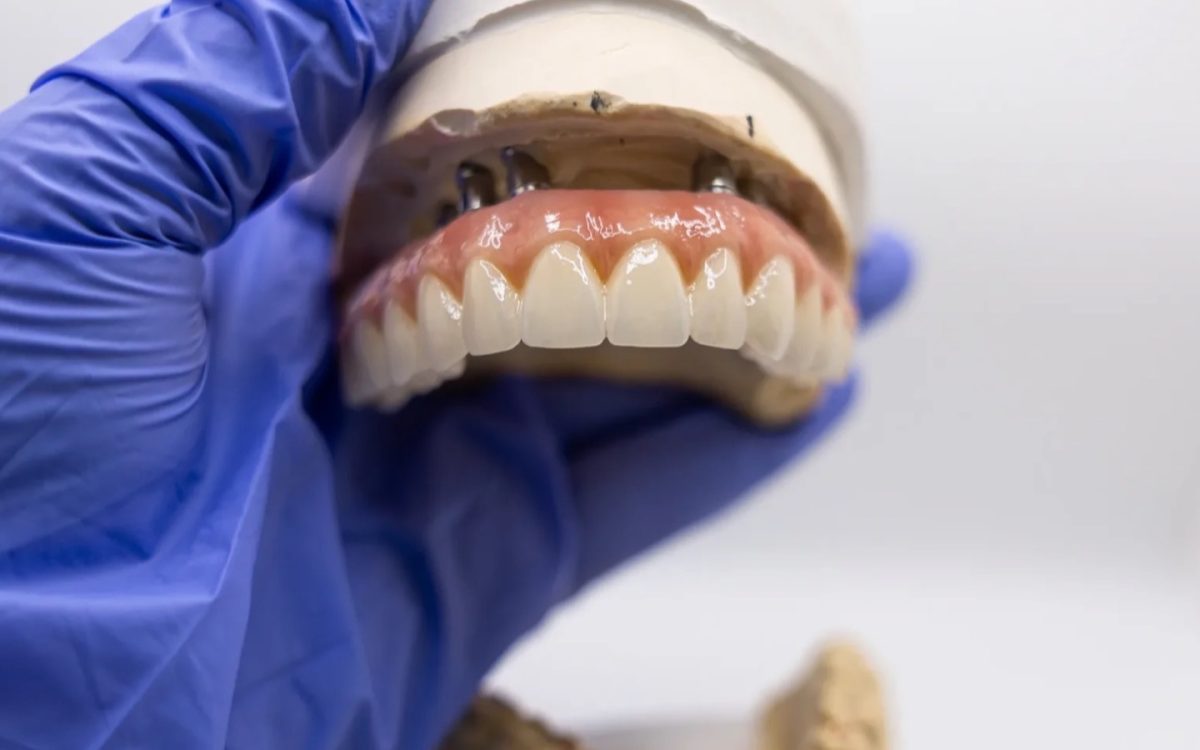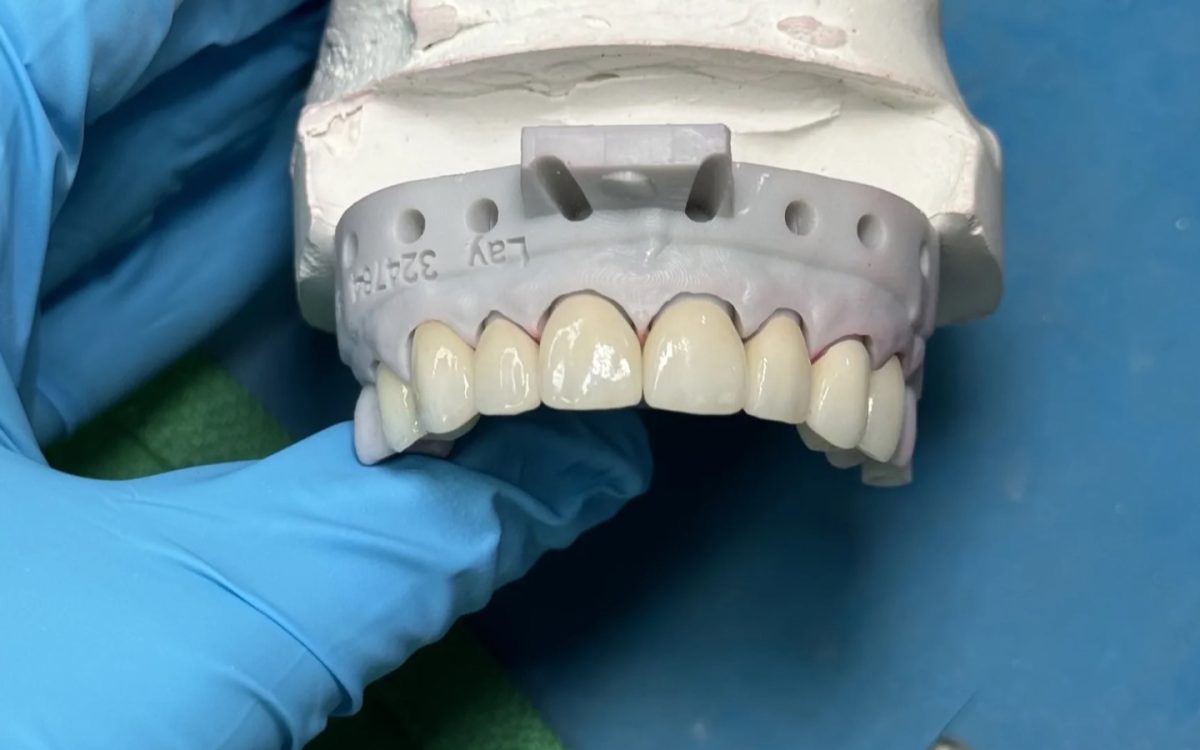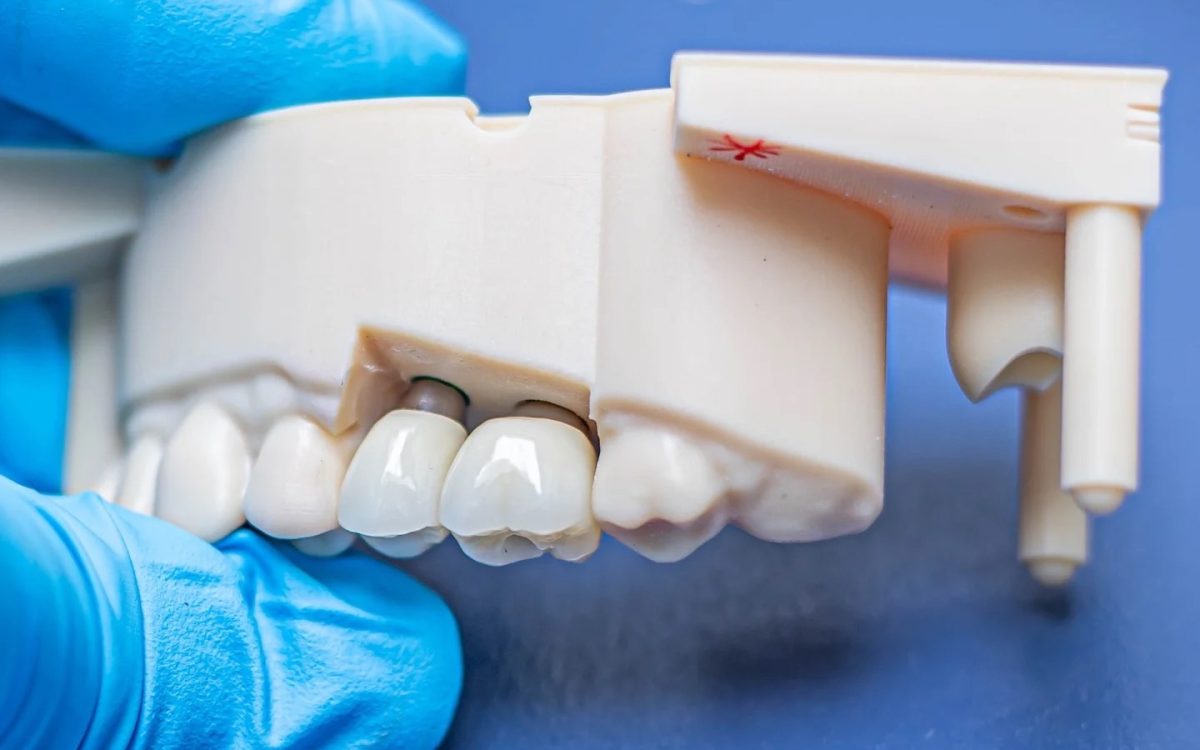
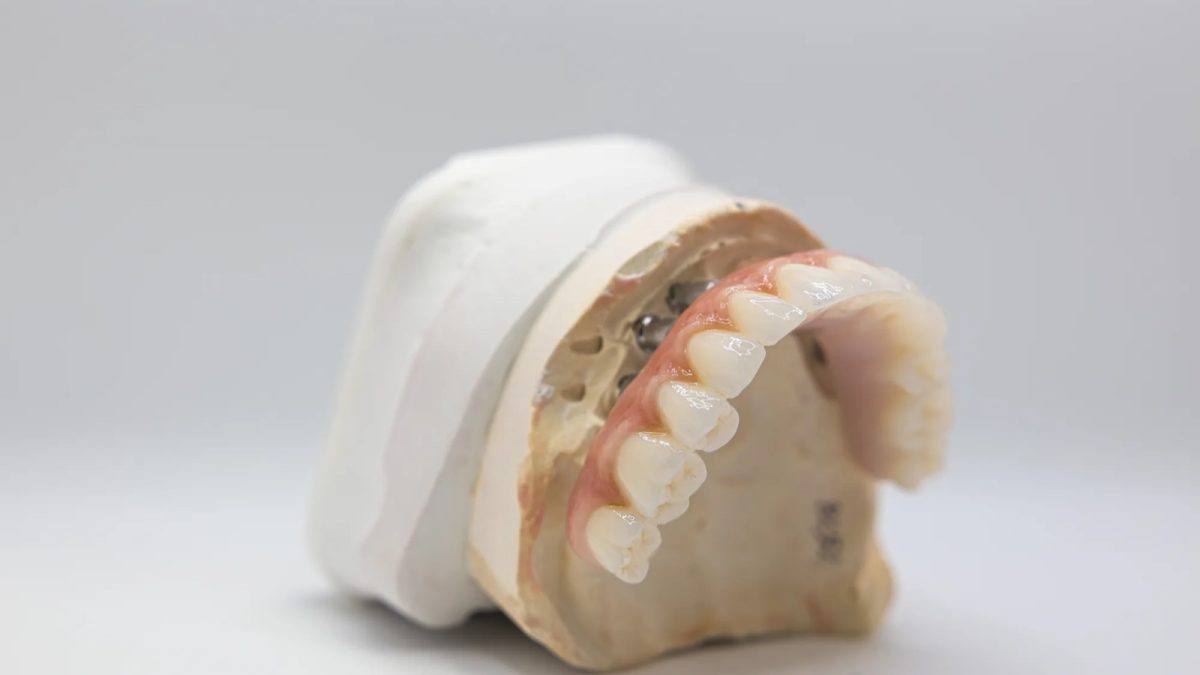
Implant supported dentures take both their retention and their support from the implants. An implant retained overdenture takes only retention from the implants and still rests its load on the ridge. The two get used as though they mean the same thing, and they do not, which is why the distinction is worth ten minutes before you plan the next case.
That one difference decides how many fixtures the case needs, whether it gets stud attachments or a bar, how much restorative space you have to find, what the patient does to maintain it, and which code you report. Here is how we separate them at the bench, and what the literature says about each decision.
Implant supported dentures versus implant retained, in one test
Ask what happens if you take the attachments out of the equation. If the prosthesis would still sit on the ridge and function, it is retained. If it would sink, it is supported. Retention is what stops it lifting. Support is what stops it settling, and a prosthesis can have one without the other.
- Implant retained overdenture. Commonly two fixtures, stud attachments, tissue still carrying the load. Most often a lower arch where a conventional denture will not stay put.
- Implant supported dentures. More fixtures, usually splinted with a bar or restored as a fixed prosthesis, load taken through the implants. The intaglio can be relieved off the tissue entirely.
- The middle. Plenty of real cases sit between the two, taking most support from implants and some from tissue. Say which end of that range you are aiming for and we design to it.
The two-implant overdenture is the most established starting point in this category rather than a compromise. Both the McGill Consensus Statement in 2002 and the York Consensus Statement in 2009 named the two-implant mandibular overdenture as the first-choice standard of care for the edentulous mandible, and that position has held for more than 20 years. If you are treating a lower arch and unsure where to begin, that is where the evidence begins.
How many implants an implant supported denture actually needs
More than a retained one, and the honest answer is that the number follows arch, bone and load distribution rather than a rule. Some useful anchors from the literature:
- Mandible, retained. Two fixtures with stud attachments, per the McGill and York positions above.
- Maxilla, supported. A systematic review with meta-analysis comparing maxillary overdentures on four splinted implants against six found the four-implant option non-inferior on patient satisfaction, implant and prosthesis survival, and prosthodontic complications. Four splinted fixtures is a defensible plan, not a shortcut.
- Single implant. A live area of research. Systematic review work on single versus two implant mandibular overdentures continues to report meaningful quality-of-life gains from even one fixture, which matters for the patient who cannot afford or tolerate more.
Send the scan and we will work the number with you against the prosthesis you actually want, rather than confirming a number after the fixtures are placed. Our case planning exists for exactly this conversation.
What implant support changes at the bench
Once the tissue stops carrying load, three things change in the laboratory, and none of them are optional.
The prosthesis has to be rigid. A retained overdenture flexes slightly against the ridge and that is tolerated. A supported one cannot, because every bit of flex transfers straight into the attachments and the fixtures. In practice that means a cast or milled framework inside the acrylic rather than acrylic alone.
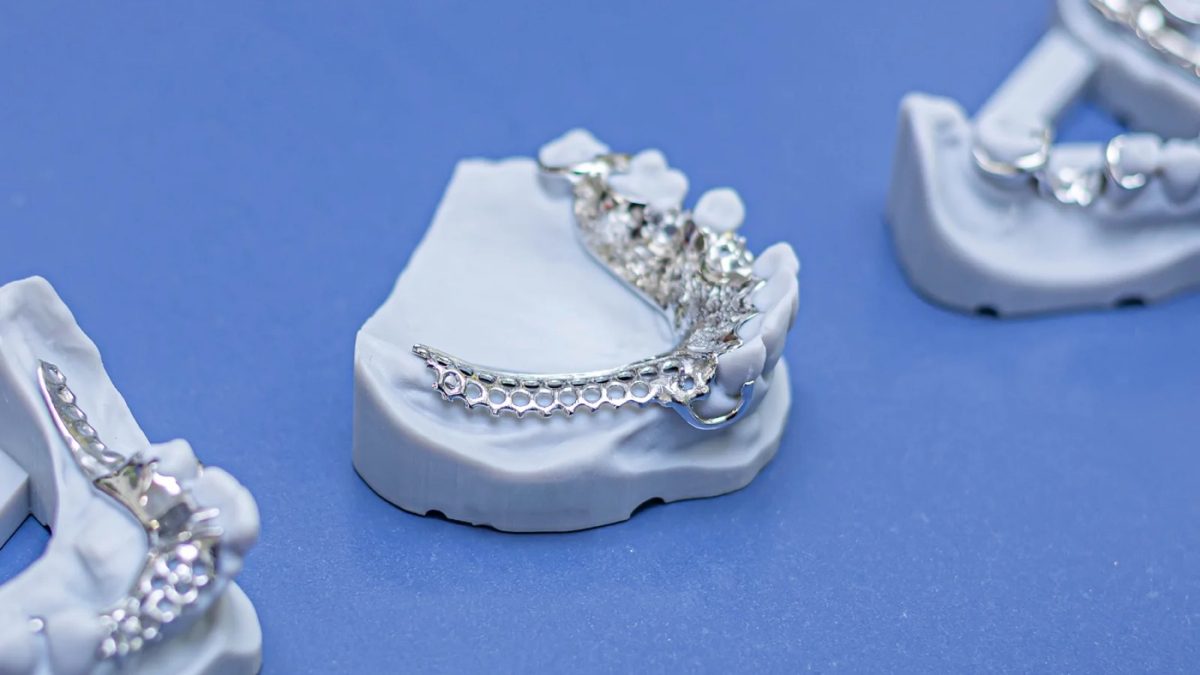
Vertical space stops being negotiable. Retention hardware, framework, denture teeth and enough acrylic to hold them together all have to fit between the implant platform and the opposing occlusion. A bar retained overdenture needs meaningfully more room than stud attachments, commonly in the order of 2 mm to 3 mm more once the bar, the clip housing and the acrylic over them are stacked up. Where the space is not there, something gets thinned, and the thing that gets thinned is the part that fractures at eighteen months.
Divergence starts to matter. Stud attachments tolerate a limited amount of off-axis placement before retention and wear suffer. A bar is far more forgiving because it splints the fixtures and creates one common path of insertion. Divergent implants are the clearest single reason to choose a bar, and it is a call better made from the scan than from the model. Where angulation needs correcting at the abutment instead, our custom abutment work can sometimes do it.
Locator overdenture or bar retained overdenture
We fabricate both and have no house preference. The case decides, and the evidence is reasonably clear about what you are trading.
On complications, stud attachments compare well. Reviews of attachment systems in implant overdentures put complication rates for Locator style attachments at roughly 14% to 20%, against roughly 24% to 35% for ball attachments, with matrix wear and attachment loosening the dominant events in both. The most frequent maintenance event by a wide margin is replacement of the nylon insert, which is a chairside job measured in minutes.
- Choose stud attachments when the fixtures are reasonably parallel, hygiene or dexterity is a concern, restorative space is limited, or cost decides the case. Retention is renewable chairside by swapping inserts.
- Choose a bar when the implants are divergent, you want load splinted across fixtures, the arch shape needs a cantilever, or you are moving toward genuine implant support rather than retention.
- Expect maintenance either way. The literature on Locator systems is consistent that retention holds well and that maintenance visits are frequent. That is not a defect, it is the ownership model, and the patient should hear it from you rather than discover it.
Both, including Locator and Hader bar work, are on our implant overdentures page.
Before the surgical plan is fixed
Decide supported or retained before anyone drills.
Send the scan and we will tell you what the restorative space allows before the implant count is locked in. Fifteen minutes with a technician, not a form.
What we need on the prescription
- Supported or retained. Say the word. If it is undecided, say that and we will work it out from the scan with you.
- Implant system and platform, per fixture. We work with Nobel, Straumann, Astra, BioHorizons and Zimmer among others, and the components are not interchangeable.
- Restorative space, or a scan that lets us measure it. This is the most common reason a design comes back for a conversation.
- The opposing arch. A supported prosthesis against a natural dentition is a different brief from one against a complete denture.
- Whether the patient has worn a denture before, and what they disliked about it.
- Attachment preference, if you have one. If not, give us the fixture angulation and we will recommend.
We accept scans from any major intraoral scanner, including iTero, TRIOS, Medit and Primescan, or a traditional impression. Details are on our intraoral scanner page.
What to tell the patient before you start
Two expectations, set early, prevent most of the disappointment in this category.
Retention is a consumable. Nylon inserts wear and are meant to be replaced, and the complication literature above says that is the single most common thing that will happen to this prosthesis. A patient told so up front treats an insert change as maintenance. A patient not told treats it as the prosthesis failing.
Retained is not fixed. A patient who has been told “implants” often hears “these do not come out”. If the plan is a removable prosthesis on attachments, the word removable needs saying out loud at the consultation, not at delivery. If the patient genuinely wants something that never comes out, that is a different treatment and it is covered in fixed or removable full arch implants.
The codes for implant supported dentures
Reference values, and worth confirming against the current CDT. Carrier language varies.
- D5863 overdenture, complete maxillary. D5864 overdenture, partial maxillary.
- D5865 overdenture, complete mandibular. D5866 overdenture, partial mandibular.
- D6110 and D6111 implant or abutment supported removable denture for an edentulous arch, maxillary and mandibular.
- D6112, D6113 and D6114 cover the partially edentulous equivalents and the related abutment supported variants.
- The distinction the codes draw is the same one this article is about. Reporting a supported prosthesis under an overdenture code, or the reverse, is a common and avoidable claim problem.
Attachment and abutment components are usually reported separately from the prosthesis itself. Where the case is individual implant crowns rather than a removable prosthesis, the retention decision is a different one and we cover it in screw-retained versus cement-retained implant crowns.
Questions from the prep
How many implants do implant supported dentures need?
For a retained lower, two is the evidence-backed starting point per the McGill and York consensus statements. For genuine support across an arch, generally four or more, splinted. For a maxillary overdenture, the meta-analysis comparing four splinted implants against six found no meaningful difference in satisfaction, survival or complications, so four is a reasonable plan rather than an economy one.
Is an implant supported overdenture better than a fixed full arch?
Different, not better. Removable is easier to clean, cheaper to maintain and easier to modify. Fixed feels more like natural teeth and needs a patient who will keep it clean without taking it out. The comparison is in fixed or removable full arch implants, and the material question that follows it is in acrylic or zirconia for a fixed hybrid.
Can an implant retained overdenture be converted to implant supported later?
Sometimes, and it is worth planning for at the start rather than discovering later. Additional fixtures and a new framework are usually involved, and the existing prosthesis often cannot carry the change. If staged treatment is likely, say so at the first case so the original design does not close the door.
Do implant supported dentures still need relining?
Much less often, and that is rather the point. A retained overdenture sits on tissue that keeps changing, so it follows the same pattern as a conventional complete denture and the same reline logic set out in hard and soft denture relines. A genuinely supported prosthesis is off the tissue, so ridge change affects it far less.
What if the implants are already placed and divergent?
That is the classic bar retained overdenture case. Splinting gives one path of insertion and takes divergence out of the retention equation. Send the scan before committing to stud attachments, because the alternative is finding out at try-in.
How often will the patient need maintenance?
Plan for it rather than hoping. The Locator literature reports frequent maintenance visits as a characteristic of the system rather than a failure of it, with nylon insert replacement the dominant event. Building a recall interval into the treatment plan at the outset changes how the patient reads every subsequent visit.
Written by Clint Carson, CDT, clinical specialist in removable prosthetics with more than twenty years at the bench at International Dental Arts. IDA has been a family founded dental laboratory in Tulsa since 1984, working with independent practices across the country. If you want a case reviewed before you commit, get in touch.