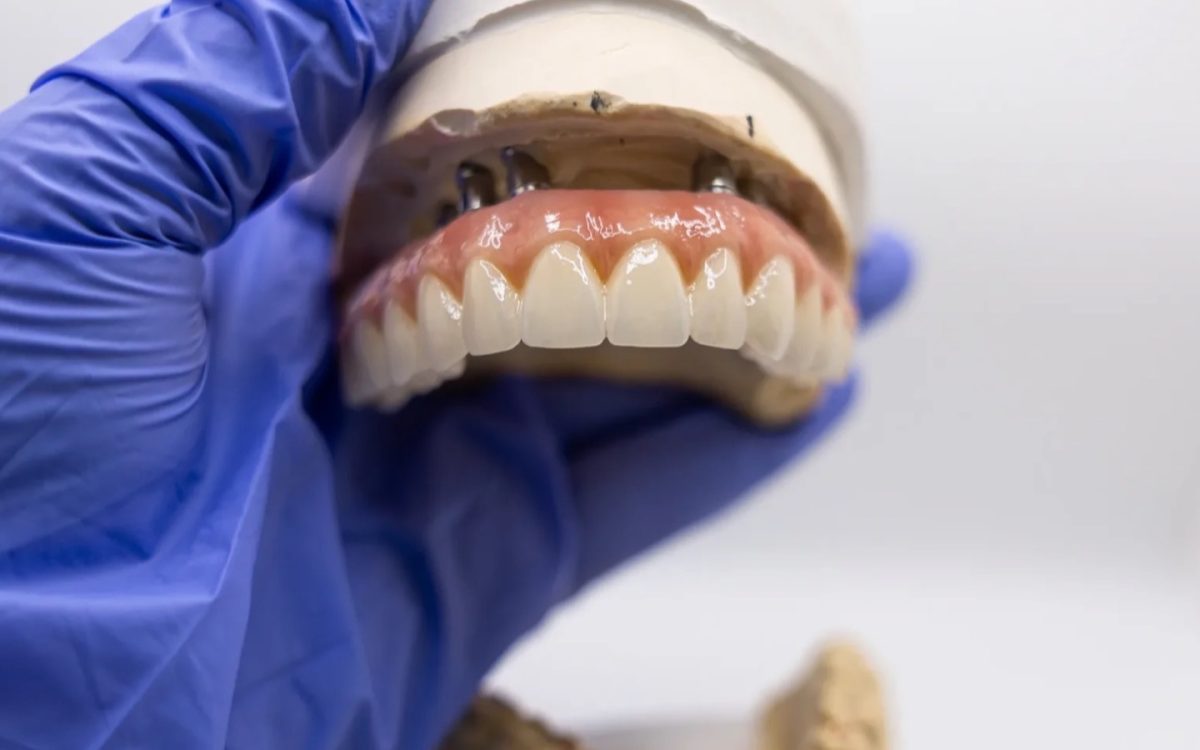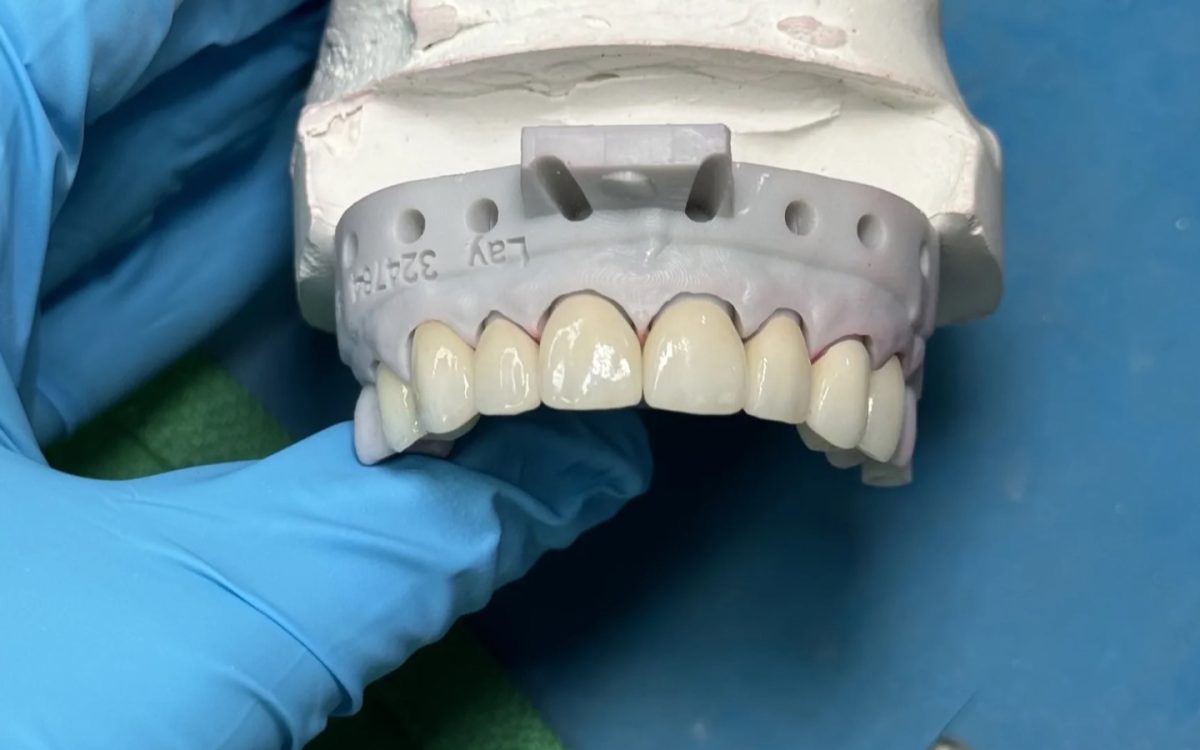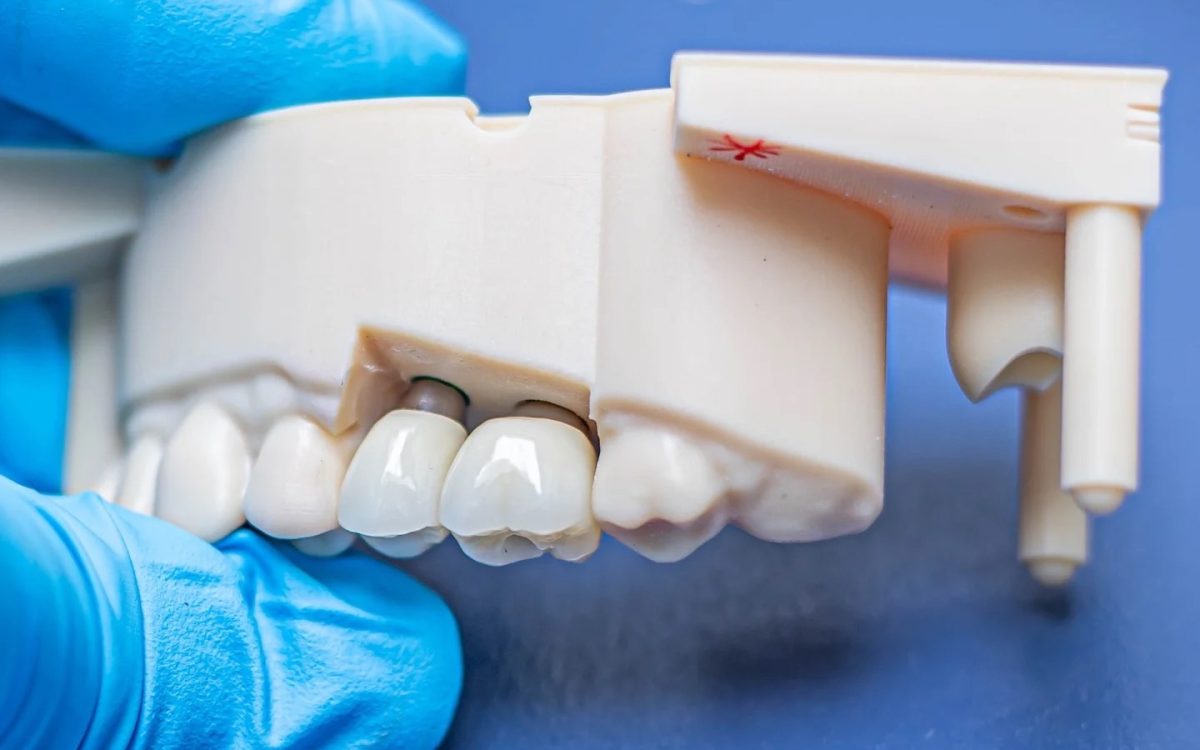
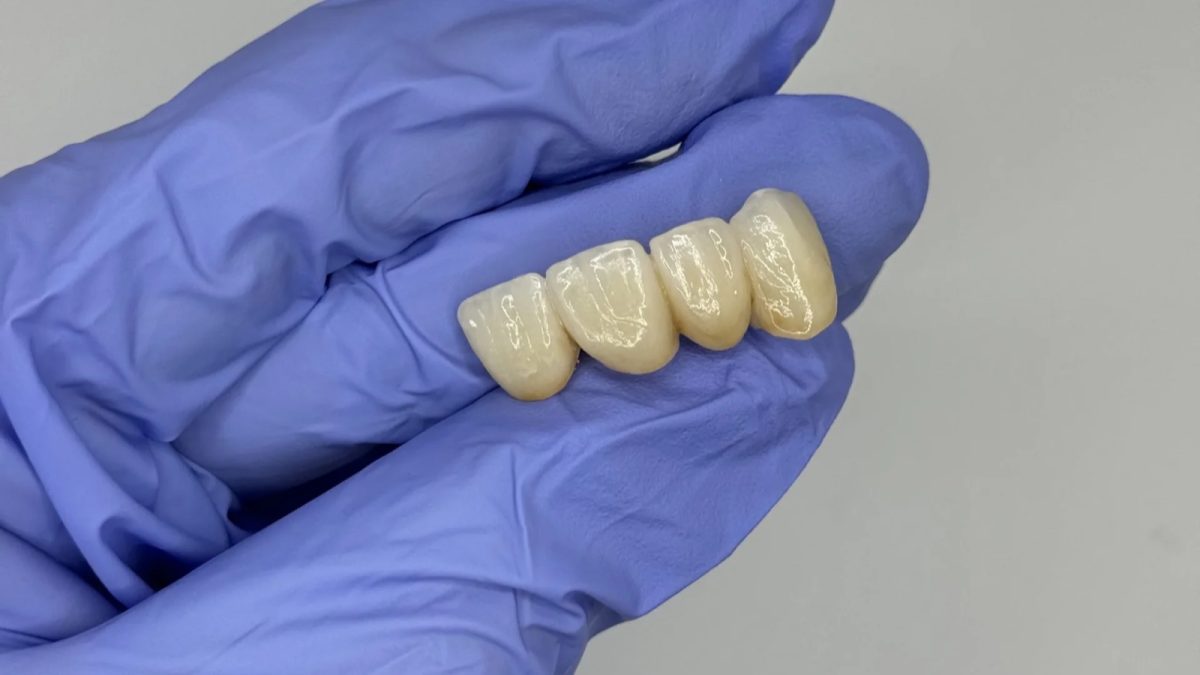
A fixed hybrid denture is a full arch prosthesis screwed to implants and left there. The two materials a practice actually chooses between are acrylic teeth on a milled titanium bar, and monolithic zirconia. They cost differently, they fail differently, and how they fail matters far more than what they cost.
Neither is the better material in the abstract. Here is what the comparative literature reports, the third option most practices are not offered, and the one question that decides it.
What the comparative evidence reports
The fracture data is more favourable to zirconia than most people expect, and it is worth knowing the actual numbers rather than the sales version.
On fracture counts. Comparative work reports monolithic zirconia prostheses experiencing 6 minor porcelain fractures and 2 debonded inserts against 16 tooth fractures in metal-acrylic arches over the same observation. On raw fracture events, zirconia comes out ahead.
On overall failure. A series of 285 one-piece zirconia fixed complete dentures across 223 patients reported a mean failure rate of 1.4% from prosthesis fracture, with prosthetic complications of some kind in 16.1% of prostheses.
Over the longer term. Monolithic zirconia frameworks followed for 5 to 13 years showed prosthesis survival of about 82.35%, with nine framework fractures across the cohort. Favourable overall, and not zero.
So the case against zirconia is not that it breaks more often. It is what happens when it does, because a fractured framework is a remake and a fractured acrylic tooth is a chairside repair.
Acrylic on a titanium bar
A milled titanium framework carries the load and acrylic with denture teeth sits on it. It has been the reference standard for a long time and its strengths are practical rather than glamorous.
- It is repairable. A fractured tooth is replaced without remaking the prosthesis. Given that the 16 fracture events above were tooth fractures rather than framework fractures, that distinction is the whole argument for the material.
- It is kinder to the opposing arch. Acrylic wears, which is usually preferable to something else wearing instead.
- It forgives a small fit discrepancy, because the acrylic has some give in it.
- It can be modified. Tooth position can be adjusted after the fact in a way milled ceramic cannot.
The trade is that an acrylic hybrid denture wears, stains and can debond from the bar. It is not permanent, and a patient told it is permanent will be unhappy in year six. The service-life picture across both materials is in fixed or removable full arch implants.
Monolithic zirconia
One milled piece, no veneering ceramic to chip, and it does not stain or wear the way acrylic does. Esthetically it can be excellent and patients tend to prefer how it feels in the mouth. A monolithic zirconia full arch is a genuinely strong appliance and the data above supports that.
The trade is unforgiveness rather than fragility. Zirconia does not flex, so a fit discrepancy is not absorbed anywhere, it is transferred to the fixtures. It is hard on an opposing natural dentition. And when something does go wrong you are usually remaking rather than repairing, which turns a small problem into a large one.
The third option: zirconia luted to a titanium bar
This is the design most practices are never offered and it deserves more attention than it gets. A monolithic zirconia suprastructure is luted to a milled titanium bar, so the bar carries the load and the zirconia provides the surface.
Retrospective work on this design reports 100% prosthetic survival across follow-up of 12 to 20 months, with technical complications of 8.1%. The follow-up is short and should not be oversold, but the logic is sound: you get the accuracy and rigidity of a milled bar with a surface that resists wear, and the bar rather than the ceramic is taking the strain.
It costs more than acrylic on titanium and it sits between the two on repairability. Where the opposing arch argues against monolithic zirconia but the patient wants better longevity than acrylic, this is the honest middle answer.
The question that decides a fixed hybrid denture
What is in the opposing arch? This is not a preference, it is in the literature. Reviews of monolithic zirconia for full arch implant prostheses specifically caution that particular attention should be paid to the opposing arch, because opposing dissimilar materials can increase prosthetic complications over time.
- Against a complete denture, or against another zirconia arch. A reasonable pairing. The wear is either shared or absorbed by something replaceable.
- Against a natural dentition, particularly a bruxer. The problematic case. Zirconia will not wear, so the wear goes into the opposing teeth or into the fixtures, and neither is repairable the way a replaced acrylic tooth is.
- Against existing restorative work. Ask what it is made of. Zirconia against ceramic crowns is a different proposition from zirconia against gold.
The second question is what the patient can afford to do again. Acrylic assumes maintenance and makes it cheap. Zirconia resists maintenance and makes it expensive when it finally becomes necessary.
Full arch materials
Tell us the opposing arch before you choose the material.
It is the single question that decides acrylic or zirconia more often than cost does, and the literature agrees. Send the case and we will give you a straight recommendation.
Where a fixed hybrid denture goes wrong
The failures we see cluster in three places, and none of them are manufacturing faults.
- Tooth position never approved. The patient meets the finished prosthesis at delivery and does not recognise themselves. A verification try-in prevents it completely and is skipped surprisingly often.
- Hygiene access designed as an afterthought. A prosthesis the patient cannot clean under becomes a tissue problem within a year.
- Material chosen on price alone. Zirconia bought to avoid maintenance, fitted against a bruxing natural dentition, produces the most expensive version of every subsequent problem.
Cost, and what it actually buys
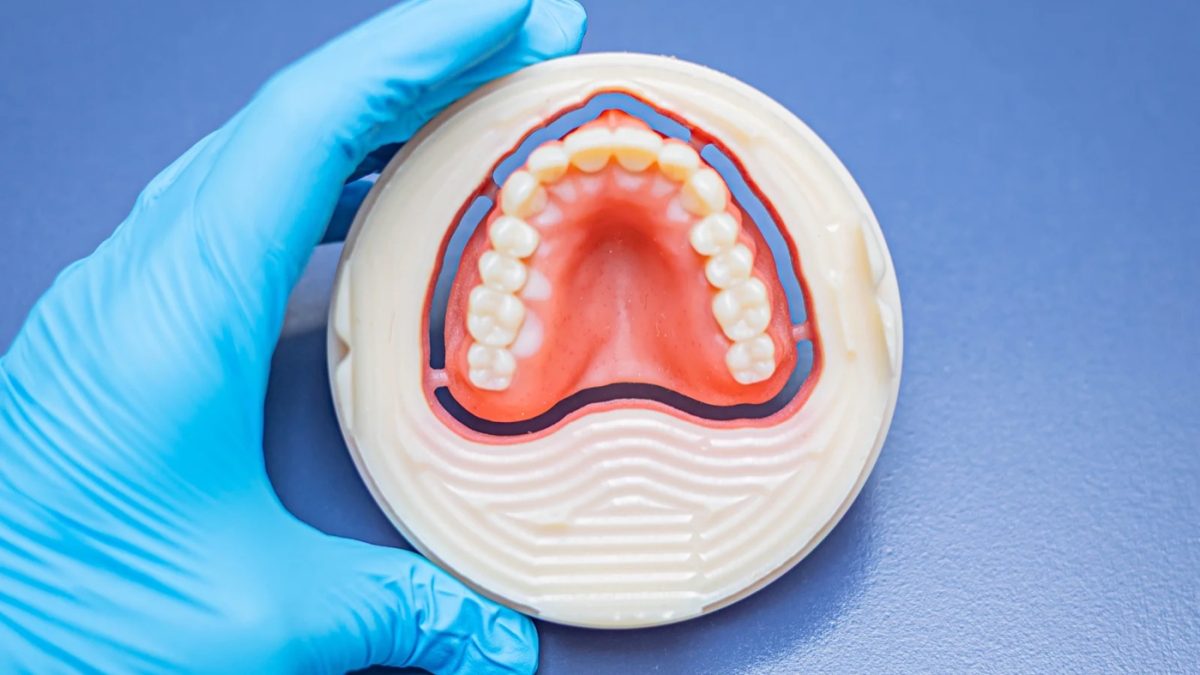
Zirconia carries a higher laboratory fee and practices reasonably ask what the difference pays for. The honest answer is that it buys a surface that does not wear or stain, and it costs you the ability to fix things cheaply.
- Acrylic. Lower initial fee. Assume periodic tooth replacement and eventual resurfacing, both modest and predictable.
- Zirconia. Higher initial fee, roughly 16.1% of prostheses experiencing some prosthetic complication in the series above, and the interventions that do come are usually remakes.
- Zirconia on a titanium bar. Highest fee of the three. Buys the wear resistance without putting the load through the ceramic.
- The one that catches people out. A patient sold zirconia on the promise of never needing anything done will be very unhappy the first time something does.
No material removes maintenance from a full arch case. They move it, and they change what it costs when it arrives. The same logic applies to removable options on our implant overdentures page.
The codes
Reference values, and worth confirming against the current CDT. Carrier language varies.
- D6114 and D6115 implant or abutment supported fixed denture for an edentulous arch, maxillary and mandibular.
- D6116 and D6117 the partially edentulous equivalents.
- D6118 and D6119 the interim implant supported fixed dentures, which is what a screw-retained provisional is.
- The material does not change the code, which is worth knowing because it means the coding conversation and the material conversation are entirely separate on this appliance.
What we need on the prescription
- The opposing arch, in detail. Natural, restored, denture, or another full arch prosthesis, and what any existing restorations are made of.
- Any bruxism history. It changes the recommendation, sometimes decisively.
- Implant system and platform per fixture, and whether multi-unit abutments are already placed.
- What the patient has been told about repairs and replacement.
- The provisional, if there is one. It is the best available information about tooth position and speech.
- Restorative space, or a scan that lets us measure it.
Scans are accepted from any major intraoral scanner including iTero, TRIOS, Medit and Primescan, with detail on our intraoral scanner page. If you have not worked with us before, becoming a client takes no contract and no minimum.
Questions from the prep
Is a fixed hybrid denture the same as All-on-4?
All-on-4 describes a surgical protocol, the number and angulation of fixtures. A fixed hybrid denture describes the prosthesis on top of them. You can have a hybrid on four implants or on six, and the two terms answer different questions. The prosthetic options are in fixed or removable full arch implants.
How long does a fixed hybrid denture last?
Monolithic zirconia frameworks report around 82% prosthesis survival over 5 to 13 years. Acrylic on titanium tends to survive as a framework while needing surface maintenance along the way. Either way the fixtures usually outlast the prosthesis, and quoting a patient a number is how you create a complaint on the day after it passes.
Which is better for a heavy bruxer?
Usually acrylic on titanium, which is the opposite of what most people assume. Zirconia resists wear, but a bruxer against zirconia moves the wear into the opposing dentition or into the fixtures, and neither is repairable the way a replaced acrylic tooth is. A protective appliance is worth discussing too, covered in occlusal splint versus night guard.
Does zirconia need a try-in?
Yes, and skipping it is the most expensive shortcut in this category. A printed or waxed verification try-in lets the patient approve tooth position, midline and speech before anything is milled. Monolithic zirconia cannot be meaningfully adjusted afterwards.
What about acrylic teeth bonded to a zirconia framework?
It exists and it is a reasonable middle path, distinct from the zirconia-on-titanium design above. You get a rigid milled framework with a surface that can be replaced when it wears. The fit demands sit with the zirconia rather than the acrylic, so the verification try-in stays essential.
Does the patient need to take a fixed hybrid out to clean it?
No, and that is precisely the design problem. Everything has to be cleanable in situ, which is why access under the prosthesis is a design decision rather than a detail. Tell us at the outset if the patient has limited dexterity, because it is far easier to design in than to retrofit, and it may be the argument for a removable prosthesis instead, covered in implant supported dentures versus implant retained.
Written by Adam Brewer, General Manager, who has completed more than 2,500 full-arch conversions with a focus on All-on-X and chairside conversions at International Dental Arts. IDA has been a family founded dental laboratory in Tulsa since 1984, working with independent practices across the country. If you want a case reviewed before you commit, get in touch.