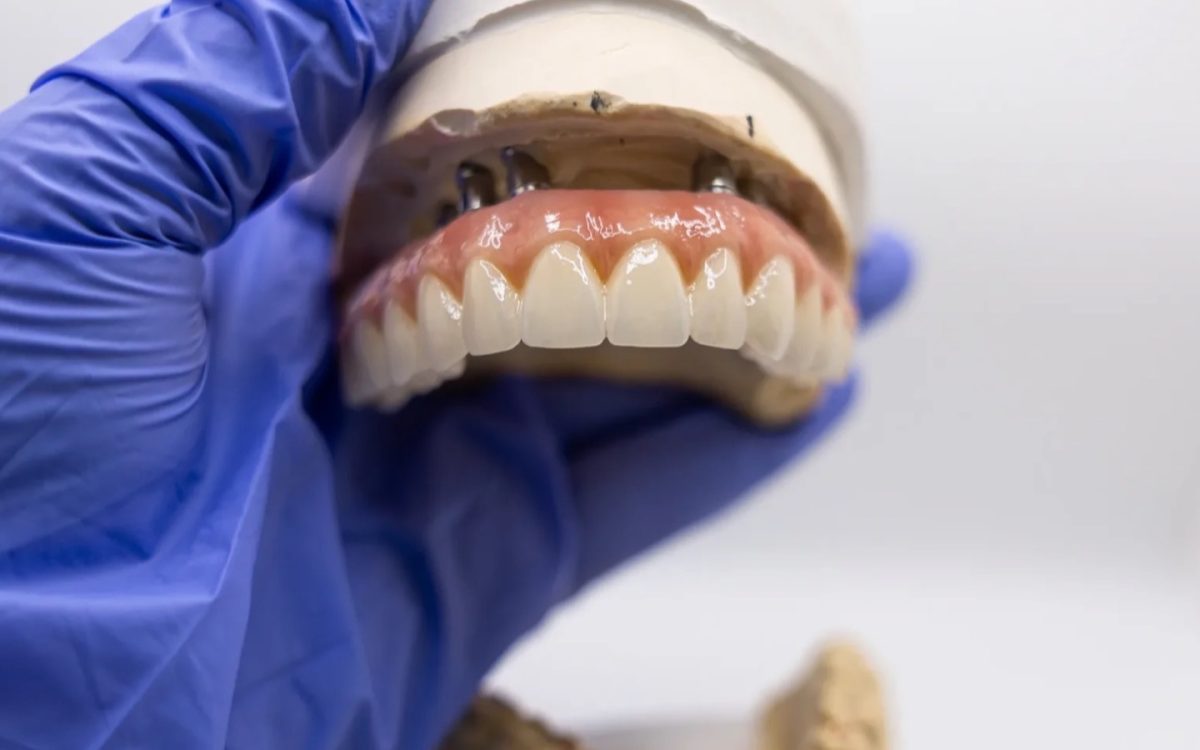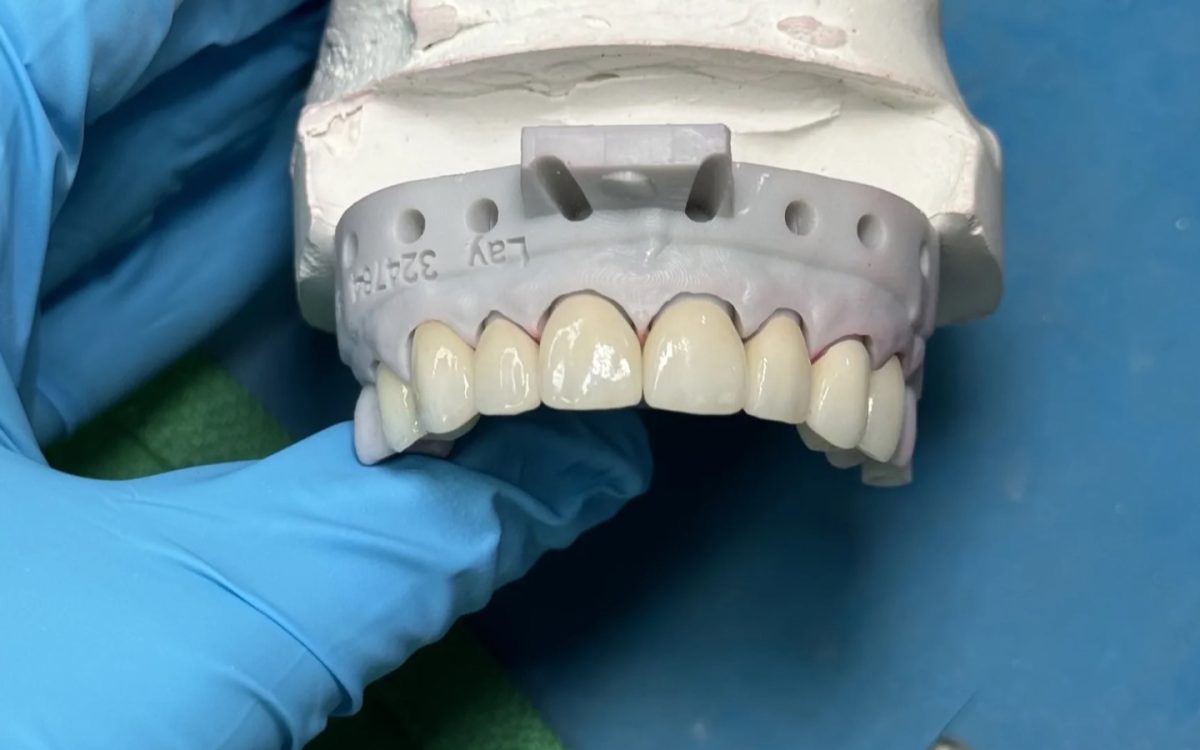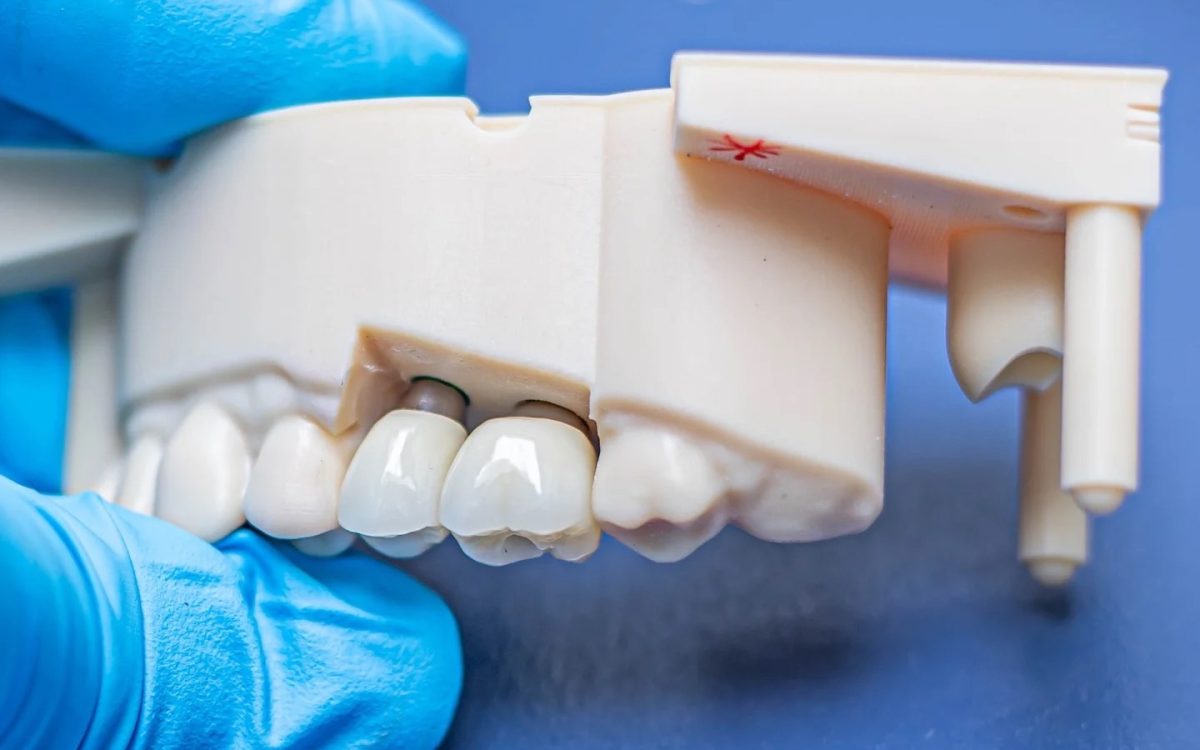
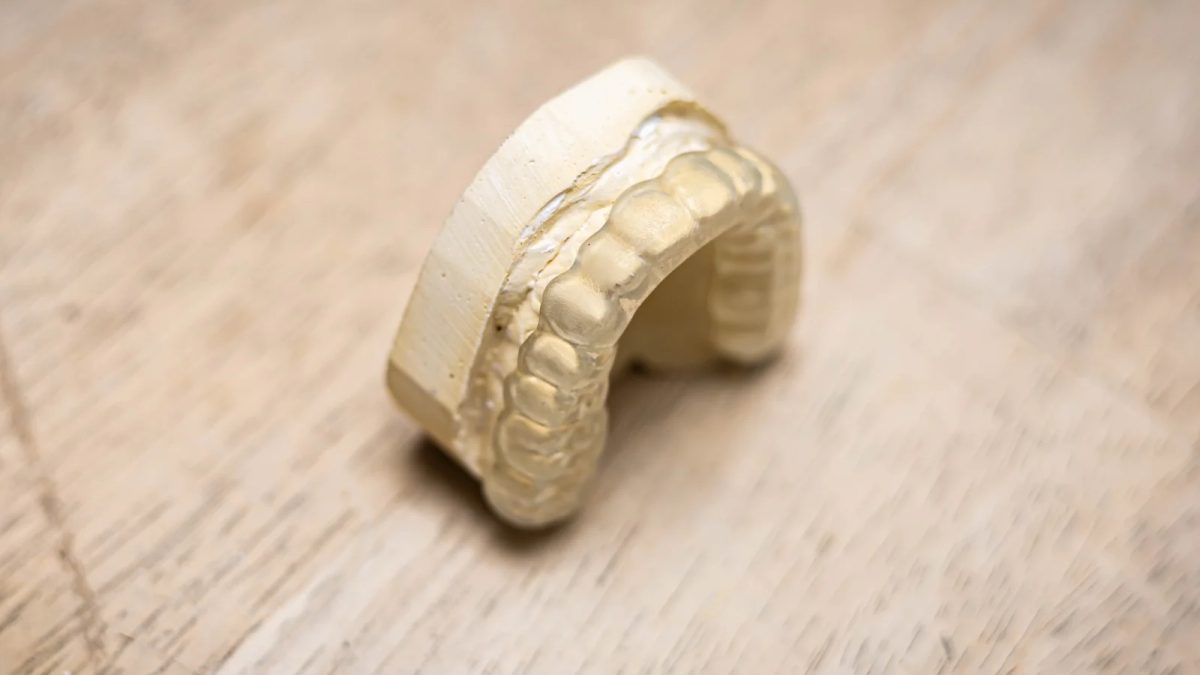
An occlusal splint and a night guard can come off the same bench looking identical and be prescribed for completely different reasons. A guard is protective. It puts a sacrificial layer between the arches so the appliance wears instead of the teeth. An occlusal splint is therapeutic. It is asking the joint and the musculature to do something different, and the occlusal surface built into it is the instruction.
The word you write on the prescription changes what we make. Here is what the literature supports, what it does not, and the six things we need before we start.
Occlusal splint or night guard, the difference in one line
Ask what the appliance is supposed to change. If the answer is “nothing, I just want the wear to stop”, that is a guard. If the answer involves the joint, muscle pain, or a repositioned mandible, that is an occlusal splint, and the occlusion we build into it is the entire point.
- Protective. Wear is the problem. Even contacts, no attempt to alter the bite, hard acrylic in most cases.
- Therapeutic. The joint or the muscles are the problem. The occlusal scheme is prescribed rather than copied, and it usually gets adjusted across several visits.
- Both at once. Common, and worth stating explicitly rather than leaving us to infer it from the material choice.
What the evidence actually supports
This is worth being precise about, because the claims made for splints in general are broader than the literature will carry.
The centric stabilization splint, a full arch hard acrylic appliance designed to give uniform bilateral contact in centric relation, is treated in the literature as the reference design. A 2025 systematic review and meta-analysis comparing centric stabilization splints against other conservative therapies for temporomandibular disorders describes the mechanism as redistributing occlusal forces, promoting neuromuscular balance and reducing parafunctional activity, with several studies reporting reductions in muscle hyperactivity on EMG.
Two honest caveats sit alongside that. First, the comparison against other conservative treatments is genuinely mixed, with some randomised controlled trials reporting meaningful pain relief and others finding no significant advantage over physical therapy or counselling. Second, and this is the one to say out loud to patients, the evidence does not support occlusal splint therapy as a cure for bruxism. It manages consequences. It protects the dentition. It does not stop the parafunction.
A patient who is told the splint will stop them grinding will report it as a failure. A patient told it will protect their teeth while they grind will report the same appliance as a success.
Hard, soft, or dual laminate
Material is a separate decision from coverage, and the evidence differentiates them.
- Hard acrylic. The default for a heavy bruxer and for anything therapeutic. It holds a prescribed occlusion, adjusts chairside, and does not deform under load. A hard occlusal splint is what the stabilization splint literature is describing.
- Soft. Comfortable, quick, appropriate for short-term or diagnostic use. It cannot hold a prescribed occlusion and heavy bruxers work through it faster than expected.
- Dual laminate. Soft inner surface against the teeth, hard outer surface for the occlusion. The usual answer where a patient cannot tolerate hard acrylic but you still need a stable biting surface.
Comparative work on hard, semi-soft and soft appliances in bruxers found all three improved clinical symptoms, while hard and semi-soft appliances outperformed soft ones on joint vibration measures. That maps closely to what we see returned at review: soft appliances come back chewed, hard ones come back marked.
Full coverage, and why partial coverage worries us
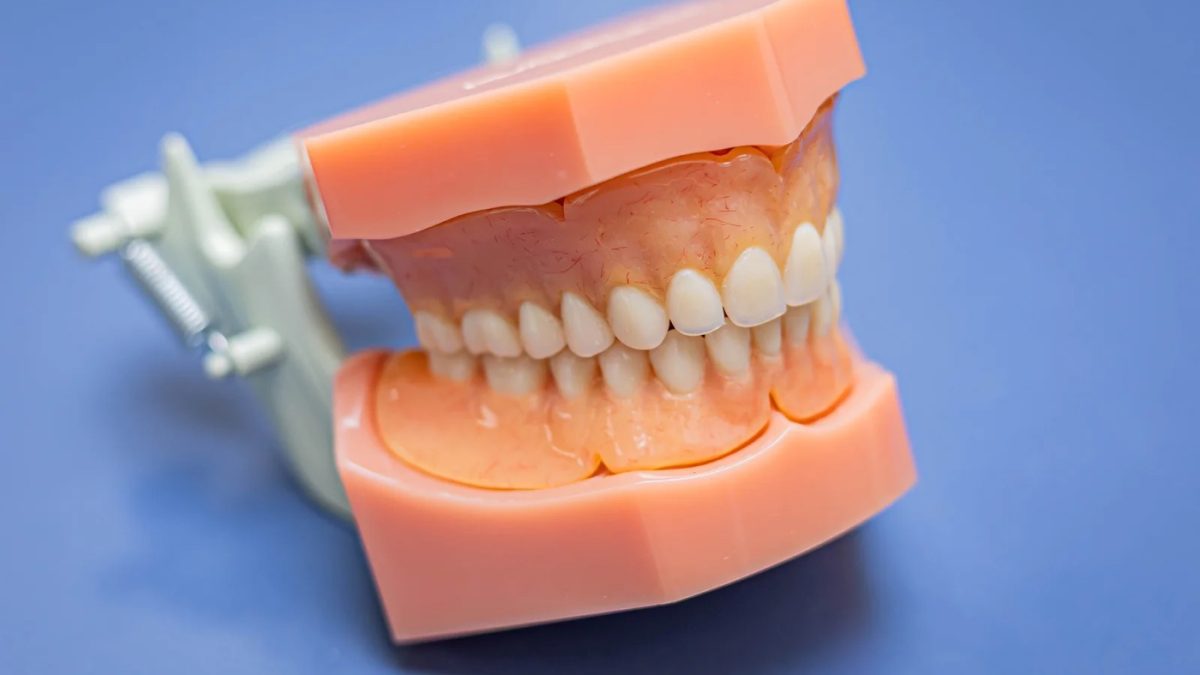
A full coverage occlusal splint holds every tooth in the arch. Nothing is left free to move. That is not a design preference, it is the reason full coverage is the default for anything worn nightly over months.
An appliance covering only some of the teeth leaves the rest unopposed, and over months of unsupervised wear the teeth that are not held can move. If you prescribe partial coverage we will make exactly what you asked for. We will also ask once whether the patient is on a review schedule. The evidence behind anterior only designs, and the complications that make that review schedule necessary, are set out in our piece on the NTI night guard.
Guards and splints
Tell us the diagnosis, not the appliance.
One line about what you are treating changes the material, the coverage and the occlusal scheme. Send the scan and the reason with it.
What the returned splint tells you
An occlusal splint that comes back at review is a record of what the patient actually does at night, and it is worth reading before you adjust it.
- Even, broad wear facets. Grinding across a range of excursions. The appliance is doing what it was made for.
- One deep localised facet. A single interference is taking the load. Worth finding on the splint before you go looking in the mouth.
- Anterior wear only. Often a clenching pattern rather than a grinding one, and it changes what a replacement should look like.
- Almost no wear with continuing symptoms. Worth asking whether it is being worn at all before assuming the design is wrong.
Send it back with the case if you want a replacement matched to it. We would rather see the worn appliance than a description of it, and it costs nothing but the postage.
Thickness, and the trade it represents
Splint thickness is a design decision with consequences at both ends, and it is worth stating on the prescription rather than leaving to us.
- Around 1 mm. Minimal, better tolerated, and appropriate where the aim is protection and the patient has struggled with bulk before. Less material to wear through, so expect a shorter service life in a heavy bruxer.
- Around 2 mm to 3 mm. The usual range for a therapeutic appliance, because there has to be enough material to hold an occlusal scheme and to survive being adjusted at review.
- Thicker than 3 mm. Occasionally indicated where the vertical dimension is deliberately being altered, and it needs to be a stated clinical intention rather than a by-product of how the case was made.
Where the patient has a history of intolerance, say so and we will take it out of the palate or off the labial rather than simply thinning the occlusal surface, which is the part that needs the material. Related decisions on removable appliances are covered in types of upper partial dentures.
Review intervals worth planning
Two review points prevent most of the problems we see on returned appliances.
- 2 to 4 weeks after delivery. For a therapeutic splint this is where the occlusion gets refined toward uniform contact. Skipping it is how a stabilization splint ends up functioning as a night guard.
- Every 6 to 12 months thereafter. Enough to catch wear before it changes the contact scheme, and enough to notice a partial coverage appliance moving teeth before the patient notices it.
- Any time symptoms change. Improvement and deterioration both warrant a look at the appliance, and the wear pattern usually explains which is happening.
What we need on the prescription
- Protective or therapeutic. Two words, and they change everything downstream.
- Which arch, and full or partial coverage. If partial, tell us why, so we know it is deliberate.
- Material. Hard, soft or dual laminate. If unsure, give us the patient’s history and we will recommend.
- The opposing arch. Always. We cannot infer an occlusion we have not seen.
- Any existing restorations to protect, particularly ceramic. A guard over new crown and bridge work is frequently the reason the case exists, and over a zirconia crown the opposing surface matters more than usual.
- Whether the patient has worn one before, and what went wrong with it. That is the most useful sentence on the form.
We accept scans from any major intraoral scanner, including iTero, TRIOS, Medit and Primescan, or a conventional impression. Details are on our intraoral scanner page.
The codes
Reference values, and worth confirming against the current CDT. Carrier language varies.
- D9944 occlusal guard, hard appliance, full arch. This is the code for a conventional full coverage hard splint.
- D9945 occlusal guard, soft appliance, full arch.
- D9946 occlusal guard, hard appliance, partial arch. The most commonly misapplied of the three.
- D9942 repair or reline of an occlusal guard, and D9943 occlusal guard adjustment. Both are worth knowing because maintenance on these appliances is routine rather than exceptional.
- D7880 occlusal orthotic device, which sits in the TMD family rather than the guard family. Where the appliance is genuinely therapeutic, this is often the more accurate report.
Coverage and material decide the code, not the word you use for the appliance. The dual laminate rule and the full detail are in occlusal guard dental codes.
Questions from the prep
Is an occlusal splint the same as a night guard?
Not usually, though the words get used interchangeably. A night guard protects teeth from wear. An occlusal splint is prescribed to change something about the joint or the musculature and carries a deliberate occlusal scheme. They can be the same material on the same arch and still be two different appliances with two different codes.
Does an occlusal splint cure bruxism?
No, and this is the most important expectation to set. The literature supports splints for protecting the dentition and for short-term reduction in TMD pain. It does not support them as a treatment for the parafunction itself. Patients who understand that judge the appliance on the right criteria.
Should a stabilization splint go on the upper or the lower?
Both are used and the choice is yours. Upper is more common and generally more retentive. Lower is often better tolerated and less intrusive on speech, which matters for a patient wearing it during the day. Tell us which and we build to it.
Can you make an occlusal splint from an intraoral scan alone?
Yes, provided we get both arches and a bite record. A single arch scan is the most common incomplete file we receive for this appliance, and it is the one that stops the case at our end rather than yours.
How long should a hard occlusal splint last?
Longer than a soft one, and how much longer depends entirely on the patient. A heavy bruxer will mark hard acrylic within months, which is the appliance doing its job. Wear on the splint is not a fault, it is wear that did not happen to the dentition.
Does a therapeutic splint need adjusting after delivery?
Almost always, and that is expected rather than a sign anything was wrong. The stabilization splint literature describes an appliance that is refined toward uniform bilateral contact over several visits. Build the reviews into the plan when you prescribe it. A patient who expects adjustment reads it as treatment progressing. A patient who does not reads it as a remake.
If you would rather talk a case through than write it down, our for dentists page sets out how to send a first case, and becoming a client takes no contract and no minimum.
Written by Carlos Cruz, team leader for removable prosthetics at International Dental Arts. IDA has been a family founded dental laboratory in Tulsa since 1984, working with independent practices across the country. If you want a case reviewed before you commit, get in touch.