There are four types of upper partial dentures a general practice prescribes with any regularity: cast metal, acrylic, flexible thermoplastic, and implant retained. They are not four price points for the same appliance. Each carries load differently, and the one that suits an upper arch is frequently not the one that suits a lower.
Here is how we separate them at the bench, what the survival literature says about each, and the one number that should change how you pick abutments.
Why the upper is a different problem
An upper partial denture has a palate available to it. That is an advantage and a complication at the same time.
The advantage is support. A major connector across the palate spreads load over a large area, which is why a well designed upper can be comfortable on very few abutments. The complication is that the palate is where patients notice everything. Bulk, temperature, speech and the gag reflex all live there, and a design that is mechanically ideal can still be rejected by the person wearing it. Most upper remakes we see are tolerance problems rather than fit problems.
What the survival evidence says before you choose
Two findings from the literature are worth carrying into every partial denture conversation you have.
First, survival is generally good. Retrospective work puts 5-year survival at around 95.1% for cast-clasp partial dentures and 91.7% for those retained by telescopic crowns, with no meaningful difference between the two designs. Whatever else is true, a well designed partial is not a short-term appliance.
Second, and this is the number that should change your planning: the abutment teeth are the risk, not the appliance. A systematic review and meta-analysis of abutment loss found that non-vital abutments were lost at around 13% (95% CI 9 to 18%) against around 4% for vital abutments (95% CI 2 to 7%). Loss of an abutment tooth is the single leading cause of partial denture failure, ahead of poor fit and adaptation.
A root-treated tooth carrying a clasp is roughly three times more likely to be lost than a vital one. That is worth knowing before you commit a compromised tooth to a rest seat, and it is the strongest argument for telling us which abutments you consider at risk so we can design load away from them.
The four types of upper partial dentures
Cast metal
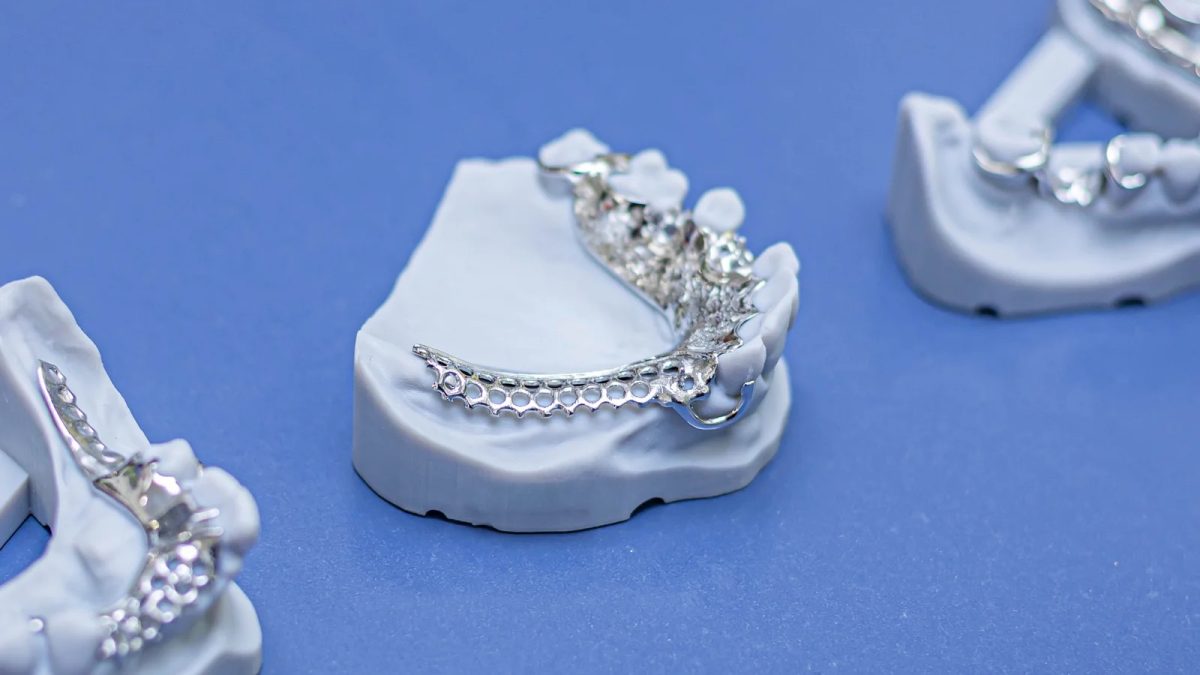
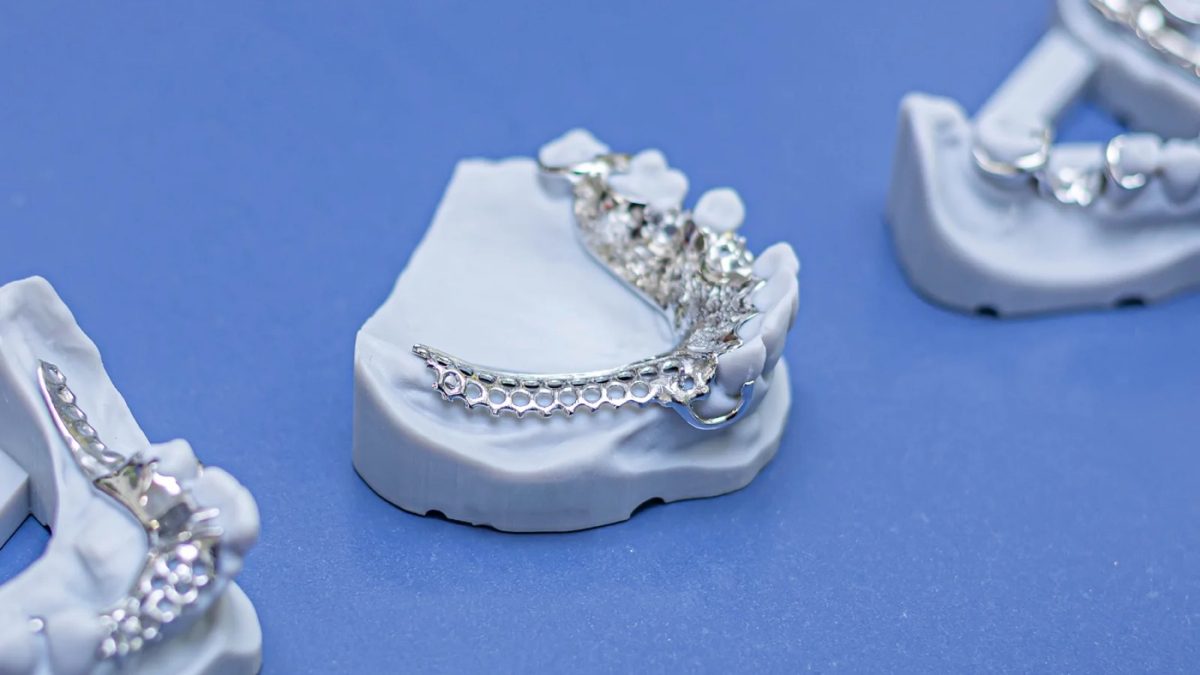
A cobalt-chromium framework is the reference standard for a definitive upper partial denture. It is rigid, so load goes where the design says it goes. It is thin, so palatal coverage can be reduced to a strap or a horseshoe rather than a plate. It survives, and the 95.1% figure above is largely describing this appliance.
The trade is that a cast metal upper partial needs planning. The framework is designed around a surveyed cast, and the survey line decides where the clasps sit and how the appliance seats. That is worth understanding before you prescribe, and we cover it in partial denture clasp types. The frameworks themselves are on our cast metal partials page.
Acrylic
An acrylic upper partial is right for a defined job: an interim while tissue heals, a transitional while a larger plan is staged, or an economy option where cost genuinely decides the case.
Because acrylic is not rigid the way metal is, it needs more palatal coverage to spread load and it will flex under function. That flex is tolerable over months and becomes a problem over years. Where it goes wrong is when an interim quietly becomes the definitive appliance because nobody scheduled the next step. If it is meant to be temporary, say so on the prescription and tell the patient the same thing. Detail is on our acrylic partials page.
Flexible thermoplastic
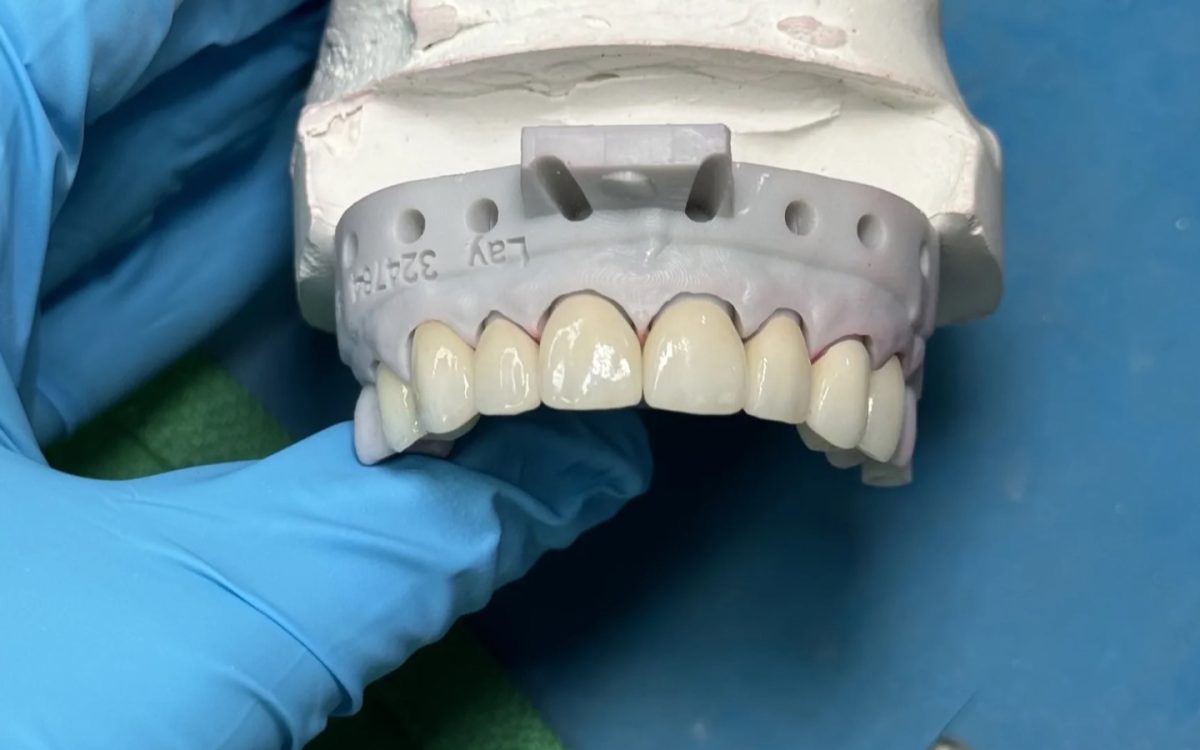
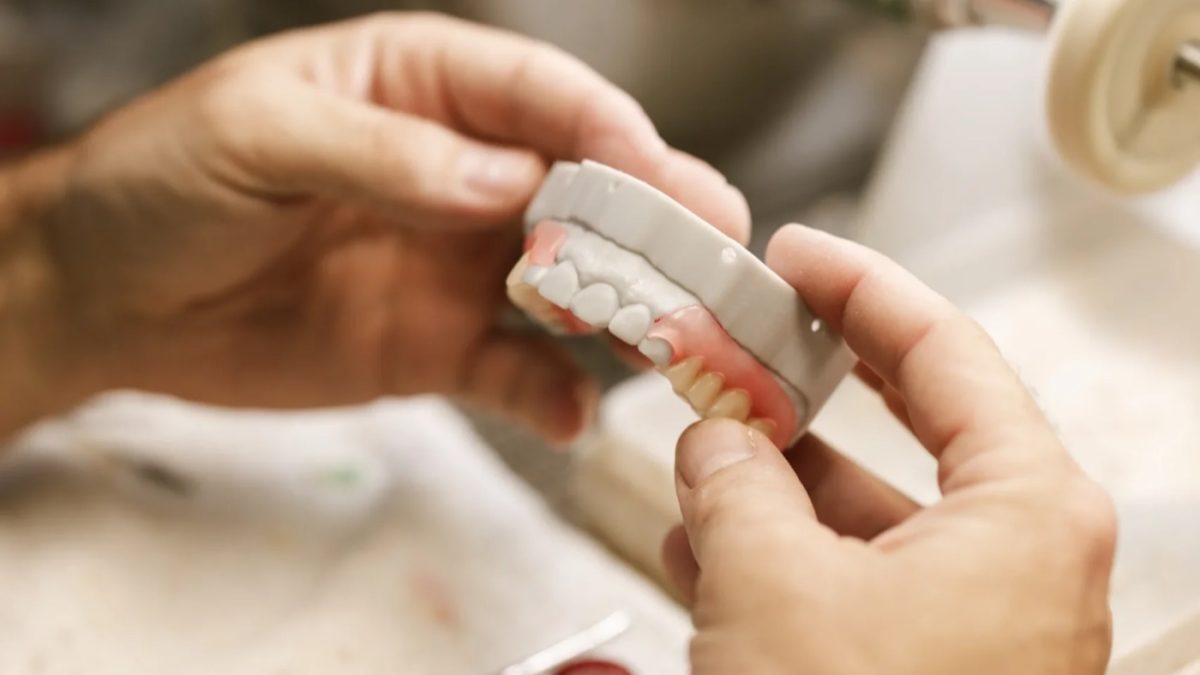
Flexible partials solve one problem better than anything else, which is the visible clasp. The clasps are tooth and tissue coloured and they engage undercuts a metal clasp could not use. For an anterior upper where the patient is looking straight at the clasp arm, that outweighs almost everything else.
There is also a finding here that runs against expectation. A randomised controlled trial comparing a flexible thermoplastic partial against a conventional cast alloy partial reported better patient satisfaction and better abutment survival in the flexible group, with no abutment failures recorded in that arm. The survival difference did not reach statistical significance, so it should not be oversold, but it is a real result and it argues against treating flexible partials as purely a cosmetic compromise.
The trade remains the flexibility itself. These are not rigid, so they are less suited to a long distal extension carrying real load, and they cannot be adjusted or relined the way acrylic can. We work in Valplast and Duraflex among others on our flexible partials page, with a fuller explanation in what dentists should know about Valplast.
Implant retained
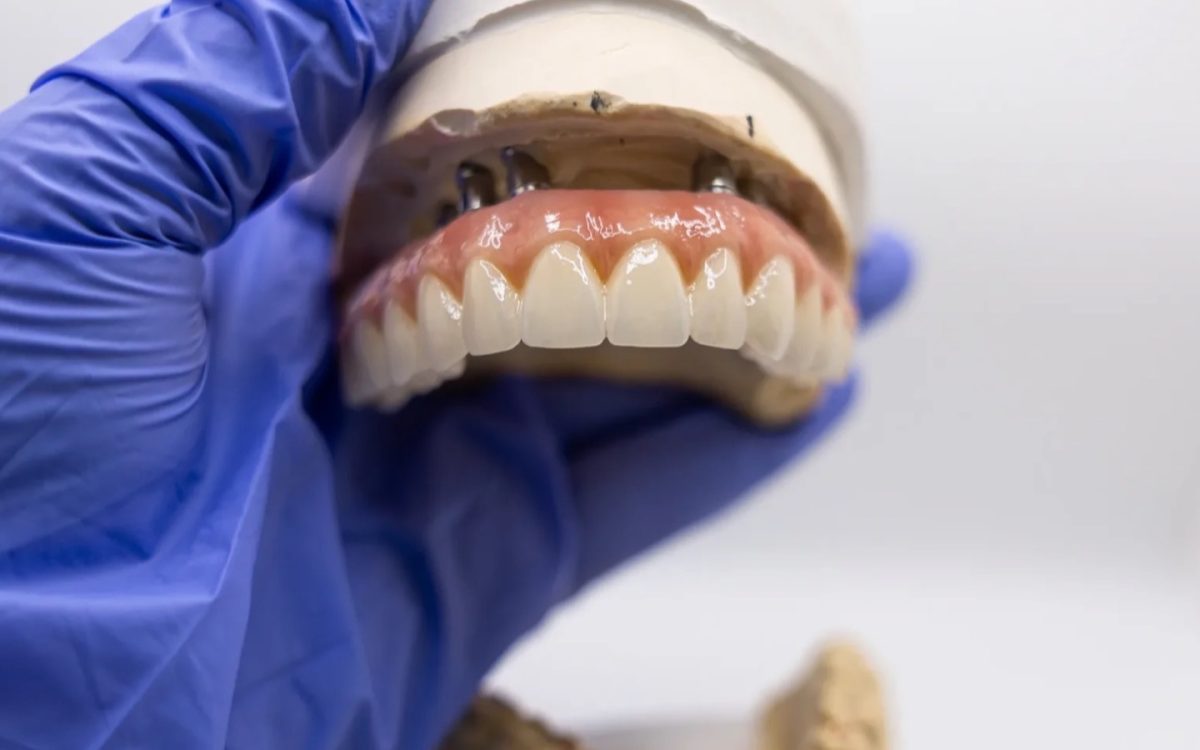
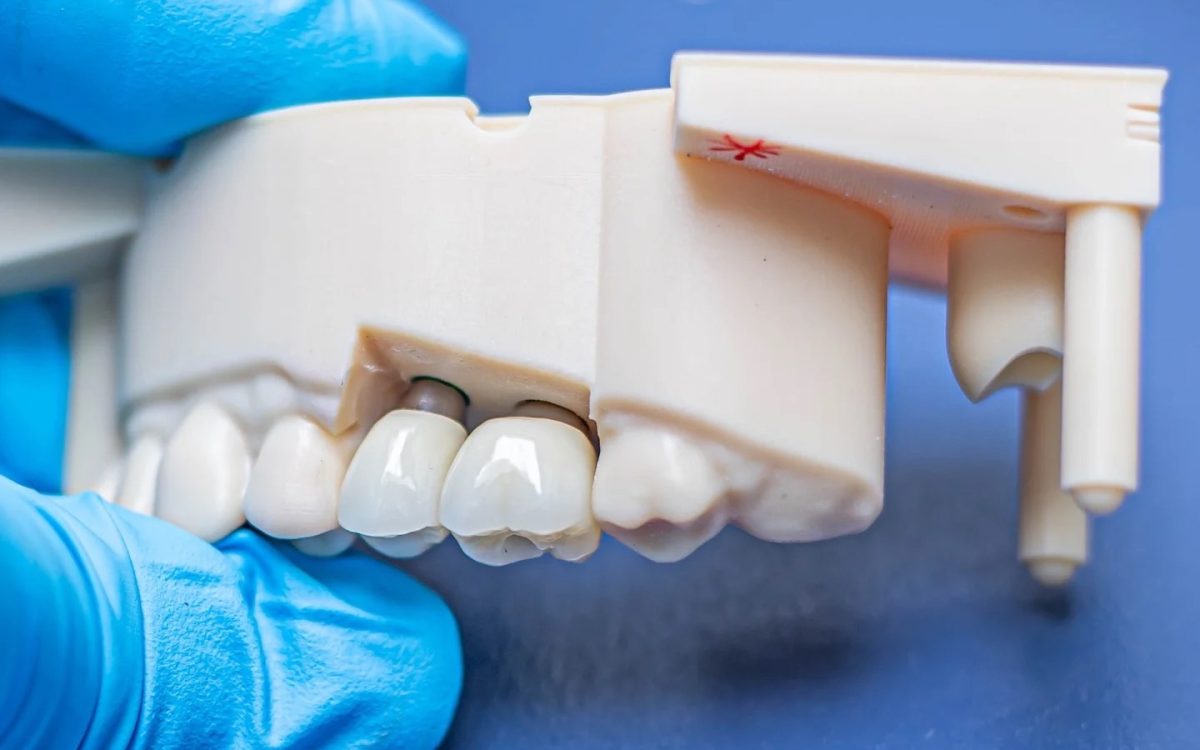
Worth naming as the fourth option because it changes the upper more than it changes the lower. Retention from implants can let you open up the palate, and a patient who could not tolerate full palatal coverage often can tolerate a horseshoe held by attachments. It is a bigger treatment plan and a bigger conversation, but for the patient who has already rejected two conventional uppers it is frequently the honest answer. Systematic review work on tooth-implant supported removable partial dentures reports good clinical performance where the case is planned for it. The retention decision behind it is in implant supported dentures versus implant retained.
Not sure which one
Send the case before you pick the design.
Tell us the abutments, which of them are non-vital, the esthetic priority and how long it needs to last. We will tell you which of the four the case actually wants.
Matching the type to the case
- Distal extension carrying real load. Cast metal. Rigidity is doing the work and nothing else substitutes for it.
- Anterior clasp visible when the patient smiles. Flexible, or a cast framework with the clasp design reworked to hide it.
- Non-vital or periodontally compromised abutments. Design load away from them, and say which teeth those are. The 13% figure above is the reason.
- Tissue still healing after extractions. Acrylic, explicitly interim, with the definitive appliance already planned.
- Patient who has failed two uppers on tolerance. Reduce the palate. That usually means cast metal, and sometimes it means implants.
- Cost is the deciding constraint and the patient knows it. Acrylic, with an honest conversation about service life.
The codes
Reference values, and worth confirming against the current CDT. Carrier language varies.
- D5211 maxillary partial denture, resin base. D5212 is the mandibular equivalent.
- D5213 maxillary partial denture, cast metal framework with resin denture bases. D5214 mandibular.
- D5225 maxillary partial denture, flexible base. D5226 mandibular.
- The base material is what the code is describing, which is why the material decision and the coding decision are the same decision.
Where the case is an immediate interim partial placed at the extraction appointment, that is a different code family again and it is covered in immediate dentures.
What we need on the prescription
- Kennedy classification and which teeth are abutments. A distal extension is a different brief from a tooth borne case.
- Which abutments are non-vital or periodontally compromised. Given the 13% versus 4% loss figures, this is the most valuable line on the form.
- The esthetic priority, by tooth. Not “esthetic case”. Name the tooth the patient looks at.
- Interim or definitive. This single word decides material more often than anything else.
- Any history of gagging or intolerance with previous appliances.
- Whether you have surveyed the cast, or want us to. Either is fine. Silence is the problem.
Scans are accepted from any major intraoral scanner including iTero, TRIOS, Medit and Primescan, with detail on our intraoral scanner page. If you have not sent us a case before, becoming a client takes no contract and no minimum.
Questions from the prep
Which of the types of upper partial dentures is most comfortable?
For most patients, cast metal, and the reason surprises people. Metal is rigid enough to be made thin, so it covers less palate than an acrylic appliance doing the same job. Comfort in an upper is mostly about how much palate is covered and how thick it is, not about whether the material itself feels soft.
How long does an upper partial denture last?
Around 95% of cast-clasp partials are still in service at 5 years in the retrospective literature, so the appliance is not usually the limiting factor. The abutment teeth are. Plan the recall around the teeth rather than around the denture.
Can a flexible upper partial replace a cast metal one?
Sometimes, and it depends on span and load. For a short span with an esthetic clasp problem, comfortably yes, and the RCT evidence on abutment survival is more favourable than most people assume. For a long distal extension carrying real occlusal load, a rigid framework is the better appliance, and substituting flexibility there usually shows up as movement the patient reports as looseness.
Does an acrylic upper partial harm the abutment teeth?
Any partial denture increases the load and the plaque burden on its abutments, which is what the periodontal health literature on partial denture wearers is describing. An acrylic appliance that flexes distributes that load less predictably than a rigid framework. Hygiene instruction and a recall interval matter more than the material choice.
Do you need a surveyed cast for every partial?
For a cast framework, the survey happens whether you do it or we do it. Either is fine. What causes trouble is neither, because then someone is guessing at the path of insertion. Tell us which of us is surveying and the case moves without a phone call.
Can an upper partial be converted to a different type later?
Not usually in any meaningful sense. Each of the types of upper partial dentures is built around a different load path, so converting generally means a new appliance. Worth saying at the consultation, because patients often assume an acrylic interim can be upgraded rather than replaced. Where the plan is to move toward implants, say so now and we design the interim so it does not get in the way.
Written by Amanda Elder, Lab Manager and a Certified Dental Technician in removable dentures, who began in her parents’ dental laboratory at fifteen at International Dental Arts. IDA has been a family founded dental laboratory in Tulsa since 1984, working with independent practices across the country. If you want a case reviewed before you commit, get in touch.