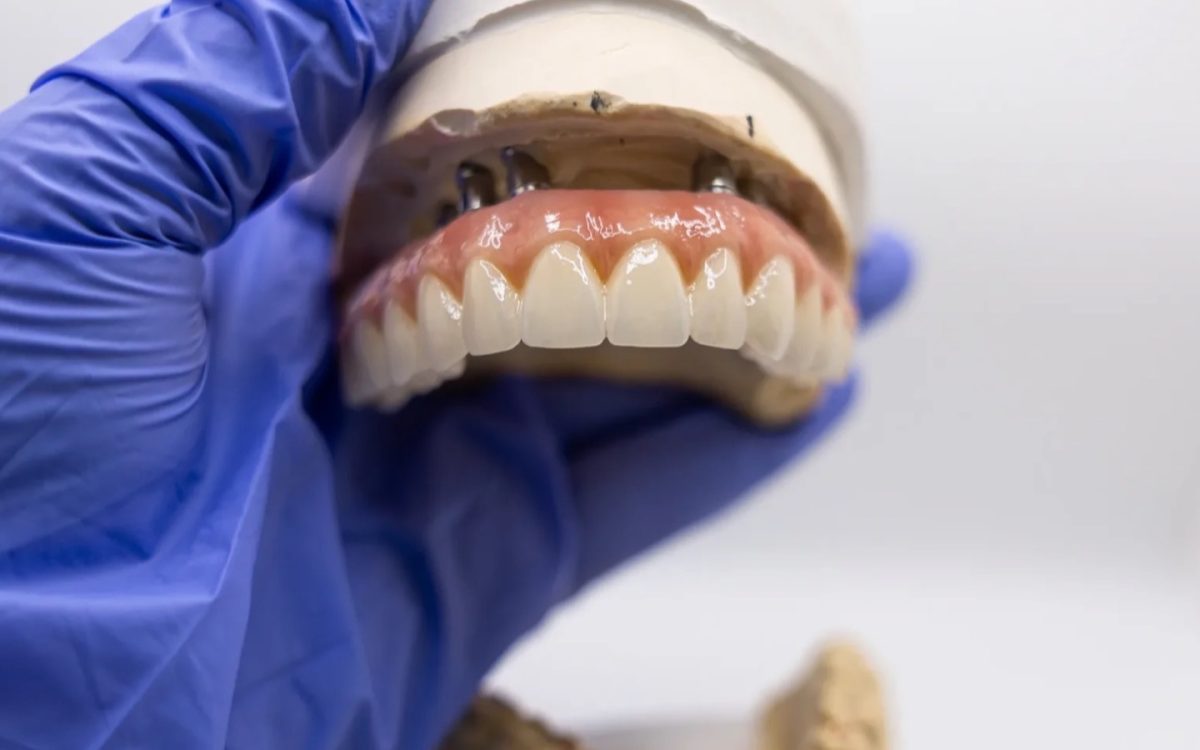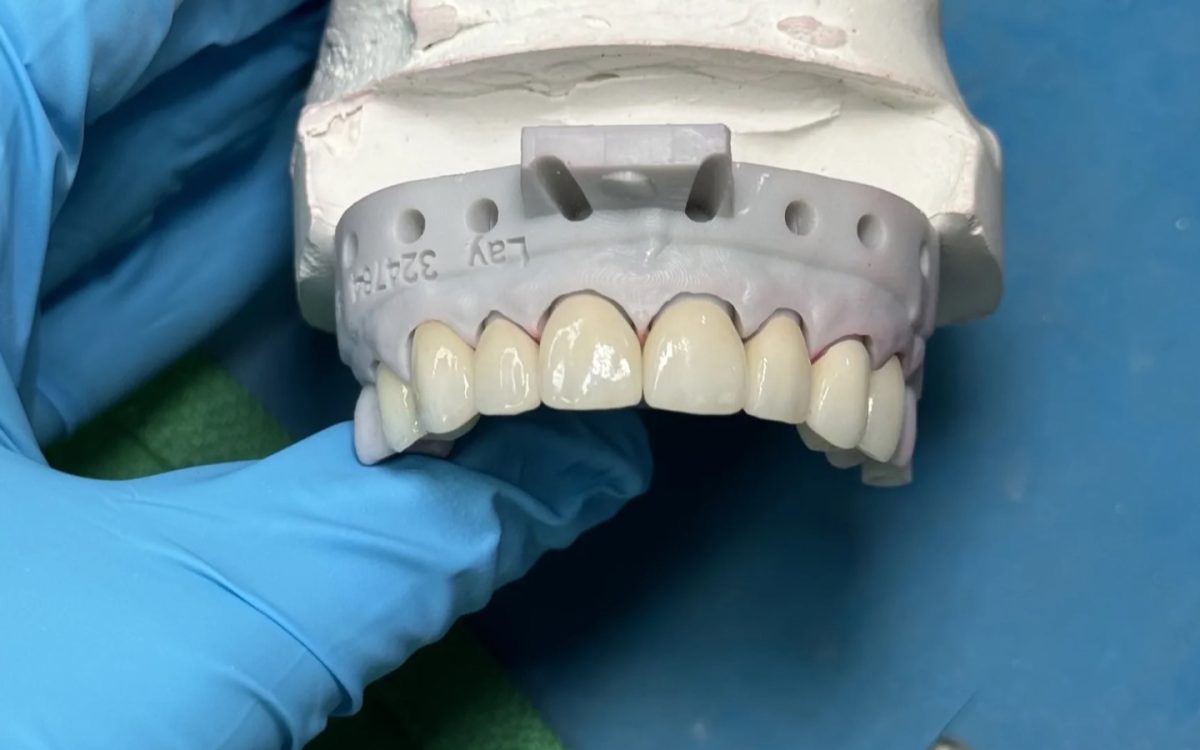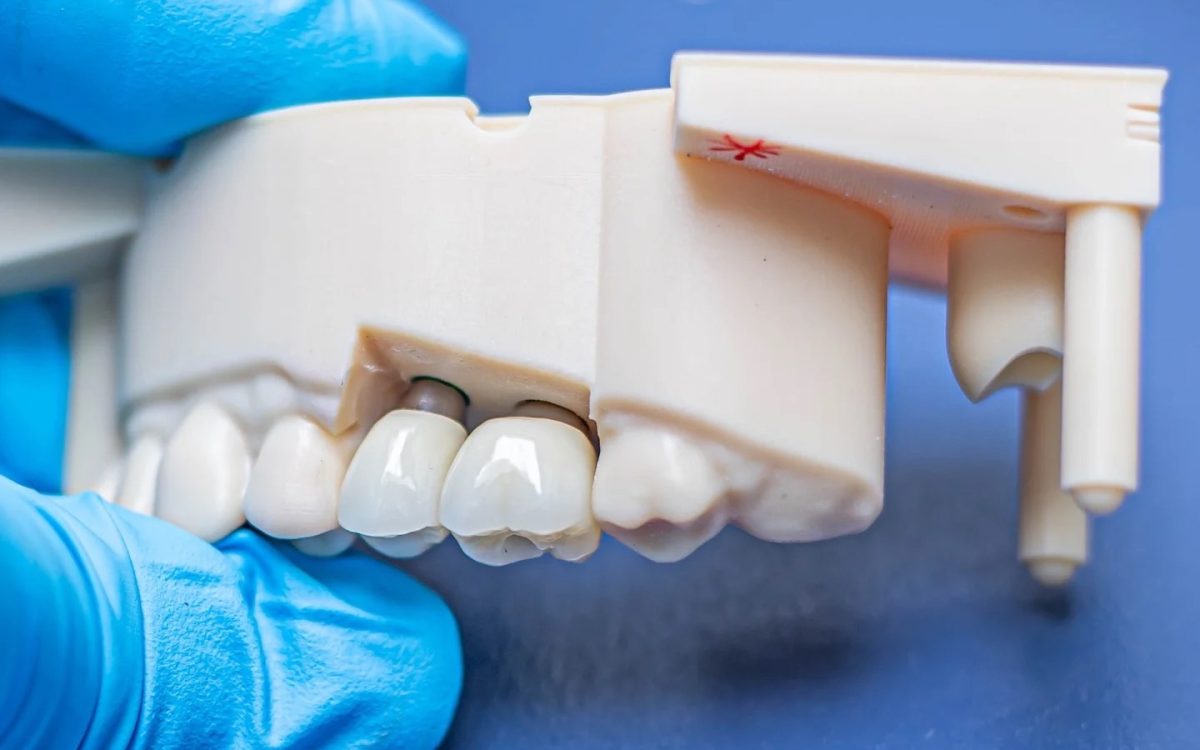
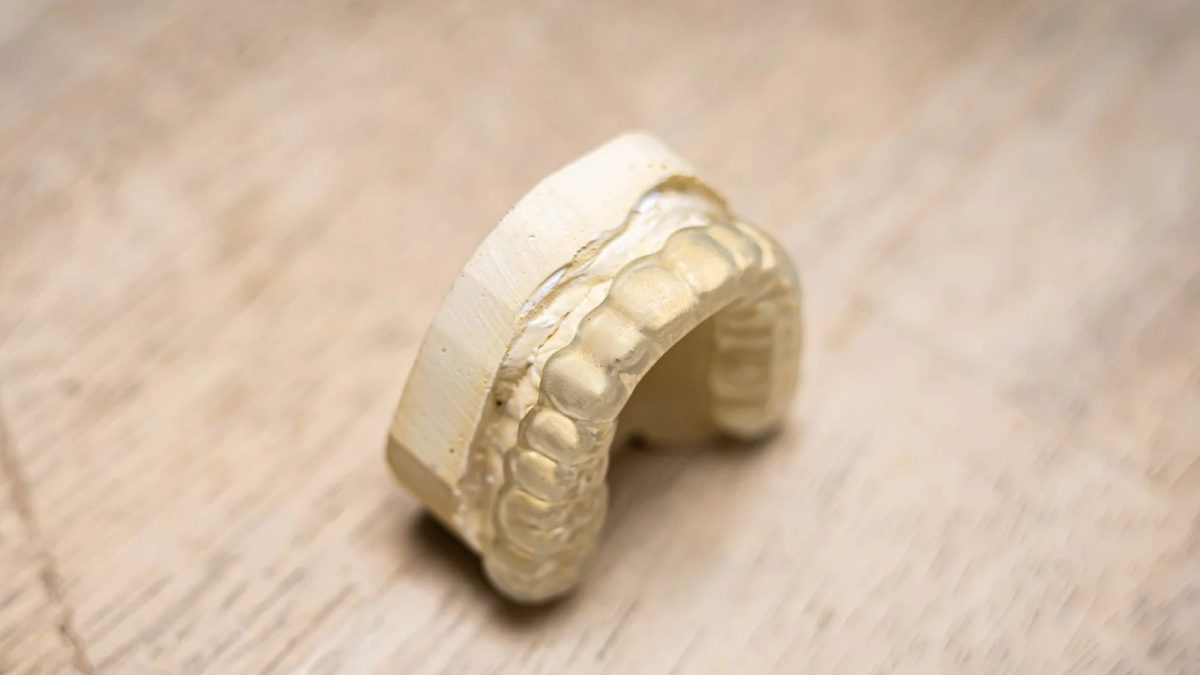
There are three occlusal guard codes, and only two variables pick between them:
- D9944, occlusal guard, hard appliance, full arch.
- D9945, occlusal guard, soft appliance, full arch.
- D9946, occlusal guard, hard appliance, partial arch.
The two variables are the material that contacts the occlusal surface and how much of the arch the appliance covers. Not the diagnosis, not the patient’s grinding severity, and not what the appliance is called on the prescription. Which matters to you because the lab, not the office, determines both of those variables at the bench. If we do not tell you exactly what we made, the code is a guess.
The rule, in the ADA’s own words
The reason a dual-laminate guard confuses people is that it is soft against the teeth and hard where it meets the opposing arch, so it looks like it could be either. The ADA published specific guidance on this, and its logic is worth reading rather than paraphrasing:
The operative part of a guard is the occlusal surface, and the key determinant of reporting a hard vs. soft appliance is the material that contacts the occlusal surface.
The same guidance states that an appliance containing both hard and soft components is properly documented and reported as a hard appliance, D9944 for full arch or D9946 for partial arch, and explains why: a combination guard’s soft layer only makes the hard working surface more comfortable to wear. It does not change the substantive effect, the fabrication or the use of the appliance.
So the practical version, and it fits on a sticky note: if anything hard touches the opposing teeth, it is a hard appliance. Soft-coded D9945 is reserved for a guard that is soft all the way through to the occlusal contact.
Which code is a dual-laminate guard?
Hard. D9944 if it covers a full arch, D9946 if it covers part of one. This is the single most common miscode we get asked about, and the reason is understandable: the patient describes it as a soft guard because the inside is soft, the front desk writes down what the patient felt, and the claim goes out as D9945 for an appliance that is hard where it counts.
It is worth fixing not because a carrier will always catch it, but because the appliance you delivered and the appliance you reported should be the same appliance.
Arch coverage, and the documentation that gets it paid
Coverage is the second variable and it is where D9946 lives. A full arch guard covers all the teeth on the upper or the lower. A partial arch guard covers only a portion, which is what an NTI-style or anterior-only splint is.
The documentation requirements differ, and this trips claims:
- For D9944 and D9945, the arch must be listed.
- For D9946, both the arch and the quadrant must be listed.
That extra field on D9946 is the most common reason an otherwise correct partial-arch claim comes back. It is one line on the narrative.
Why we tell you what we made
Look again at the two variables. Material at the occlusal contact, and arch coverage. Both are decided at the bench, from your prescription, and neither is visible to the person filing the claim once the appliance is in a bag.
So when we deliver a guard we tell you the material at the occlusal surface and the coverage, in those terms, because those are the terms the code is written in. If the prescription said “nightguard, upper” and we made a dual-laminate full arch appliance, the office needs to know it reports as a hard full arch appliance and not as the soft one the patient will describe. That is not billing advice, it is a description of what we fabricated, which is the part only we can supply.
It also runs the other way. If your prescription and the case do not agree, for instance a soft guard requested for a patient described as a heavy bruxer with significant occlusal wear, we will call. A soft appliance in a genuine grinder is a short-lived appliance, and the patient comes back.
Prescribe and code once
The appliance and the code, one call.
Tell us the wear pattern. You get the material, the arch coverage, and the code that follows.
When it is not an occlusal guard code at all
This is the exclusion most likely to cost a practice a claim, because the appliance can look identical on the bench.
D9944, D9945 and D9946 are not to be reported for sleep apnea appliances, snoring appliances, or TMD appliances. An appliance prescribed as an occlusal orthotic for a temporomandibular disorder is reported under D7880, occlusal orthotic device, by report, which sits in the oral surgery section rather than the adjunctive one and carries a narrative requirement.
So the same piece of hard acrylic can be D9944 or D7880 depending on the diagnosis behind it and the intent of the treatment. We fabricate to the prescription and the diagnostic and treatment-planning decisions stay with you, which is exactly why the diagnosis needs to reach us: it changes what we build and what it reports as.
D9940 is gone, and the codes people forget
D9940, occlusal guard by report, was removed in the CDT 2019 update and split into the three codes at the top of this article. It has been retired for seven years and it is still one of the search terms that brings dentists to this site, which tells you how long a familiar code survives in a practice’s habits and templates. If D9940 is still in your fee schedule or a favourites list, that is worth an afternoon.
The maintenance codes, which get missed far more often than the fabrication codes:
- D9942, repair and/or reline of occlusal guard. For an existing appliance, not for fabricating a new one.
- D9943, occlusal guard adjustment. The follow-up appointments, particularly on a TMD case where adjustment is part of the treatment rather than a sign something went wrong.
- D9950, occlusion analysis, mounted case. A separate diagnostic procedure performed in the practice, not part of the appliance.
As always, reference values only. Confirm against your current CDT set and the carrier, because insurance language and frequency limitations vary considerably on this category.
Hard, soft or dual-laminate for this patient
The clinical side, briefly, because it decides the code:
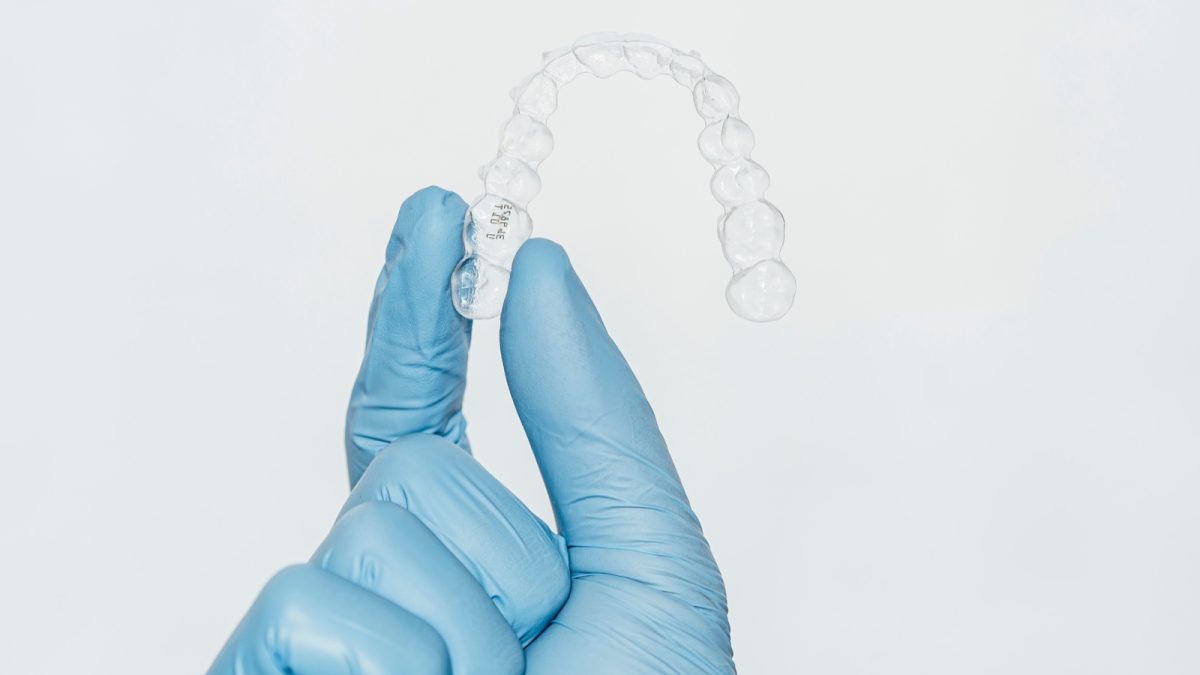
- Hard acrylic for bruxism and heavy parafunctional load. It holds its shape under load and it lasts. Expect a patient adjustment period.
- Soft thermoplastic for minor grinding and comfort cases, and for the patient who genuinely cannot tolerate a hard guard. Easier adoption, shorter service life.
- Dual-laminate where you want hard-appliance performance with a softer intaglio for tolerance. Codes as hard.
- Partial arch and NTI-style for specific anterior-only indications. Codes as D9946 with the quadrant.
Full detail on the material families, the indications and what we need in the prescription is on our nightguards and occlusal guards page, and the wider range sits under nightguards. We fabricate from any major intraoral scanner, iTero, TRIOS, Medit and Primescan, or from a traditional impression. Send the opposing arch for the occlusal registration.
Common questions
What is a D9944 dental code?
D9944 reports a hard occlusal guard covering a full arch. Hard is decided at the occlusal contact, so a dual-laminate appliance with a soft liner and a hard biting surface reports as D9944, not as the soft code the patient will describe. Confirm against your current CDT set and the carrier.
What does the dental code D9943 represent?
D9943 is occlusal guard adjustment, the follow-up visit that modifies the fit or the contacts on a guard already delivered. It is not the fabrication code, and it is not a repair or reline, which is D9942. On a TMD case, adjustment is part of the treatment rather than a sign something went wrong.
What is the dental code for occlusal adjustments?
That is a different family from adjusting a guard. Occlusal adjustment on the teeth is D9951 when it is limited, usually one visit on a site or quadrant, and D9952 when it is a complete multi-visit equilibration. D9943 adjusts the appliance. D9951 and D9952 adjust the occlusion.
Is an occlusal guard covered by insurance?
Coverage varies by plan, so nobody at the lab can answer it for your carrier. What we can do is remove the reasons a claim gets questioned: an accurate material and coverage description from the bench, the arch or quadrant documented where D9946 applies, and a diagnosis that matches the code, since a TMD appliance reports as D7880.
What if the guard covers a full arch but only contacts anteriorly?
Coverage is what the code describes, so a full arch appliance is a full arch appliance. Contact scheme is a design decision we document, and it belongs in the narrative rather than changing the code. If you are unsure how a specific design should be described, ask us before the claim goes out.
Can we bill for the guard and an occlusion analysis on the same case?
They are separate procedures and D9950 describes a diagnostic workup with mounted casts, not the appliance. Whether a given carrier will pay both on the same date is a plan question, not a coding one, so check the plan.
Does a printed guard code differently from a pressure-formed one?
No. The code describes the material at the occlusal surface and the arch coverage. How the appliance was manufactured does not appear in the nomenclature.
Who is responsible if the code is wrong?
The practice submits the claim, so the practice owns it. What we owe you is an unambiguous description of what we fabricated, in the language the codes use, so that nobody has to infer it from the appliance or from what the patient says it feels like.
Terminology you have not met before is probably in our glossary of dental terminology. When you want to start sending cases, becoming a client takes no contract and no minimum, priced per case.