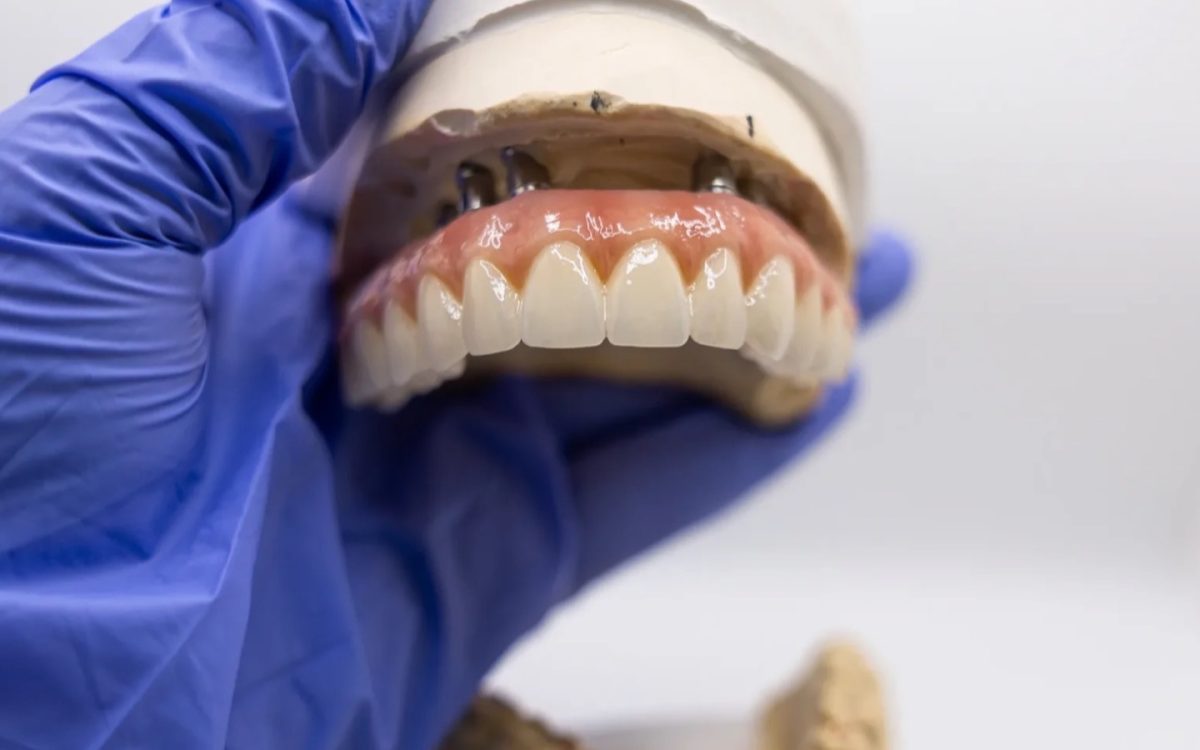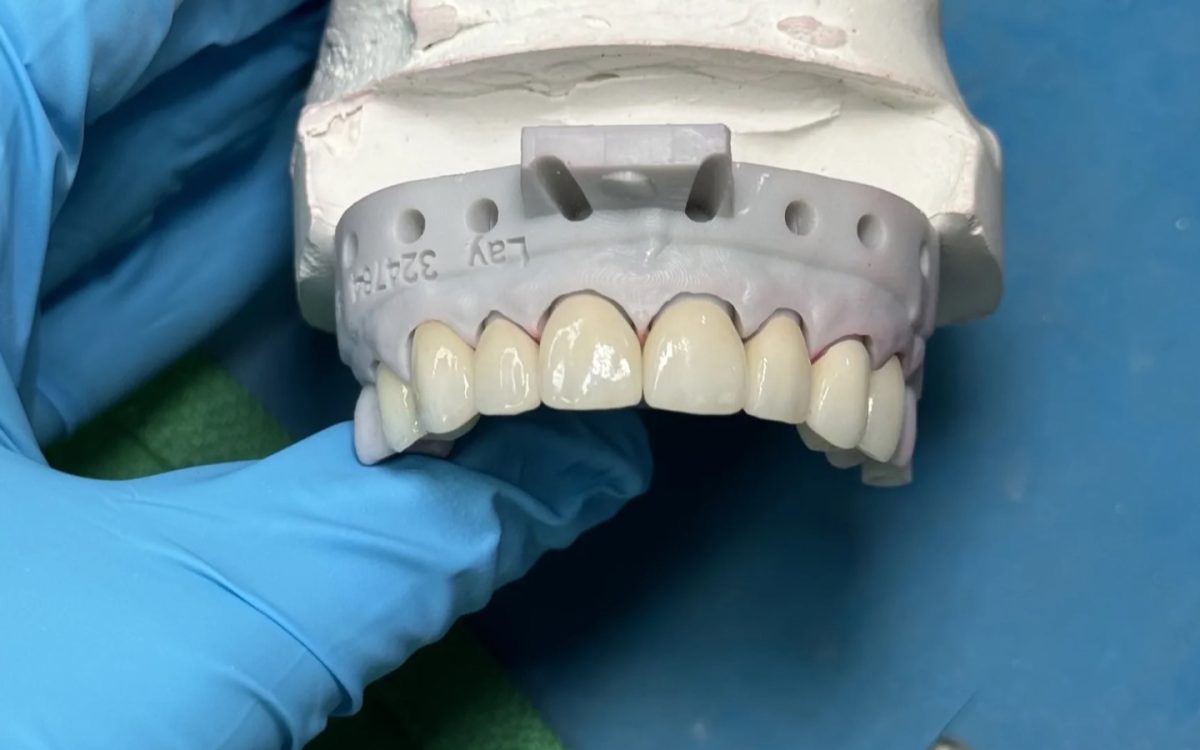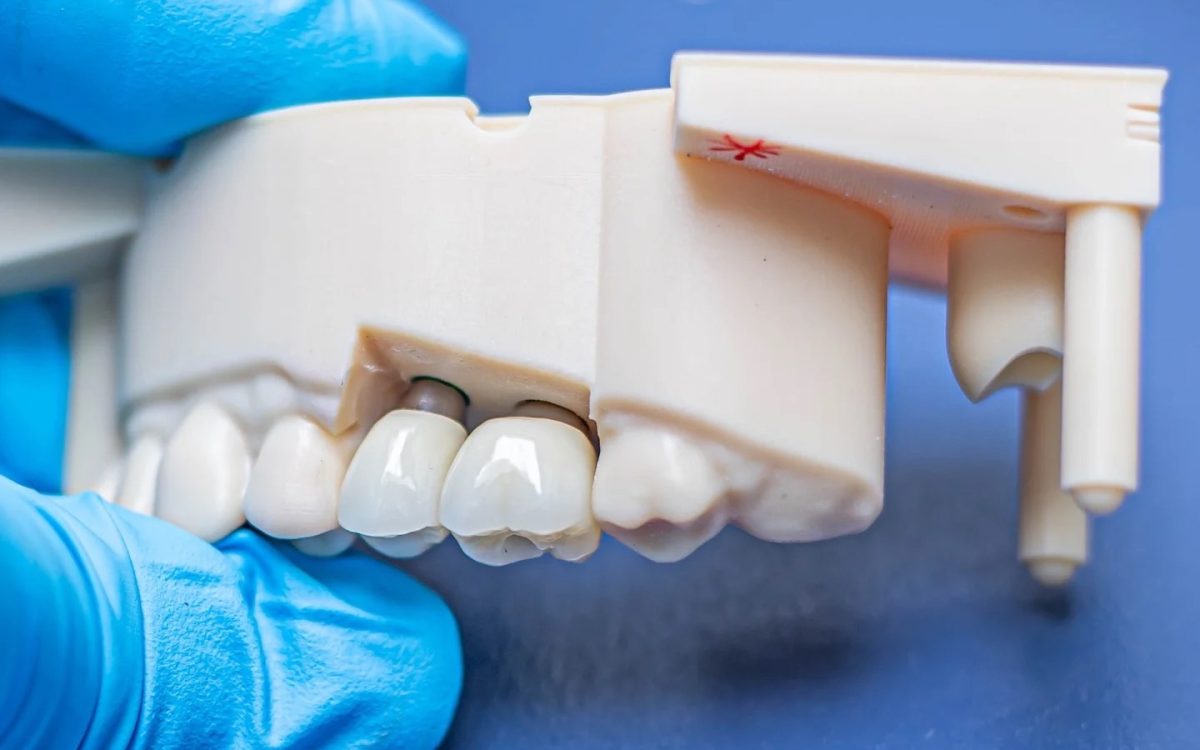
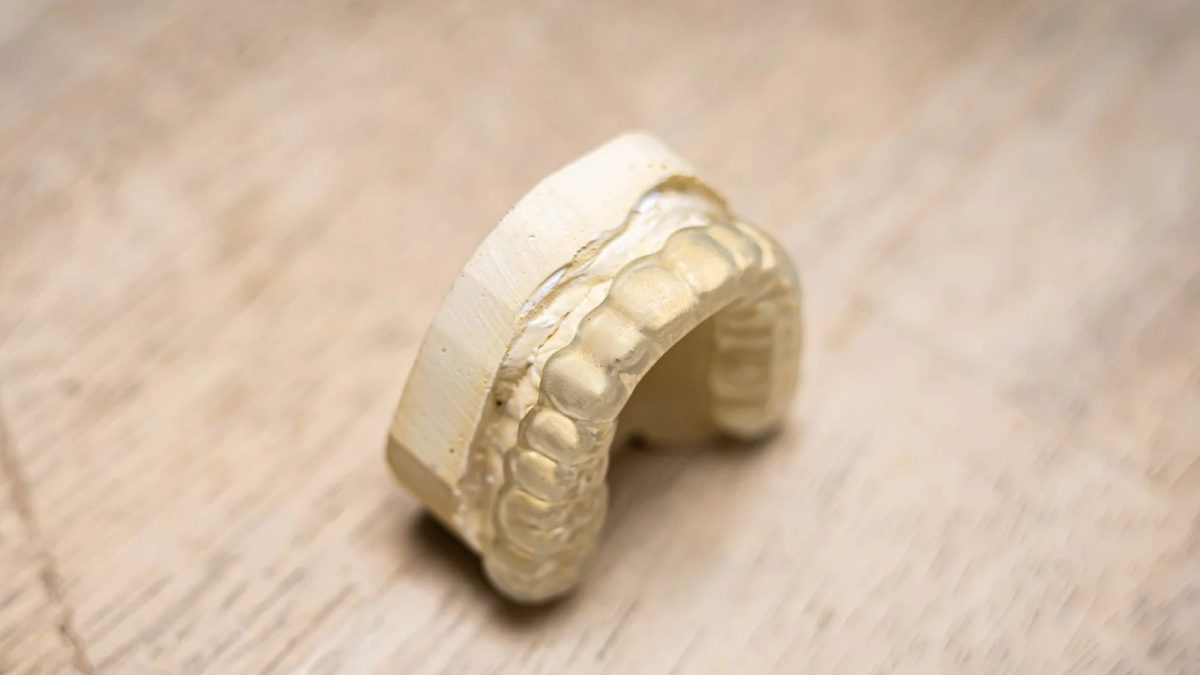
An NTI night guard is the smallest appliance we make and the one with the most argument attached to it. It covers the two central incisors and nothing else, holds the posterior teeth apart, and asks a small contact point to do the work a full arch appliance spreads across every tooth. It has randomised trial support. It also has a documented complication list. Both facts belong in the same conversation.
This is the lab view of it. What the evidence shows, what goes wrong when it goes wrong, and what we need from you to build one that is safe to wear. If you are still deciding between a protective appliance and a therapeutic one, that decision comes first and it is covered in occlusal splint versus night guard.
What an NTI night guard actually is
The design is an anterior bite stop. In its most common form it sits on the two maxillary central incisors, though mandibular versions exist, and the opposing incisors meet a single small platform. Everything behind the canines is held out of contact. The claim behind the design is that a patient cannot generate the same clenching force against a single anterior point as they can against a full arch of posterior contacts, so the muscle effort drops.
It is made in hard acrylic. The prefabricated versions are fitted chairside and the laboratory versions are built on your models to the contacts you specify. A separate appliance often confused with it is the full arch anterior deprogrammer, which covers the whole arch and discludes the posterior teeth using an anterior ramp. That appliance does a similar job with considerably more retention, and it matters later in this piece.
What the evidence supports, and what it does not
The best single source is a qualitative systematic review that went through 68 publications and identified 5 randomised controlled trials reported across 9 papers, with Jadad quality scores ranging from 1 to 5. That is a small evidence base by any standard, and it points in more than one direction.
On muscle activity the results favour the design. One randomised trial found significant decreases in masseter EMG activity during sleep against baseline with the anterior device, where the stabilization splint showed no such difference. A second trial found reduced contraction intensity in both masseter and temporalis against baseline. Neither device stopped bruxism. The parafunction continues and the appliance changes how hard it is expressed.
On headache the numbers are more modest than the marketing around this appliance suggests. In the headache trial, 16 percent of participants using the device reported an 85 to 100 percent reduction in migraine against 7 percent in the control group, and users reported elimination of 46.9 percent of all headache pain. That is a real effect in a minority of patients rather than a general result.
On temporomandibular disorders the picture is genuinely split. Two randomised trials looked only at TMD patients. In one, the full coverage stabilization appliance produced greater improvement than the anterior device. In the other there was no difference between them. Nothing in that supports reaching for the small appliance first in a TMD case.
The complications are documented, not theoretical
This is the part that changes how the appliance should be prescribed. The same review collected the adverse events reported across the literature and the manufacturer complaint records, and they cluster around two themes. The first is the appliance being small and loose in the mouth. The second is teeth moving because only two of them are being held.
- Swallowing difficulty in 2 of 18 patients in one series, and one reported case of the appliance lodging in the esophagus. A small unretained appliance in a sleeping patient is the risk this design carries that a full arch one does not.
- Dry mouth from a forced open jaw position in 6 of 18 patients, which is a direct consequence of holding the posterior teeth apart all night.
- Transient tooth tenderness in 6 of 14 patients in another series, and isolated reports of persistently sensitive lower front teeth.
- Radiologically confirmed widening of the periodontal ligament with alveolar bone resorption in 1 of 20 patients, at a single tooth.
- Occlusal change, including anterior open bite after extended wear around the clock, and a recorded reduction in vertical overbite of 1 mm between follow-up visits. Tooth mobility also appears in the manufacturer complaint records.
None of that makes the appliance unusable. It makes it an appliance with a supervision requirement built into it. The review authors put it plainly, which is that the device may be used successfully for bruxism and TMD management but should be chosen only where the clinician is confident the patient will return for follow-up and readjustment.
Why an NTI night guard needs a review schedule in writing
Two teeth are being held and the other twenty six are free. Over a night that is nothing. Over eight months of unsupervised nightly wear it is an orthodontic appliance nobody prescribed. The posterior teeth are unopposed and the anterior teeth are loaded, and the direction of travel is an open bite that takes real work to correct.
The practical version is that the recall is part of the prescription rather than an optional extra. Patients who are told at delivery that they are returning in six weeks and then every few months tend to come back. Patients handed an appliance with no date attached tend to reappear when something has already changed. We will build whatever you prescribe. On a partial arch design we will ask once whether the patient is on a review schedule, because that question has caught real problems.
If the honest answer is that this particular patient will not come back, that is a strong argument for a full arch appliance instead. Our occlusal and bite guard line covers both, and the full arch versions carry none of this risk because nothing is left free to move.
Prefabricated chairside or made in the laboratory
A prefabricated anterior device is fitted and relined at the chair in a single visit. It is fast and the patient leaves with it. What you give up is control over the contact. The platform is where the prefabricated form puts it, and the occlusal relationship is whatever results once the material sets with the patient closing into it.
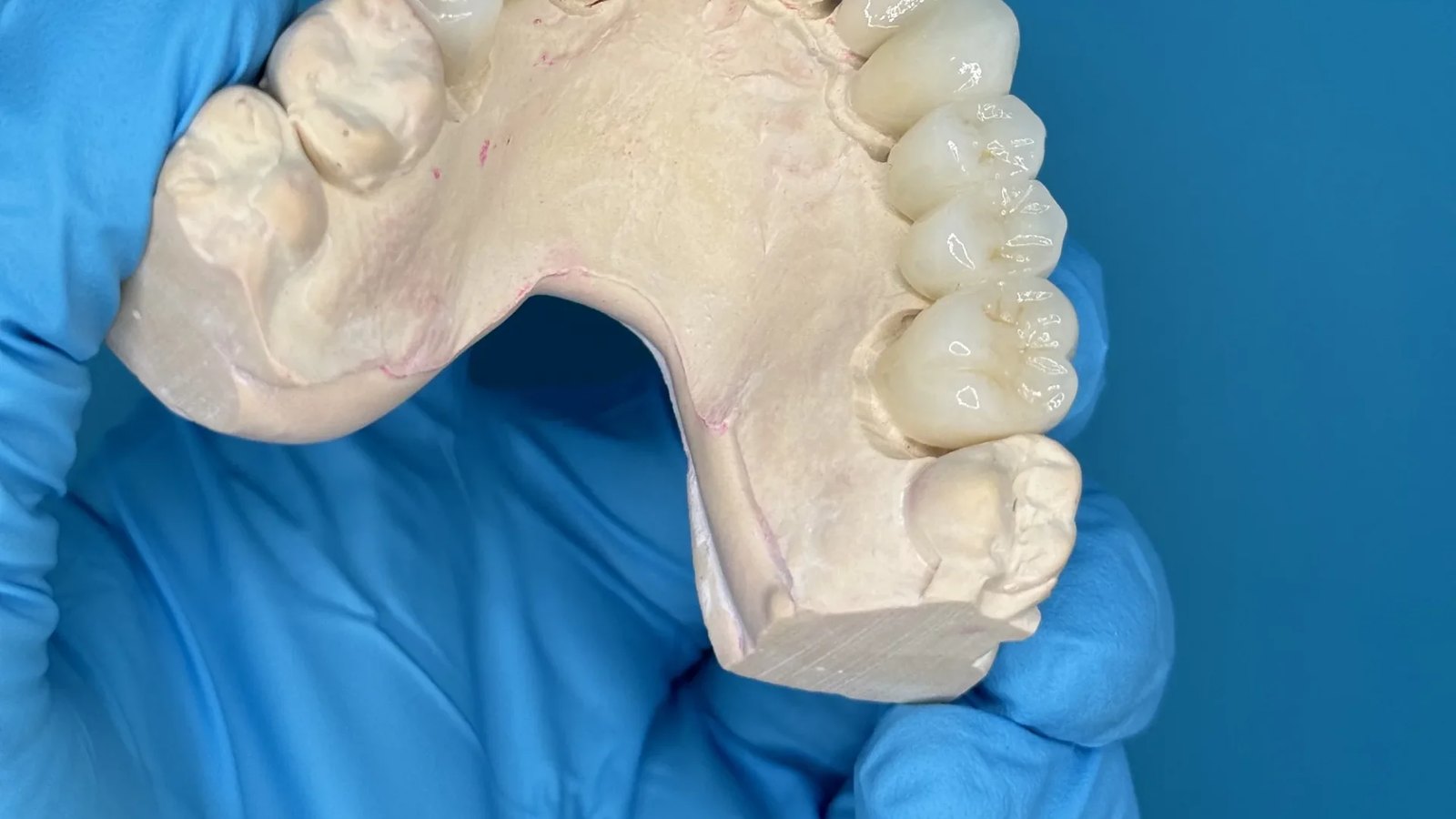
A laboratory made appliance is built on mounted models to a contact you specified. We can place the platform where you want it, set the amount of posterior separation deliberately rather than accepting what falls out of the fit, and finish the acrylic properly so there is no rough surface sitting against the lower incisors all night. On an appliance where a single contact point does all the work, that control is the entire difference in the finished result.
When a full arch appliance is the better call
- The patient has extensive anterior restorative work. A single point contact concentrates force exactly where the porcelain is, and our emax and zirconia crown cases do better under a distributed load.
- The patient will not attend review appointments, for whatever reason. This is the single strongest indication for full arch coverage.
- The diagnosis is TMD rather than bruxism or headache. The trial evidence either favours the stabilization splint or finds no difference, so there is no case for the smaller appliance.
- There is missing posterior support, or the patient is restoring implants. A design that holds the posterior teeth apart is the wrong instinct where the posterior segment is already compromised, and implant restorations want the load spread rather than concentrated.
- Anterior periodontal support is reduced. The documented ligament and bone findings occurred at single loaded teeth, which is the situation a compromised incisor is already in.
What we need on the prescription
- The diagnosis, in one line. Bruxism, headache and TMD lead to different appliances and this is the field that decides it.
- Which arch, and confirmation that partial arch coverage is deliberate rather than shorthand.
- Which teeth the platform should contact and how much posterior separation you want.
- Whether the patient is on a review schedule and when the first recall is booked.
- Mounted models or a scan of both arches with a bite record. A partial arch appliance cannot be built safely from a single arch scan, because the whole design is about a relationship between the two.
We take scans from any of the major systems as well as conventional impressions, which is set out on our intraoral scanners page. How a case moves through the lab once it arrives is covered in what a digital dental lab actually changes, and case planning support is on the for dentists page.
The codes
- D9946 occlusal guard, hard appliance, partial arch. This is the code for an NTI night guard and for any other anterior or quadrant only hard appliance.
- D9944 occlusal guard, hard appliance, full arch. The conventional hard splint.
- D9945 occlusal guard, soft appliance, full arch.
- D7880 occlusal orthotic device, by report. For TMD orthotics rather than protective appliances.
- D9943 occlusal guard adjustment, for the review visits this design depends on.
- D9942 repair and reline of an occlusal guard.
- D9936 cleaning and inspection of an occlusal guard.
Reference values only. Confirm against current CDT and remember that carrier language varies, particularly on whether a partial arch appliance is covered at all.
Questions from the prep
Is an NTI night guard the same as an anterior deprogrammer?
No. Both hold the posterior teeth apart. The anterior deprogrammer covers the full arch and discludes the posteriors with an anterior ramp, so nothing is free to move and retention is much better. The NTI style appliance covers only the central incisors. If you want the deprogramming effect without the tooth movement risk, the full arch version is the one to ask for.
Does it stop bruxism?
No, and this is worth saying to the patient directly. The trials that measured muscle activity found reduced contraction intensity against baseline. Neither the anterior device nor the stabilization splint stopped the parafunction. The appliance changes how the clenching is expressed rather than whether it happens.
Can a patient wear one during the day?
The occlusal changes in the literature were associated with extended wear around the clock rather than overnight use. Daytime wear on top of nightly wear is the pattern most likely to move teeth. If a patient has decided on their own to wear it all day, that is worth catching at review.
Can you make one from a single arch scan?
No. The appliance is defined by where the opposing incisors land on the platform, so we need both arches and a bite record. A single arch scan produces a guess.
How long should one last?
Hard acrylic in a heavy clencher marks within months, and on this design the wear is concentrated at one small platform rather than spread out. Wear on the appliance is the appliance working. Wear that has changed the contact point is a reason to remake it, which is part of what the review visits are checking.
Appliance planning
Tell us the diagnosis and we will tell you the appliance
Send the diagnosis with the case and we will confirm whether a partial arch design is the right build or flag where a full arch appliance is the safer answer. No charge for the conversation.
Written by Clint Carson, CDT, certified dental technician at International Dental Arts. IDA has been a family founded dental laboratory in Tulsa since 1984, working with independent practices across the country. If you want a case reviewed before you commit, get in touch.