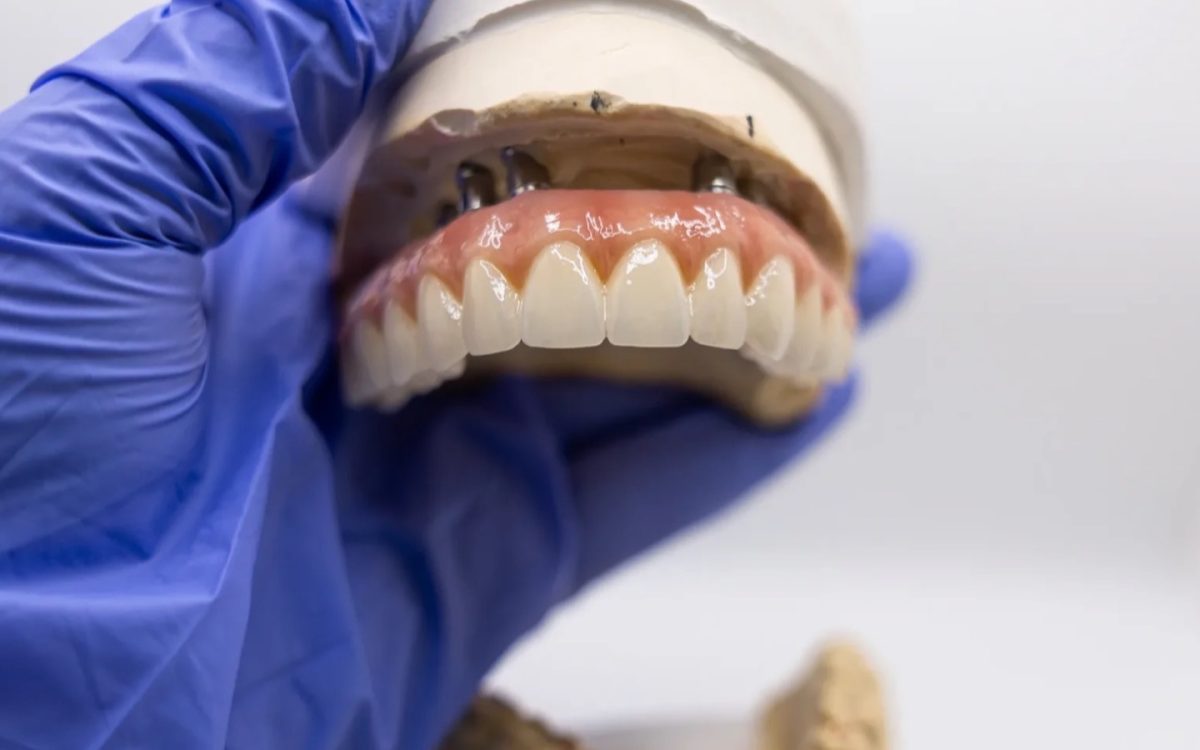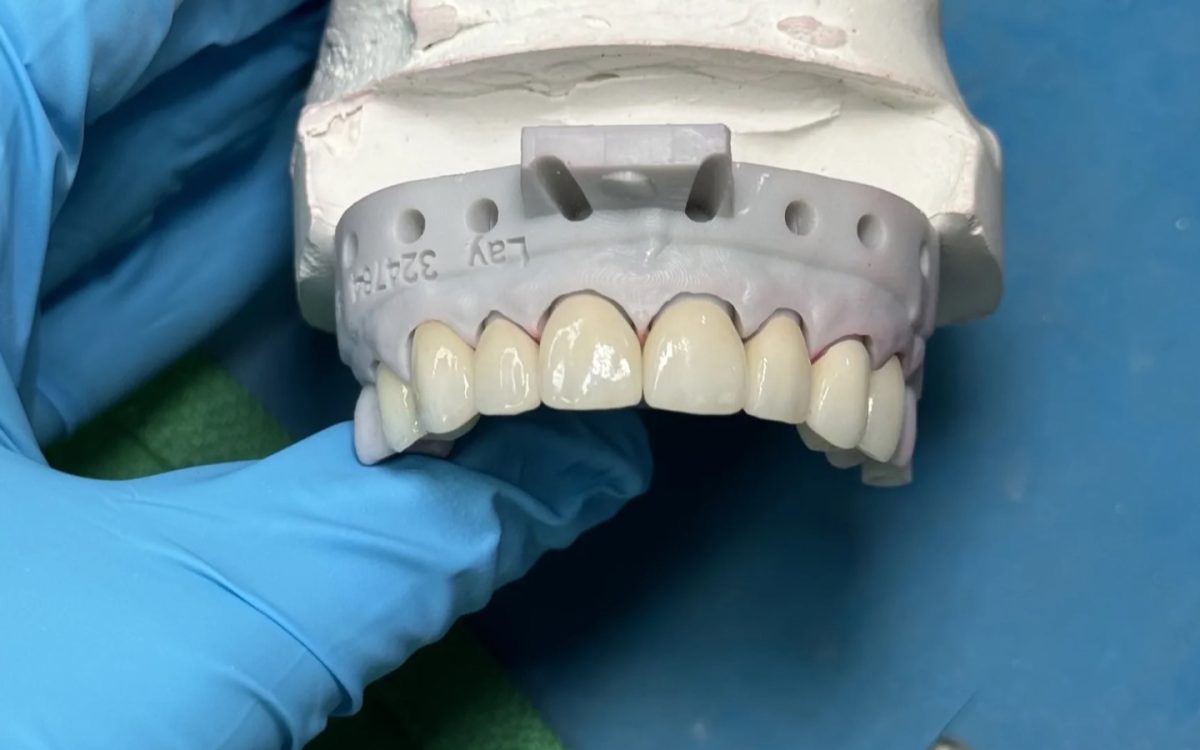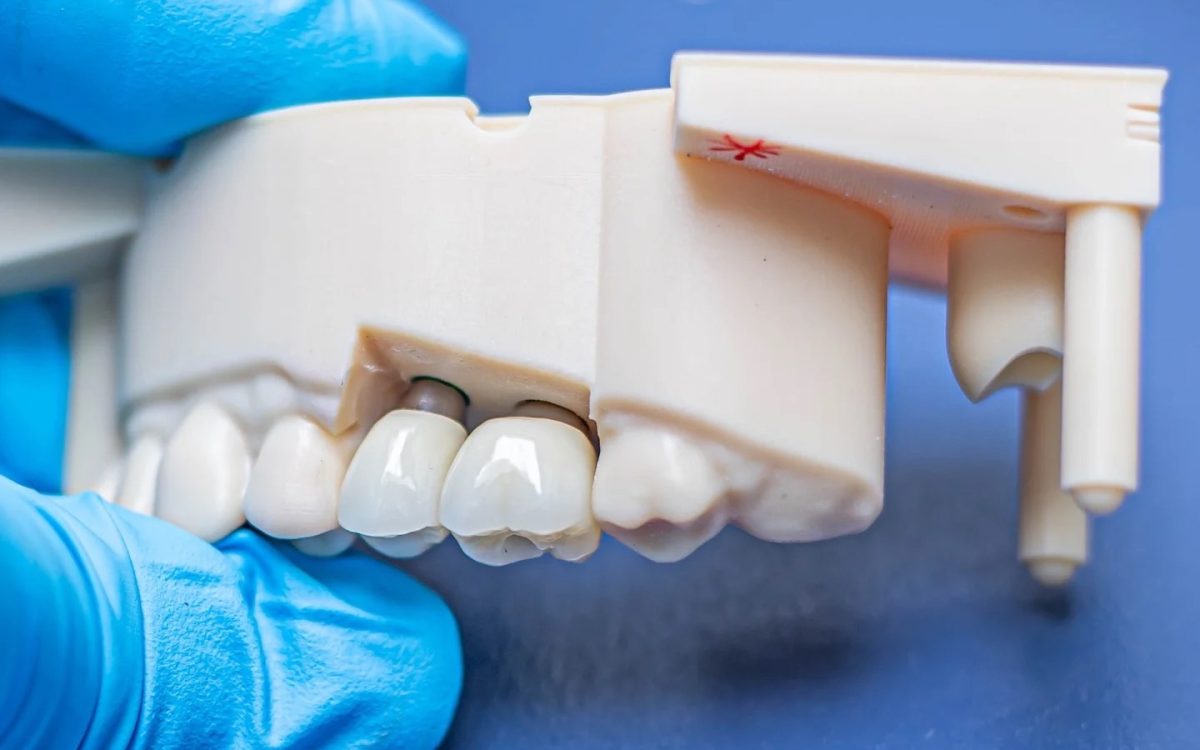
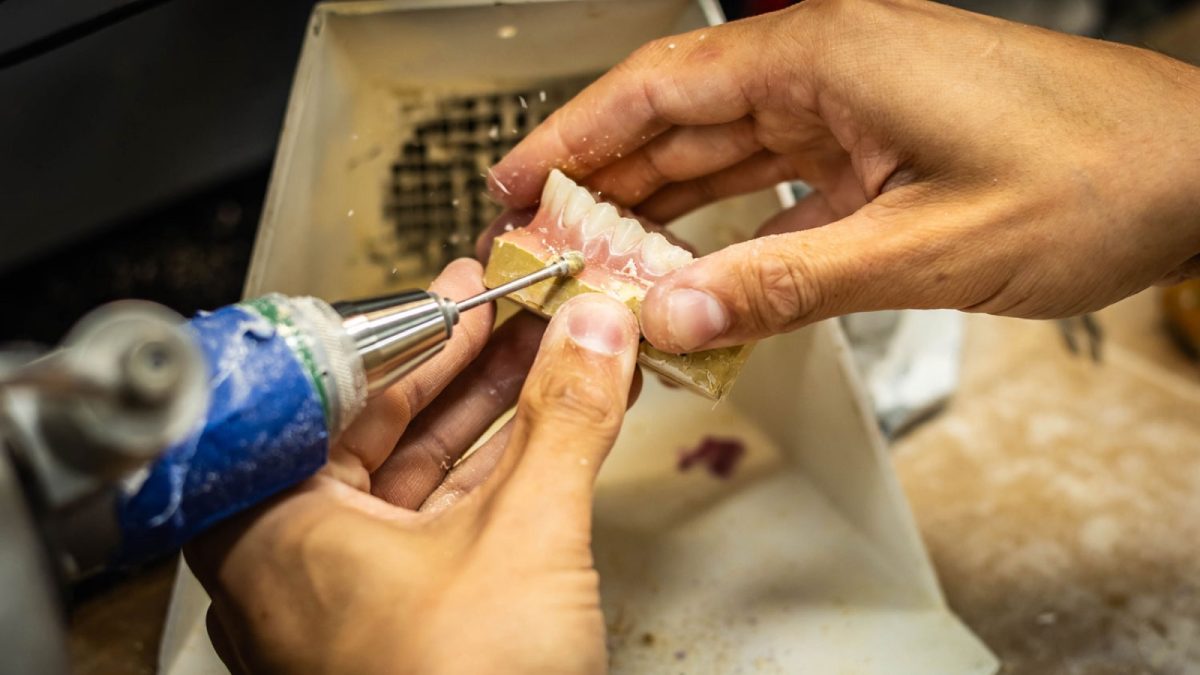
A denture reline replaces the fitting surface of a denture without touching the teeth or the occlusion. It is the right answer when the ridge has changed and the denture has not. It is the wrong answer when the problem is the bite, the tooth position, or an appliance that was never right.
Here is how we choose between hard and soft, what the literature says about how long each lasts, and the four cases where we will tell you to remake instead.
Hard denture reline
New acrylic against the tissue, processed to the existing base. It is the default for a stable ridge that has simply resorbed, and it restores adaptation without changing anything the patient recognises about their appliance.
A hard denture reline lasts as long as the next period of ridge change, which on a settled ridge is years. On a ridge still remodelling after extractions it is much shorter, because most alveolar bone loss happens in the first 3 to 6 months after extraction, with maxillary vertical reduction of roughly 1.5 mm to 2 mm inside six months and anterior mandibular height loss reaching 4 mm to 5 mm in the first year. That timetable and its consequences are set out in immediate dentures.
Soft denture reline, and how long it actually lasts
A resilient material against the tissue instead of hard acrylic. The indication is tissue that cannot tolerate load: a knife edge ridge, a recent surgical site, a patient with sore spots recurring in the same place.
The service life is the part worth being straight about. A laboratory processed soft liner typically needs replacing within one to two years. That is not a defect, it is the material, and a patient who is told so treats the second one as maintenance rather than as a failure.
Material choice inside that matters more than most practices realise. Silicone based liners retain resiliency longer than acrylic based ones, and a randomised clinical trial comparing the two found both significantly improved oral health related quality of life and maximum bite force at one and three months against baseline, with the silicone group recording significantly higher biting force at three months. Acrylic based liners are also more prone to fluid sorption and solubility, which reduces longevity and colour stability and increases the potential for microbial biofilm.
Two practical consequences. If the patient smokes, expect discoloration and odour sooner, both frequently reported in that group. And if the liner is going to be in service for a year or more rather than weeks, the silicone option is worth the difference.
On tolerance, the literature is reassuring: clinical experience reports close to universal tissue tolerance of soft liners with acceptable patient reaction. The limitation is durability and hygiene, not biocompatibility.
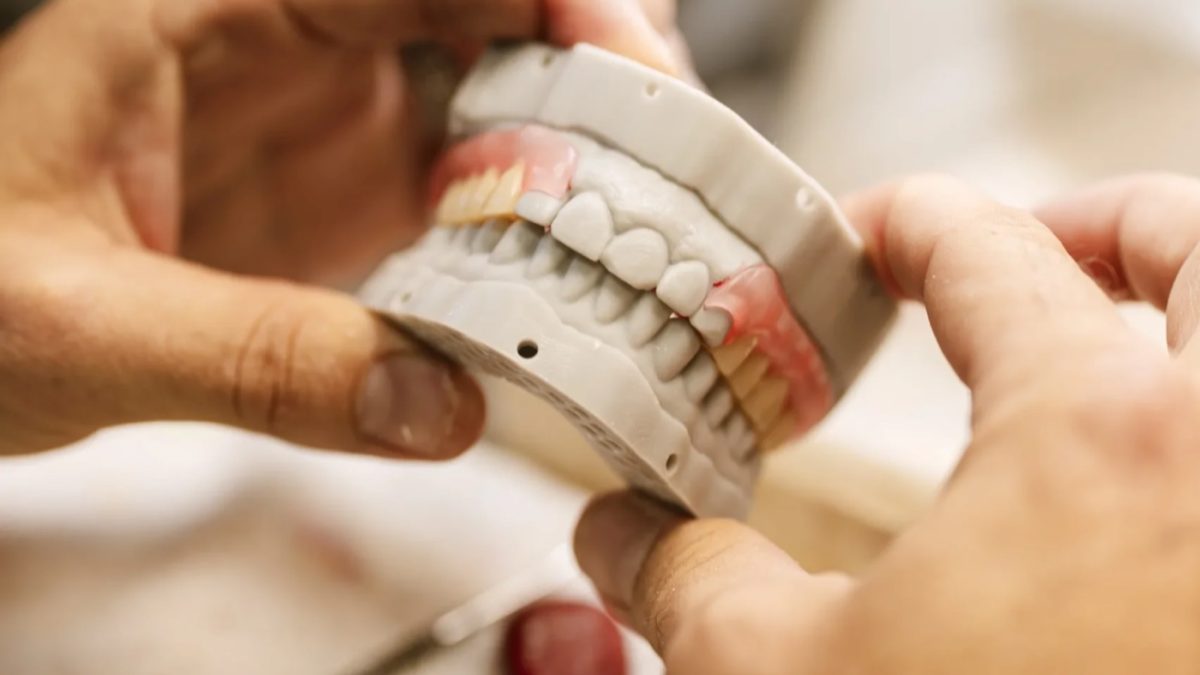
When a denture reline is the wrong answer
This is the part worth reading twice, because relining the wrong case makes a bad denture fit better without making it a good denture.
- The occlusion is wrong. A reline does not touch the bite. If the vertical dimension is off or the teeth meet badly, relining locks that error in place and makes it permanent.
- The teeth are worn through. A new fitting surface under worn teeth buys a few months and wastes the visit.
- The denture has been relined repeatedly. Each one adds bulk and moves the teeth further from where they should sit relative to the ridge.
- The patient has never been happy with it. A reline will not rescue an appliance that was wrong at delivery, and it confirms to the patient that nothing can be done.
In those four cases we will phone you rather than process it. It is a slightly awkward call and it is much less awkward than the one afterwards. The reline or remake decision is genuinely clinical, and population scale work exists on it, including a 20 year retrospective following complete denture longevity after relines across more than 187,000 insured adults.
Reline or remake
Not sure which one the case needs.
Send it and tell us what the patient is actually complaining about. If a reline will not fix it we would rather say so before we process it than after.
Reading the complaint
What the patient says is usually a better diagnostic than what the denture looks like on the bench, and three complaints point in three different directions.
- “It moves when I eat.” Adaptation. This is the reline case.
- “It hurts in the same spot.” A localised pressure problem. Sometimes a reline, often an adjustment, occasionally a soft liner while tissue recovers.
- “It clicks” or “my jaw aches.” Occlusion or vertical dimension. A reline will not help and may make it more comfortable to keep doing damage.
- “It has never been right.” Take it seriously. This is a remake conversation and relining delays it at the patient’s expense.
Chairside or laboratory processed
Both are legitimate and they answer different constraints, so the decision is usually about the patient’s day rather than about quality.
- Chairside reline. The patient keeps the appliance and walks out with it. Right for someone who cannot be without teeth for any period, and right as a holding measure while a remake is planned. Border extension is harder to control and the surface is less durable.
- Laboratory processed reline. More accurate, better border form, materially more durable. It costs the patient the time the denture is away, which for a single denture patient is the whole objection.
- The middle path. A chairside soft liner now to settle sore tissue, a processed hard denture reline once it has recovered. Two appointments, and it treats the tissue before committing to a fitting surface.
If turnaround is the reason you are reaching for chairside, tell us. A processed reline is often faster than practices assume, and knowing the constraint lets us tell you honestly whether we can meet it.
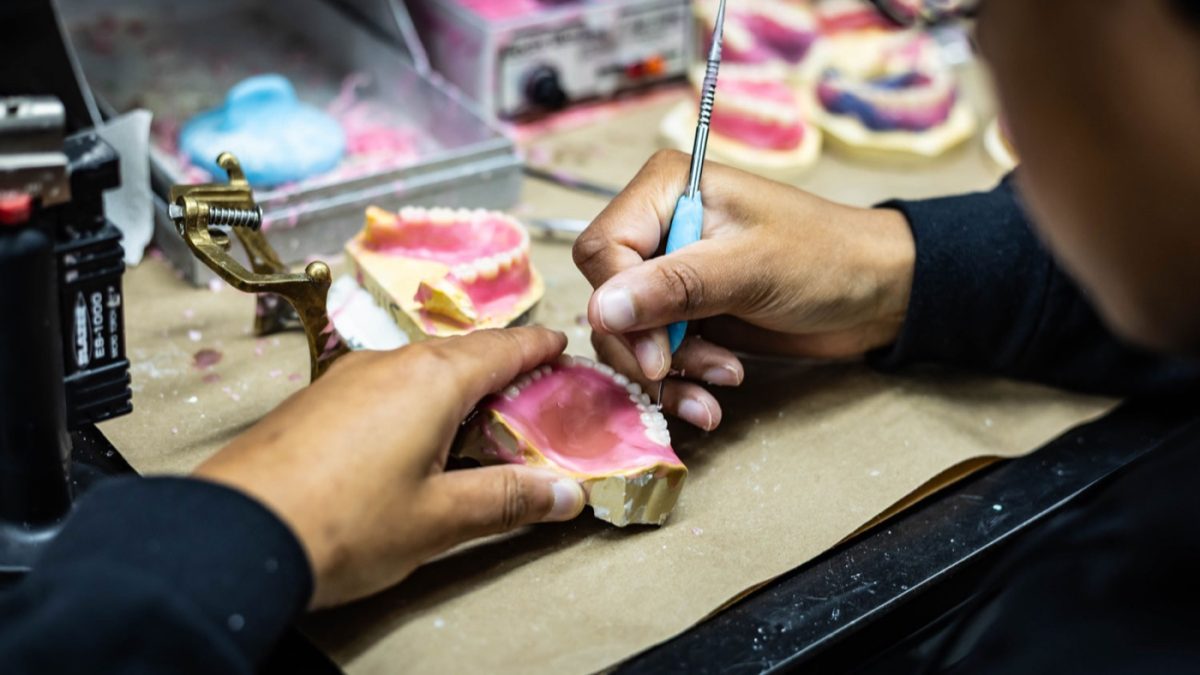
Hygiene, and the part patients get wrong
A soft liner changes what the patient has to do, and almost nobody tells them. It is worth thirty seconds at delivery because it directly affects how long the liner lasts.
- No abrasive paste, no hard brush on the liner. Scratching a resilient surface accelerates the sorption and staining that shortens its life in the first place.
- Soaking matters more than scrubbing. A soft liner is porous relative to acrylic, and biofilm is the practical limit on service life as much as material fatigue is.
- Check the liner at every recall, not the teeth. A liner at 12 to 18 months is approaching replacement whether or not the patient has complained.
- Smokers need telling twice. Discoloration and odour are frequently reported in that group and both arrive sooner than the patient expects.
None of this makes a soft liner the wrong choice. It makes it a choice with a maintenance schedule attached, which is a different thing from a compromise.
What relining cannot fix, and what comes next
Where a reline is the wrong answer, the honest options are narrower than patients hope and worth naming out loud.
- A remake, on a properly recorded new impression. The right answer where the occlusion or tooth position is the problem. It costs more and it solves the actual fault.
- A rebase, where the teeth are sound and the entire base is replaced rather than just the fitting surface. Useful where the acrylic itself has degraded.
- Implant retention, where the ridge has resorbed to the point that no fitting surface will stabilise a lower denture. This is frequently the honest answer for the patient on their third reline in two years, and it is set out in implant overdentures.
- Accepting the appliance is at end of life. A denture that has been relined three times and rebased once has usually earned its retirement, and saying so is kinder than another 20 minutes of adjustment.
The codes
Reference values, and worth confirming against the current CDT. Carrier language varies.
- D5730 and D5731 reline complete maxillary and mandibular denture, chairside.
- D5750 and D5751 reline complete maxillary and mandibular denture, laboratory processed.
- D5740 and D5741 reline maxillary and mandibular partial denture, chairside.
- D5760 and D5761 reline maxillary and mandibular partial denture, laboratory processed.
- Chairside and laboratory are separate codes, which is worth noticing because the choice between them is often made for turnaround reasons and then reported without thinking.
What we need on the prescription
- Hard or soft, or the patient’s symptoms and we will recommend.
- If soft, silicone or acrylic based. Given the durability and bite force findings above, this is a real decision rather than a default.
- What the patient is complaining about, in their words. Looseness, soreness and clicking point at three different problems.
- How old the denture is, and how many relines it has already had.
- Whether there have been recent extractions, and when.
- Whether the patient smokes, because it changes what to expect from a soft liner.
- Send the denture itself. Obvious, and it still arrives without the appliance often enough to be worth listing.
If you have not sent us a case before, becoming a client takes no contract and no minimum, and for dentists sets out how the first case works.
Questions from the prep
How often should a complete denture be relined?
It follows the ridge rather than the calendar. After extractions, expect the first denture reline within months. On a settled ridge, years can pass. A patient told at delivery that relining is planned maintenance treats it very differently from one who discovers it when the denture loosens.
How long does a soft denture reline last?
Typically one to two years for a laboratory processed liner before replacement. Silicone based materials hold their resiliency longer than acrylic based ones, and in smokers expect discoloration and odour sooner. Setting that expectation at the outset avoids the patient reading a normal replacement as a failure.
Can a flexible partial be relined?
Thermoplastic materials do not accept a reline the way acrylic does, and this is one of the practical trade-offs of the material. It is worth saying at the point you prescribe rather than years later. The material comparison is in types of upper partial dentures.
Is a chairside reline as good as a laboratory processed reline?
They solve different problems. Chairside is fast and appropriate for a temporary fix or a patient who cannot be without the appliance. A processed reline is more accurate, more durable and cleaner at the border. If the denture has years left in it, the laboratory reline is the better use of the visit.
What if the patient needs a reline and a repair at the same time?
Send both together and tell us the order matters. Repairing a fracture then relining is a different sequence from relining a base about to be sectioned, and getting it the wrong way round can mean doing one of them twice.
Does an implant overdenture need relining?
Less often than a conventional denture, and it depends on how much load the tissue is still carrying. A prosthesis genuinely supported by implants is off the tissue and barely follows ridge change. One retained by implants but resting on the ridge follows it much like any complete denture. The distinction is in implant supported dentures versus implant retained.
Written by Clint Carson, CDT, clinical specialist in removable prosthetics with more than twenty years at the bench at International Dental Arts. IDA has been a family founded dental laboratory in Tulsa since 1984, working with independent practices across the country. If you want a case reviewed before you commit, get in touch.