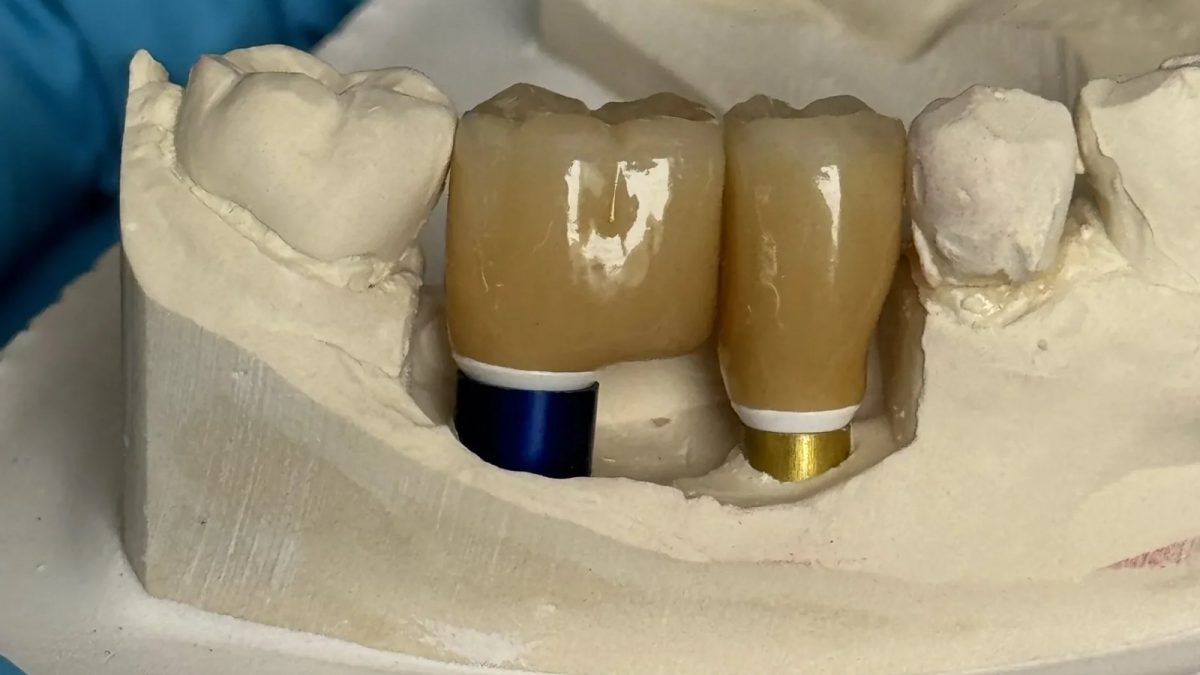
A Ti base abutment turns the abutment question into a bonding question. Instead of milling one solid piece, you have a titanium cylinder that engages the implant connection and a ceramic superstructure bonded onto it in the laboratory. The connection to the implant is metal on metal, which is the part everybody trusts. The part that decides whether the restoration lasts is the glue line we create here.
This is about that glue line, about the geometry that supports it, and about which code the finished unit belongs under. If the question you are actually asking is custom against stock, that is a different decision and it is covered in custom versus stock abutment and D6057.
What a Ti base abutment is, and what it replaces
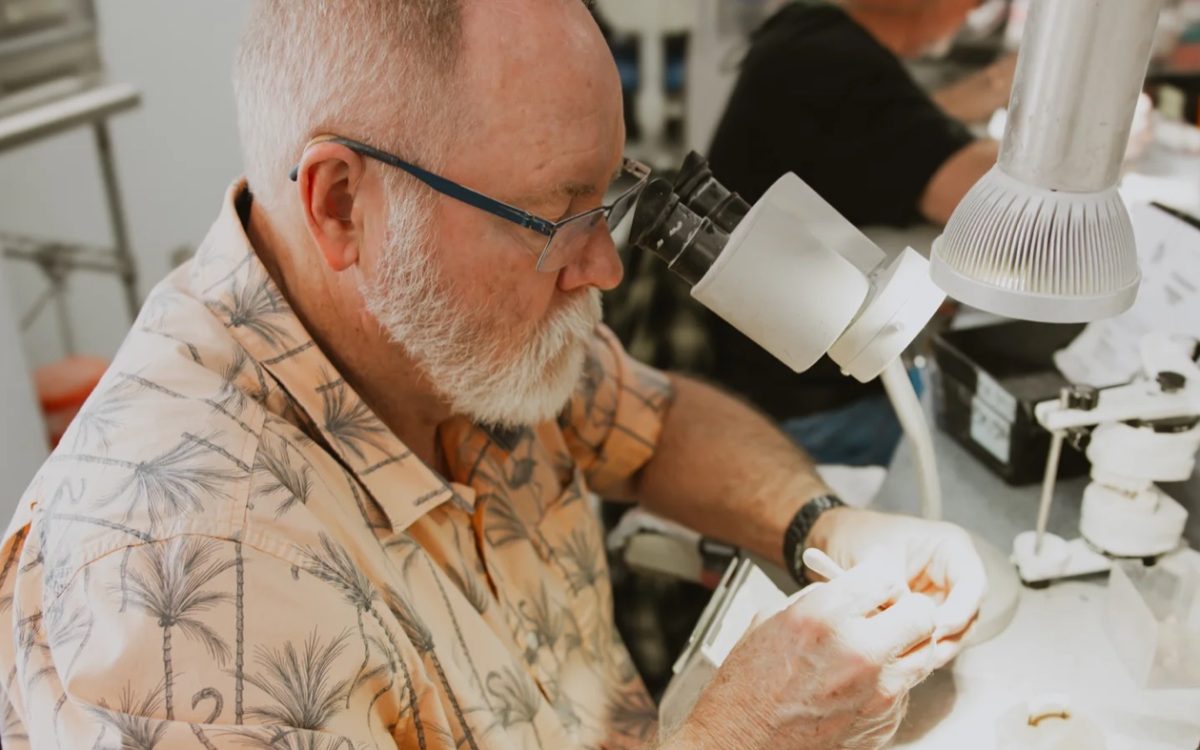
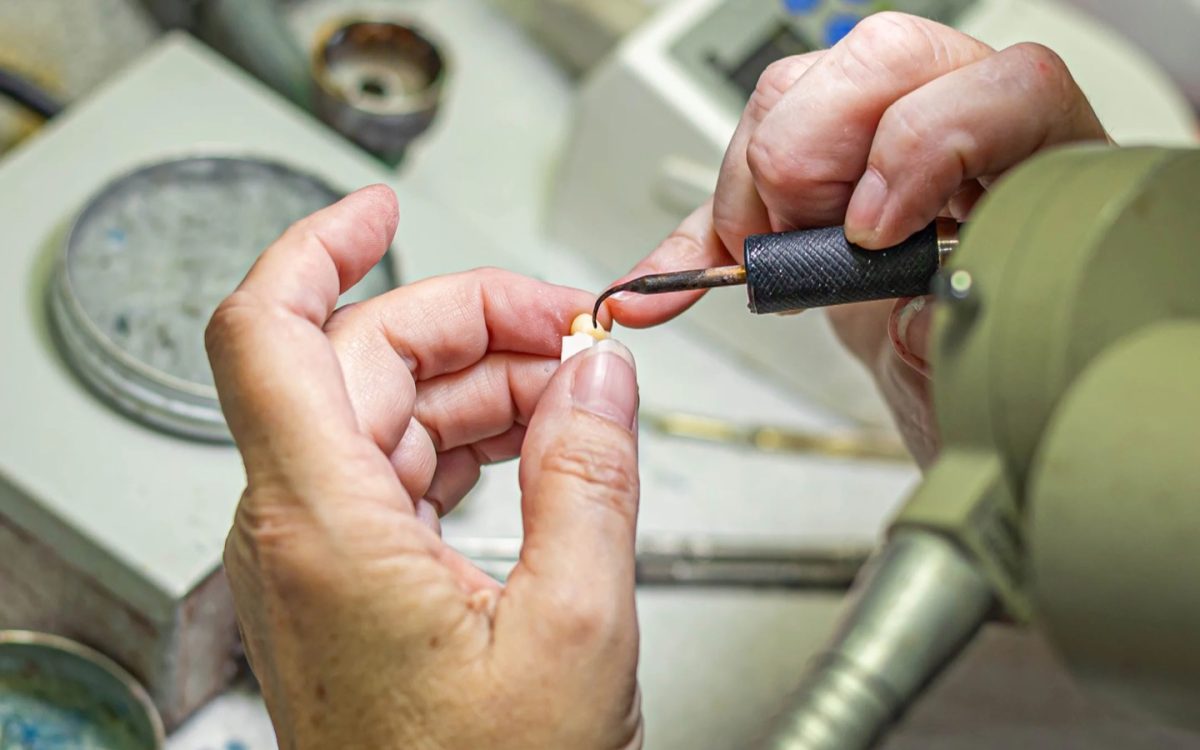
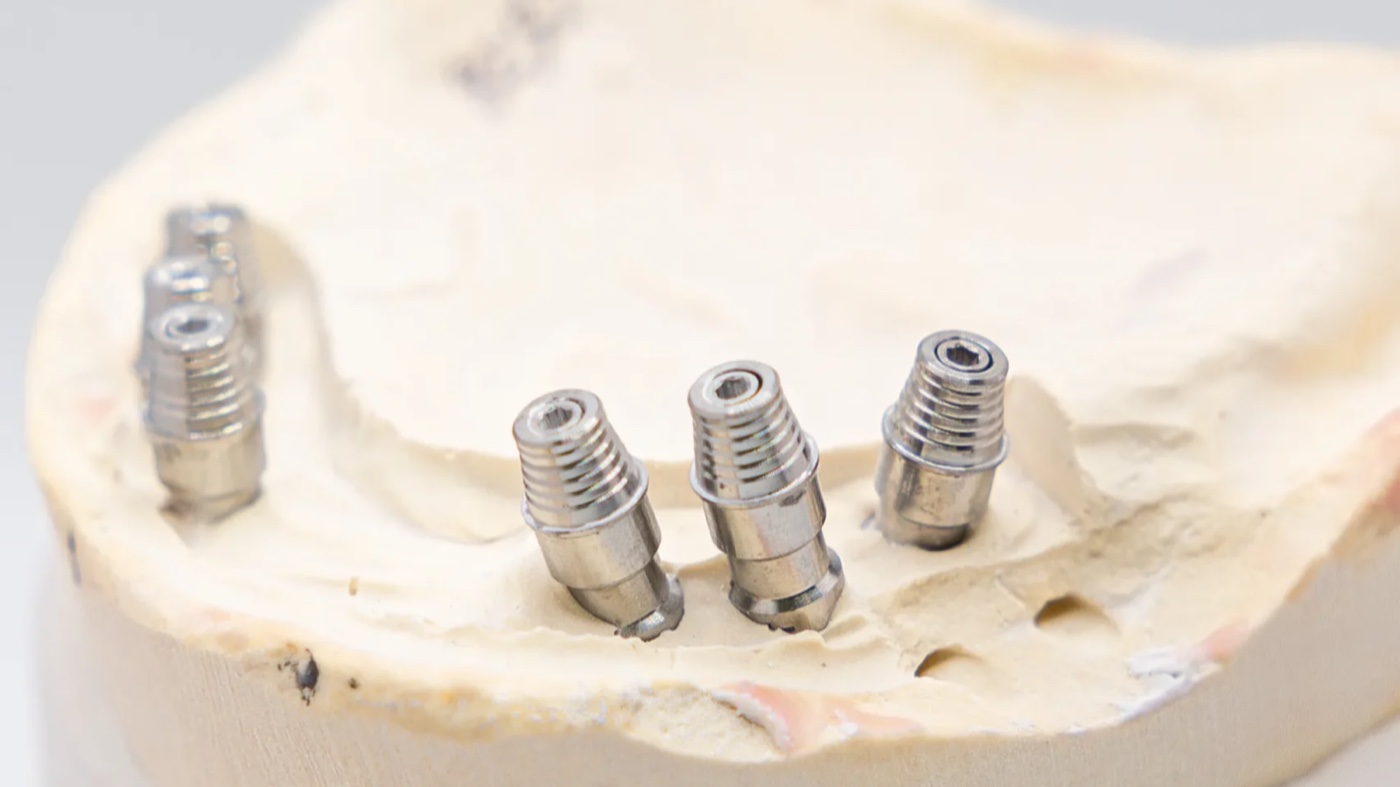
Written out in full it is a titanium base abutment, and the two names get used interchangeably. The component is a short titanium cylinder. The lower end carries the implant connection and the screw seat. The upper end is a bonding surface, usually with retentive grooves and a flat or notched anti rotation feature. A zirconia or lithium disilicate superstructure is designed to fit over it and bonded with resin cement in the laboratory, and the finished assembly is delivered as one piece that screws straight into the implant.
What it replaces is either a solid custom abutment with a separately cemented crown, or a fully milled one piece ceramic abutment. Against the first, the hybrid assembly removes the cement margin from the mouth entirely, which removes the residual cement problem. Against the second, it puts metal rather than ceramic against the implant connection, which is the more forgiving interface under load. Our custom abutments page covers the fully milled route where that is the better answer.
The bond is the restoration
There is good in vitro work on what actually holds these together, and the differences between protocols are large enough to matter. One study pushed bonded zirconia off titanium bases and measured the load required. A self adhesive resin cement used with a universal adhesive primer reached 1576.45 newtons. A dedicated hybrid abutment cement with its own primer reached 1268.10 newtons. The same self adhesive cement used alone, with no priming step, reached 959.66 newtons, and another primed system reached 905.84 newtons. The two highest performers were significantly better than the other two.
The practical reading is that the priming step is worth more than the brand on the tube. The same cement gained more than 600 newtons of retention purely from adding an adhesive primer to the protocol. Primers carrying 10-MDP are the ones with the evidence behind them for bonding to zirconia, and the literature is consistent on that point.
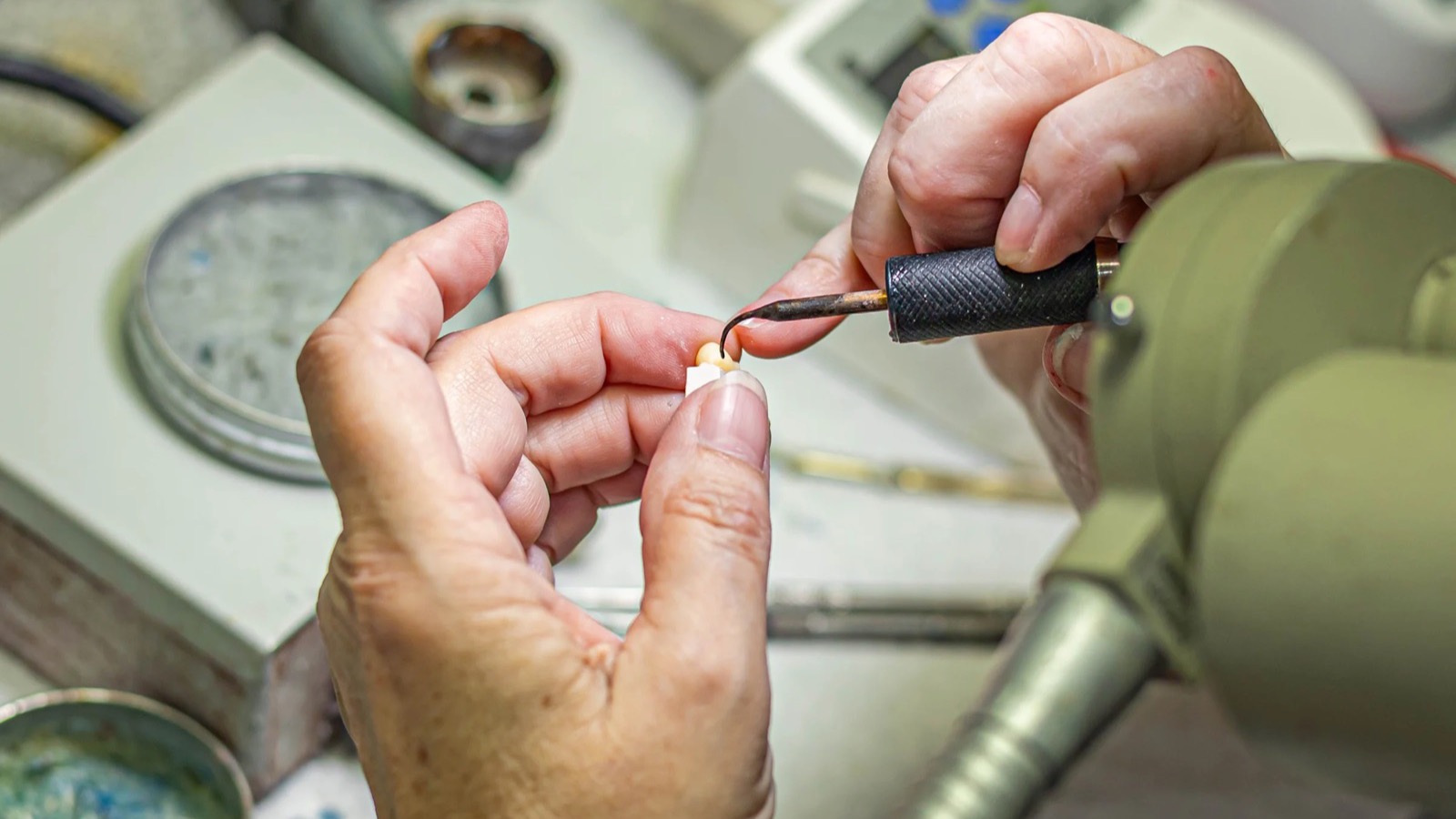
Surface preparation is the other half. The standard protocol in these studies is airborne particle abrasion with 50 micron aluminium oxide at 2.0 bar for 20 seconds followed by ultrasonic cleaning, and the systematic review evidence supports abrasion of the titanium surface as improving bonding stability and retention. This is laboratory work with controlled pressure and distance rather than something to improvise at the chair.
Height is the variable most people ignore
Bond strength is a function of area, and on this component the area is set by how tall the base is. A study comparing a 2.5 mm short base against a 4.0 mm tall base found higher retention for the taller one, and the effect stacked with surface treatment and adhesive protocol rather than competing with it.
This is where a case gets decided before we ever open a cement tube. On a short interocclusal space, or a deeply placed implant where the gingival height of the base eats the available room, the bonding surface left over can be small. When we see that we will say so, because the options are all better than discovering it after delivery.
- Choose a taller base where the space allows it. This is the cheapest retention available.
- Where the space does not allow it, a fully milled custom abutment with a separate crown avoids the problem by not having a bond line at all.
- Where the implant is deeply placed, the gingival height of the base matters as much as the total height, because that portion contributes emergence rather than bonding surface.
- Tell us the interocclusal measurement. It changes the component we order.
What the clinical data shows
The clinical record is reassuring and short. A systematic review and meta-analysis of implant supported single hybrid abutment crowns pooled a 1 year survival rate of 100 percent with a success rate around 99 percent. Reported bonding failure rates across the included work ran between 2.7 and 3.4 percent with no significant difference between the groups compared.
Two caveats belong with those numbers. The follow up in most of the included studies is short, generally from 12 months, so this is not long term data in the way twenty year implant survival curves are. And a 2.7 to 3.4 percent debonding rate is small but it is not zero, which is exactly why the protocol above is worth being fussy about. The complications that do appear are prosthesis loosening, loss of retention and ceramic fracture rather than anything at the implant itself.
Autoclaving and handling before bonding
A practical question that comes up constantly is whether sterilising the base before bonding damages the result. In the push out study above, autoclaving showed no significant influence on retention when compared within cement pairs, at a p value of 0.427. Sterilising the component is not the thing that costs you retention.
What does cost retention is contamination after preparation. Once a surface has been abraded and cleaned it needs to stay clean, and a handled or saliva contaminated bonding surface undoes the preparation. That is one of the reasons this assembly belongs in a laboratory rather than at the chair, and it is the same argument made on our screw retained restorations page.
The superstructure material
Monolithic zirconia is the default and the evidence supports it. Monolayer zirconia crowns show higher fracture load than layered ones, and the failure mode differs, with monolithic units failing in bulk and layered units failing cohesively in the veneer. On an implant supported hybrid assembly, monolithic restorations showed greater fracture resistance than layered ones.
Lithium disilicate remains a reasonable choice in the anterior where translucency is doing the work and the load is manageable. That is a case by case judgement and we will give you an opinion if you ask. Material behaviour is set out further on our zirconia crowns and emax crowns pages, and the finished units themselves sit under implant crowns.
When a Ti base abutment is the wrong choice
- Interocclusal space too short to use a tall base. Bond area is the first thing sacrificed and it is the thing you cannot see failing.
- Severe angulation that the base cannot correct. A solid custom abutment can be designed around a divergent implant in a way a stock cylinder cannot.
- A patient with a documented history of debonding restorations, where removing every bond line from the case is worth more than the advantages this design brings.
- Cases where you specifically want a cement retained crown on a shaped abutment for esthetic emergence reasons. The trade between the two retention routes is set out in screw retained versus cement retained implant crowns.
Coding it, and this one is commonly wrong
A bonded hybrid assembly is delivered as a single unit that screws directly to the implant, which is to say it is delivered as a screw retained crown with the abutment already inside it. Under CDT that is an implant supported crown, which is D6065 for a porcelain or ceramic unit, and the titanium base is not billed separately because it is an integral part of the one piece restoration rather than a separate abutment placed in the mouth.
The alternative pairing is for genuinely abutment supported work. D6058 is the abutment supported porcelain or ceramic crown and it has to be submitted alongside an abutment code, which is D6057 for a custom abutment or D6056 for a prefabricated one. Submitting D6058 with no abutment code, or billing a Ti base separately as D6056 on top of D6065, are the two errors we hear about most. The surgical placement of the implant body itself is D6010 and sits outside this entirely.
Reference values only. Confirm against current CDT and expect carrier interpretation to vary.
What we need from you
- The implant system, platform diameter and connection. There is no universal Ti base and the wrong component is a wasted week.
- A scan body scan or an implant level impression. We cannot design an accurate intaglio from a soft tissue level record.
- The interocclusal measurement, so we can choose base height rather than guess at it.
- Soft tissue contour or a photograph if emergence matters, which in the anterior it always does.
- Whether you want the screw channel repositioned. Angulated channels are available on most systems and it is easier to plan than to correct.
We take scans from the major systems as well as conventional impressions, which is covered on the intraoral scanners page, and case planning support is on for dentists. The full line sits under implant restorations.
Questions from the prep
Can a Ti base abutment be used in the anterior?
Yes, and it is common. The consideration is the metal showing through thin tissue at the margin, which is a function of tissue thickness and how deep the base sits. Where the tissue is thin, a fully milled ceramic abutment or a base with a shorter gingival height is the usual answer.
Does the bond fail more often than a cemented crown?
The reported bonding failure rates in the review data run between 2.7 and 3.4 percent, which is low. The difference is where the failure happens. A crown cemented in the mouth can debond and be recemented chairside. A hybrid assembly that debonds comes back to the laboratory.
Can you rebond one that has come apart?
Usually yes. The old cement has to be removed completely and both surfaces reprepared, which is bench work rather than a chairside repair. If the superstructure is intact we will rebond it to protocol and return it. If the ceramic is fractured, it is a remake.
Do you need the screw at the same time?
Send it or tell us the system so we supply the right one. A screw from a different manufacturer in a connection it was not made for is the kind of shortcut that shows up as a loosening complaint six months later.
Implant case planning
Send the system and the space, and we will spec the component
Tell us the implant system and the interocclusal measurement and we will confirm the base height before anything is ordered. No charge for the review.
Written by Adam Brewer, General Manager, with nearly two decades in the dental implant industry at International Dental Arts. IDA has been a family founded dental laboratory in Tulsa since 1984, working with independent practices across the country. If you want a case reviewed before you commit, get in touch.