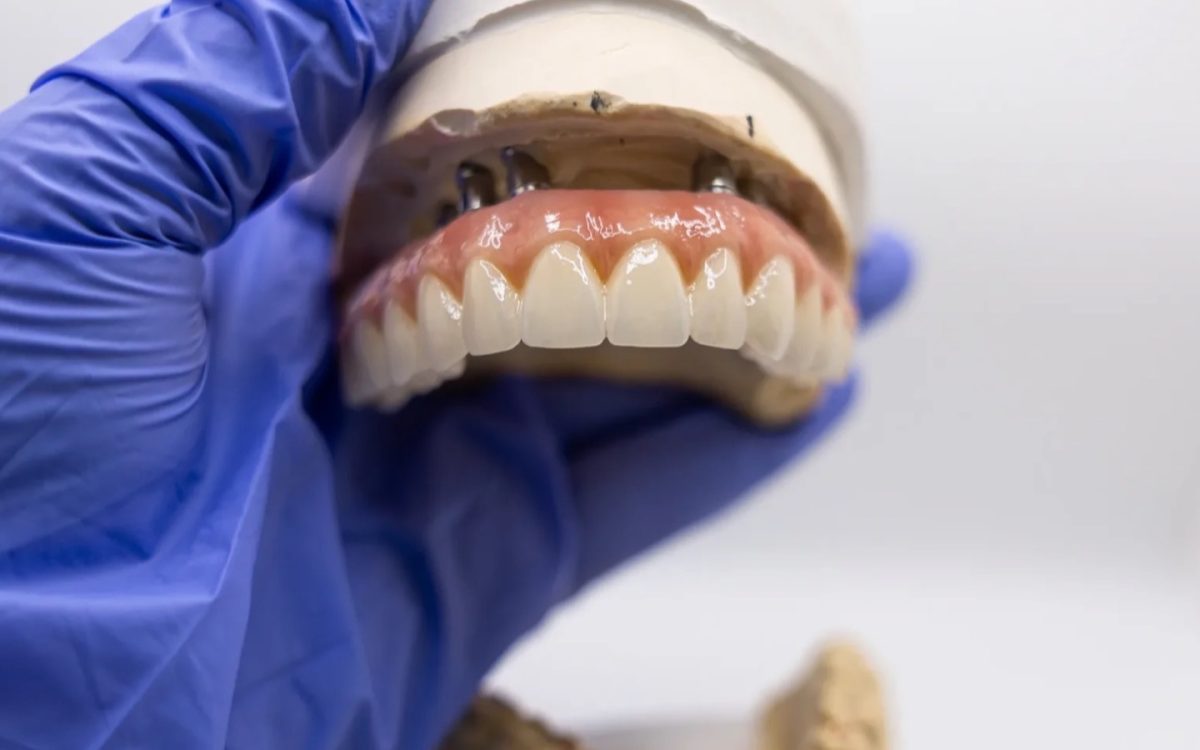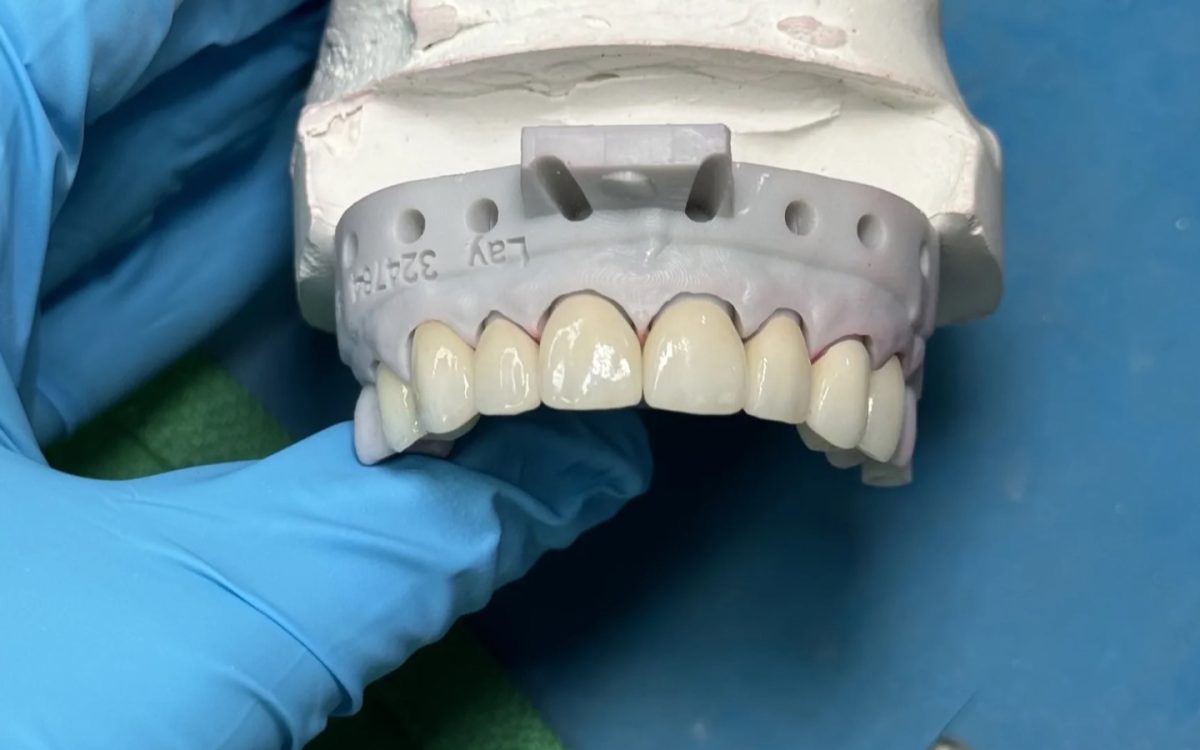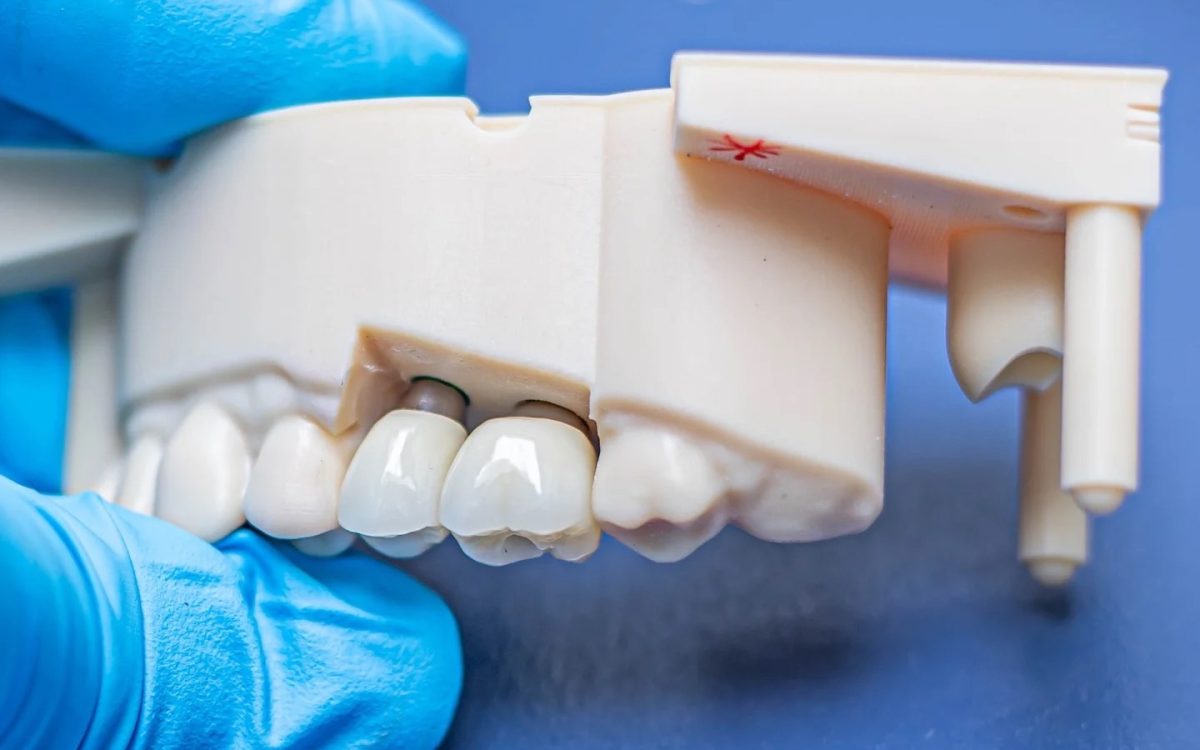
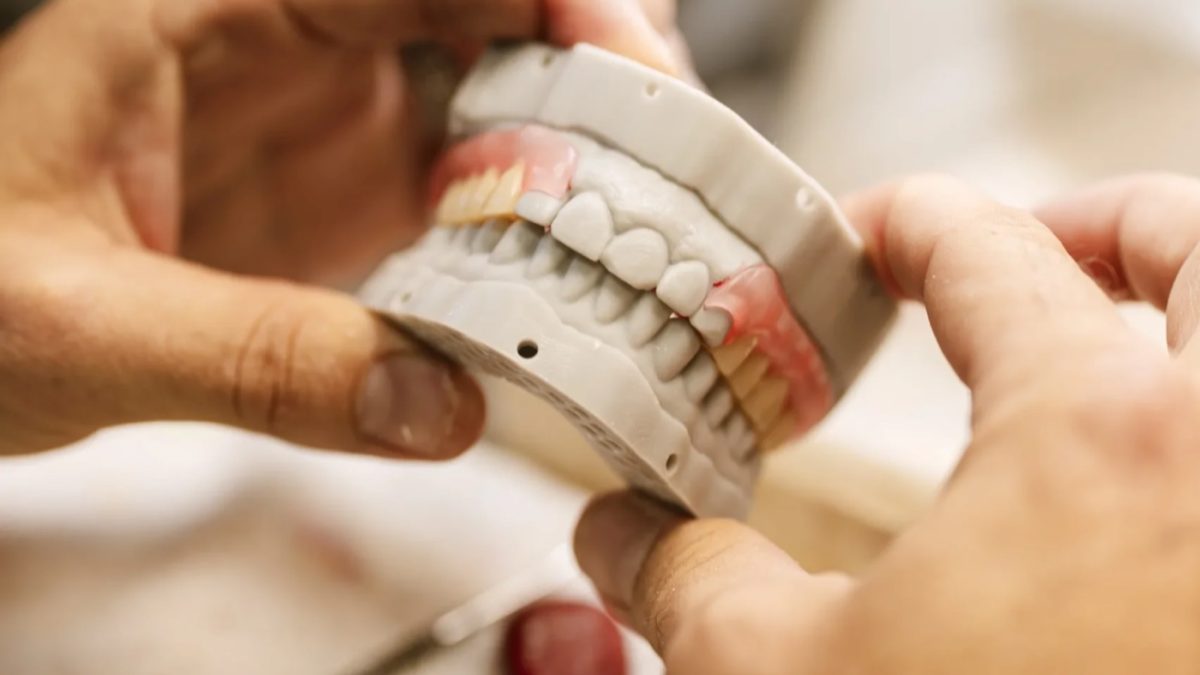
The wax try-in is the last appointment where a complete denture can be changed cheaply. Everything after it is either an adjustment or a remake. That is the whole reason the step exists, and it is also why the twenty minutes spent on it decide more about the case than anything we do at the bench afterwards.
What follows is what we would want checked before a case comes back to us for processing, in the order that wastes the least of your time, and how to write up changes so we can act on them without guessing. Our traditional dentures page covers the surrounding workflow.
What a wax try-in is actually for
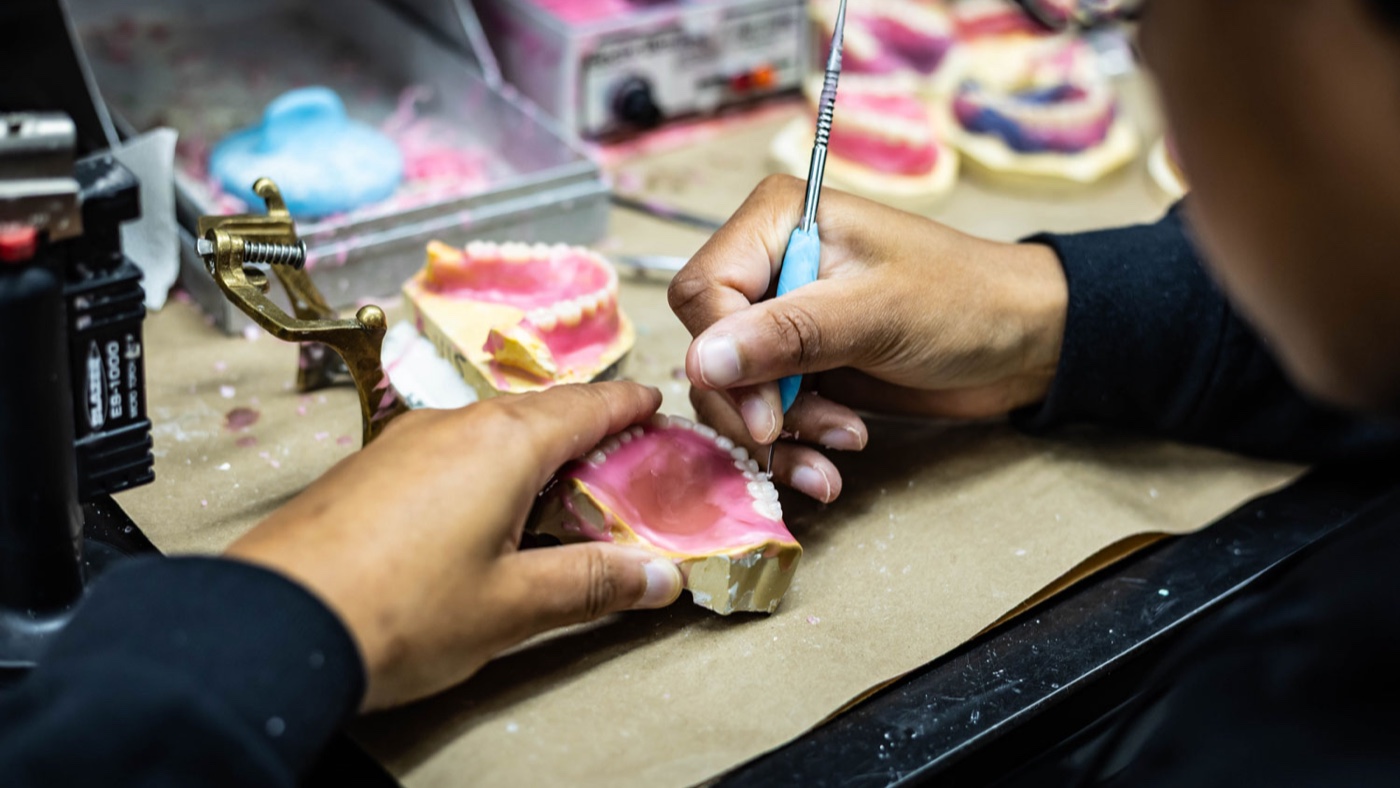
It is a rehearsal of the finished prosthesis in a material we can still alter. The teeth are set in wax on a base, so tooth position, midline, incisal edge height, lip support, occlusal plane and shade are all still moveable. Once the case is processed, none of those are moveable in any meaningful sense. You can adjust an occlusal surface after processing. You cannot move a midline.
The second function is consent. The patient sees the arrangement and agrees to it before it becomes permanent. A patient who has approved tooth position at the try-in is a different patient at delivery than one meeting the arrangement for the first time. That is not a small point, because esthetic objection at delivery is one of the more common reasons a finished denture gets remade.
Check things in this order
Order matters, because judging esthetics at the wrong vertical dimension means judging them twice. Establish the skeleton first, then look at the teeth.
- Vertical dimension. Rest position and occlusion, with the patient relaxed and lips together. Watch the chin close. If the vertical is wrong, everything downstream of it is wrong too and nothing else on this list is worth assessing yet.
- Centric relation. Confirm the record you sent us actually reproduces. A jaw relation error recorded at the bite stage and not caught here becomes an occlusal error in a finished denture.
- Occlusal plane and midline. Both against the face rather than against the cast. The cast does not have a face.
- Lip support and incisal edge position. At rest and in a relaxed smile, not a commanded one.
- Phonetics. Have the patient count and talk. Speech finds vertical and anterior position problems that visual inspection does not.
- Shade, mould and arrangement. Last, because they are the only things on the list that are purely about preference.
What the evidence says about skipping it
The expert consensus work on digital complete dentures is blunter about this than you might expect. Common occlusal errors in finished dentures, specifically improper vertical dimension and anterior open bite, are attributed in the literature to inaccuracies in jaw relation recording and to the absence of clinical try-in steps. Those two causes sit together because the try-in is the appointment that catches the first one.
There is a related finding worth carrying into any conversation about compressed workflows. Digital processes genuinely reduce chair time, with one study reporting savings of 58 to 233 minutes of clinical time using subtractive manufacturing, and digital workflows are described as reducing a traditional five appointment process to two or three visits. The question that matters is which appointment got removed. Removing a pour or a remount is a saving. Removing the try-in is a transfer of risk from the appointment to the delivery.
The accuracy side supports the workflow rather than the shortcut. Intraoral scan deviations are reported within 0.2 mm against conventional impressions and under 0.9 mm against gypsum models, which is described as clinically acceptable. Retention forces in the literature range from 13 to 20 newtons in some studies, with border moulded maxillary dentures reaching up to 74 newtons. Manufacturing accuracy is largely solved. Judgement is not.
There is no published numeric standard for acceptable
This is worth saying plainly because it changes how the appointment should be treated. The consensus literature provides no numeric criteria for what constitutes acceptable fit at try-in, and no quantified tolerance for occlusal plane angulation or for accepting a vertical dimension. Gothic arch tracing is widely called the gold standard for centric relation, and even there no study has established the superiority of facebows, tracers or particular articulators in digital denture fabrication.
So the try-in is not a measurement you can pass or fail against a published threshold. It is a clinical judgement, made once, by the person in the room with the patient. We cannot make it from Tulsa and we will not pretend otherwise. What we can do is build precisely to a decision you record clearly, which is what the next section is about.
How to tell us what to change
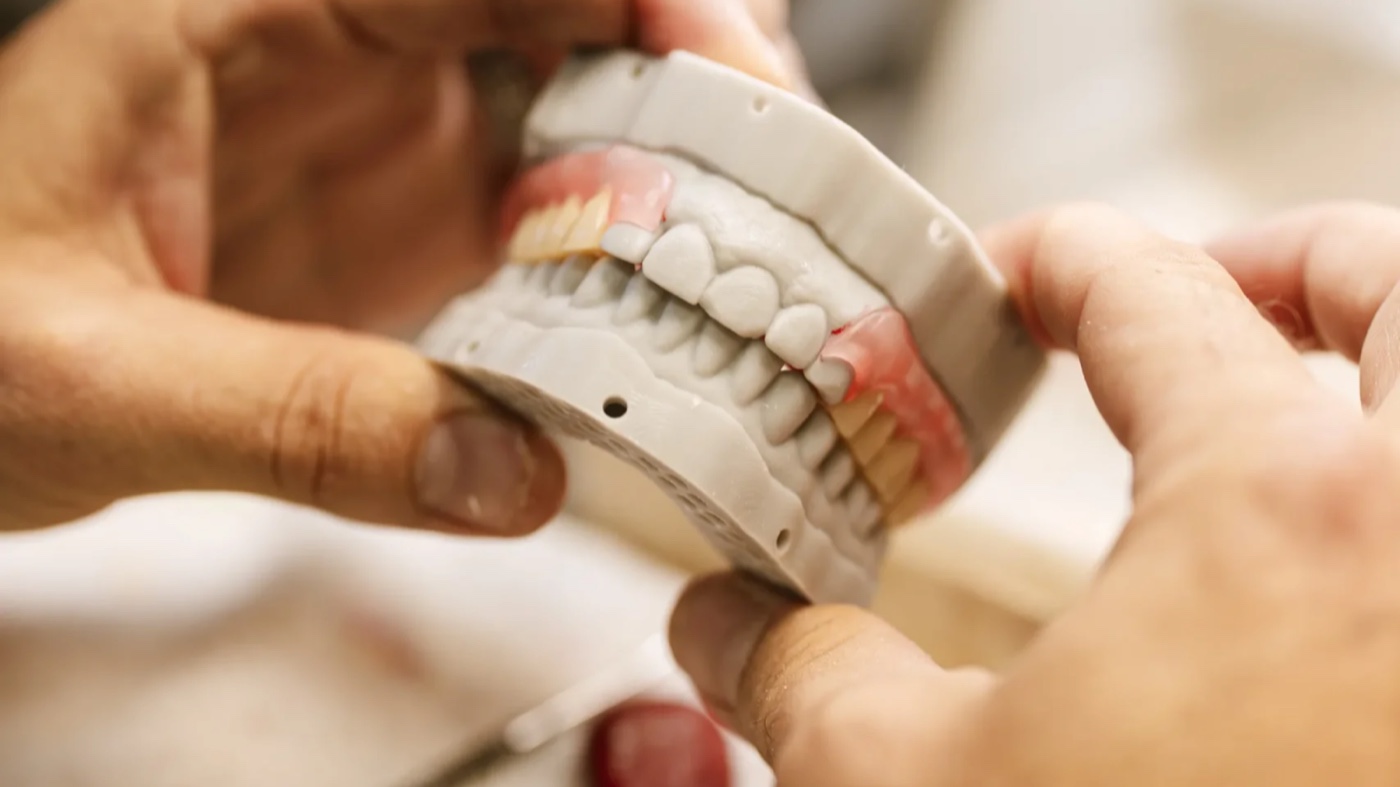
The most common thing that costs a case an extra week is an instruction we cannot act on. Shorten the uppers is not an instruction. Reduce the incisal edge of the upper anteriors by 1 mm is. Where you can, mark the wax itself, because a pencil line on the try-in outranks any note.
- Give a direction and an amount. Millimetres if you have them, and a marked reference on the wax if you do not.
- Say whether the change is esthetic or functional. We solve those differently, and a functional change may require the case back on the articulator rather than a simple reset.
- Send photographs of the try-in in the mouth, at rest and smiling. This is the single most useful thing you can add and it takes ten seconds.
- If the vertical changed, tell us explicitly, because it invalidates the record we set the case to.
- If the patient rejected the shade, send the new shade and say whether the mould is staying.
- If the try-in was damaged or distorted in transit, say so rather than working around it. Wax moves with heat and a warped base misleads both of us.
Printed try-ins, and where they help
A printed trial denture does the same job in a more durable material. It survives shipping and handling better than wax, it can be worn slightly more aggressively during assessment, and the same digital file that produced it produces the definitive prosthesis, so an approved arrangement carries forward exactly rather than being re-set by hand. Using a printed prototype to evaluate occlusal and esthetic changes is reported to reduce both clinical and laboratory time.
The honest caveat is the one we make elsewhere. In a multi centre clinical trial of printed complete dentures, conventional dentures were all rated comfortable or very comfortable while three of the digital ones were rated uncomfortable and two neutral, with a preference for the conventional denture in 8 of 14 cases. Printed prototypes are excellent for approving position. That is a different claim from printed being the right material for a definitive denture, and the fuller version of that argument is in what a digital dental lab actually changes and on our digital dentures page.
When a second wax try-in is worth it
- The vertical dimension changed at the first appointment. Anything judged at the old vertical needs looking at again.
- The patient is difficult to please esthetically, or a family member is involved in the decision. A second appointment is cheaper than a remake and considerably cheaper than a lost patient.
- Centric relation did not reproduce cleanly and a new record was taken.
- The case is an anterior heavy arrangement where a millimetre of incisal edge changes the whole face.
- You are working to a pre extraction photograph or a previous denture the patient liked, and matching it is the stated goal.
Where a try-in is not possible at all, the case has to carry more information up front instead. That is the situation with immediate dentures, where the teeth being replaced are still in the mouth at the time we set the case.
The codes
The try-in is a stage within the denture, not a separate procedure, so it is included in the prosthesis code rather than billed on its own. The relevant codes are D5110 for a maxillary complete denture and D5120 for a mandibular one, with D5130 and D5140 covering maxillary and mandibular immediate dentures. A laboratory reline is D5750 maxillary, which is a separate procedure and is required on most immediates once healing settles.
The practical implication is that a second try-in appointment is chair time you are not separately paid for, which is exactly why the first one should be thorough. Reference values only, so confirm against current CDT.
What we need with the returned try-in
- The try-in itself, protected from heat and handled as little as possible.
- Written changes with directions and amounts, or a marked wax.
- Photographs in the mouth if anything esthetic is being changed.
- A new bite record if the vertical or the centric relation changed.
- Confirmation that the patient approved the arrangement, or a clear note that they did not and why.
If a case needs talking through rather than writing up, our for dentists page sets out how case planning works, scanning is covered on intraoral scanners, and the wider removable line sits under dentures and partials.
Questions from the prep
Can you skip the try-in on a straightforward case?
You can, and plenty of practices do on a replacement denture copying an arrangement the patient already likes. The risk rises with how much the new prosthesis differs from what the patient is used to. On a first denture, or where the vertical is being changed, skipping it is where remakes come from.
How long should the appointment take?
Long enough to run the checks in order and let the patient talk. The step that gets cut when time is short is phonetics, and it is the one that finds problems the mirror does not.
Should the patient bring someone?
For an esthetically demanding case, often yes. A partner who first sees the teeth at delivery can undo an arrangement everybody else was happy with. Better to have that opinion in the room while the teeth are still in wax.
What if the wax arrives distorted?
Tell us. Wax deforms with heat and a base that has warped in a hot car will seat wrong and read as a fit problem that does not exist. We would rather reset it than have you chase a phantom.
Can you set a case to a photograph of the patient with their own teeth?
Yes, and it is one of the most useful things you can send. A pre extraction photograph with a known reference for scale gives us tooth proportion and midline to work to instead of an average.
Case planning
Send the try-in back with a note we can build from
Directions, amounts, and a photograph in the mouth. If you would rather talk the changes through, the planning call is free and usually faster than writing it up.
Written by Amanda Elder, Lab Manager and a Certified Dental Technician in removable dentures at International Dental Arts. IDA has been a family founded dental laboratory in Tulsa since 1984, working with independent practices across the country. If you want a case reviewed before you commit, get in touch.