Ask most laboratories what separates a Duraflex partial from a Valplast one and you get an answer about comfort profiles and track records that tells you nothing. The materials are chemically different families, and that single fact drives every practical difference between them. Here is the honest version, including where the published evidence runs out and the marketing takes over.
This is a material comparison rather than a case selection guide. If you are still choosing between cast metal, acrylic and flexible for a given arch, that is types of upper partial dentures. If you want the Valplast workflow specifically, that is our Valplast overview.
What a Duraflex partial is made of, and why that is the whole answer
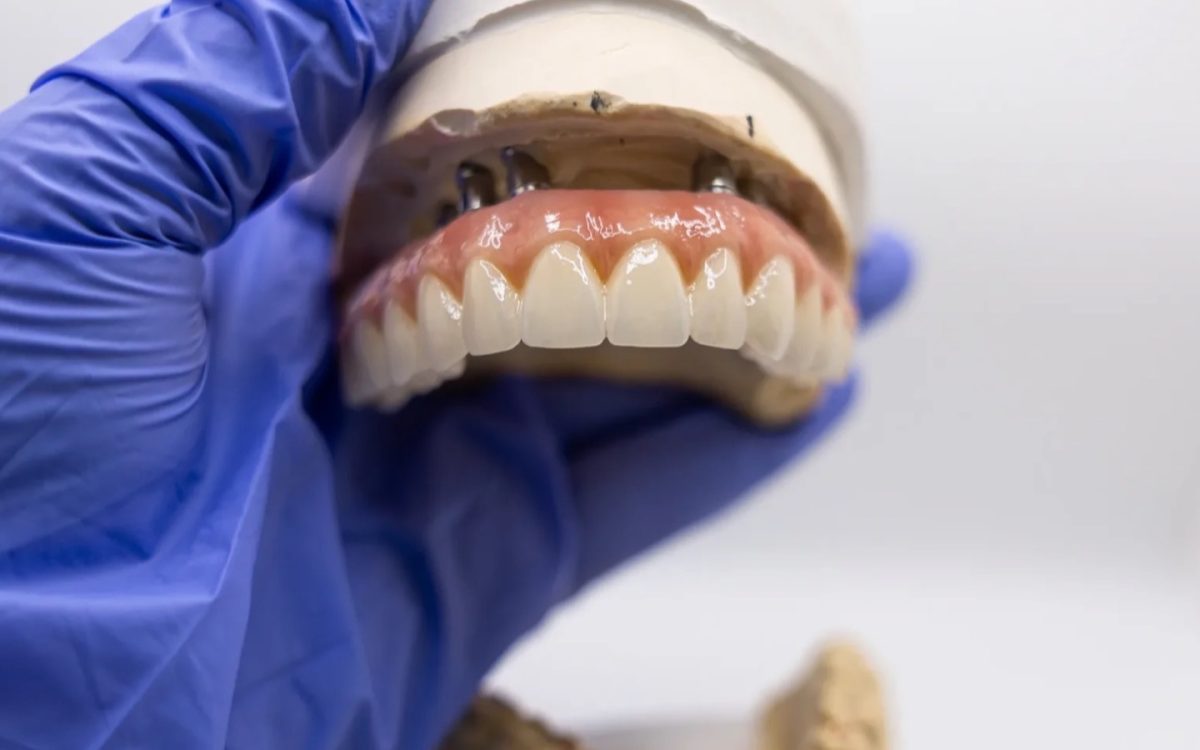
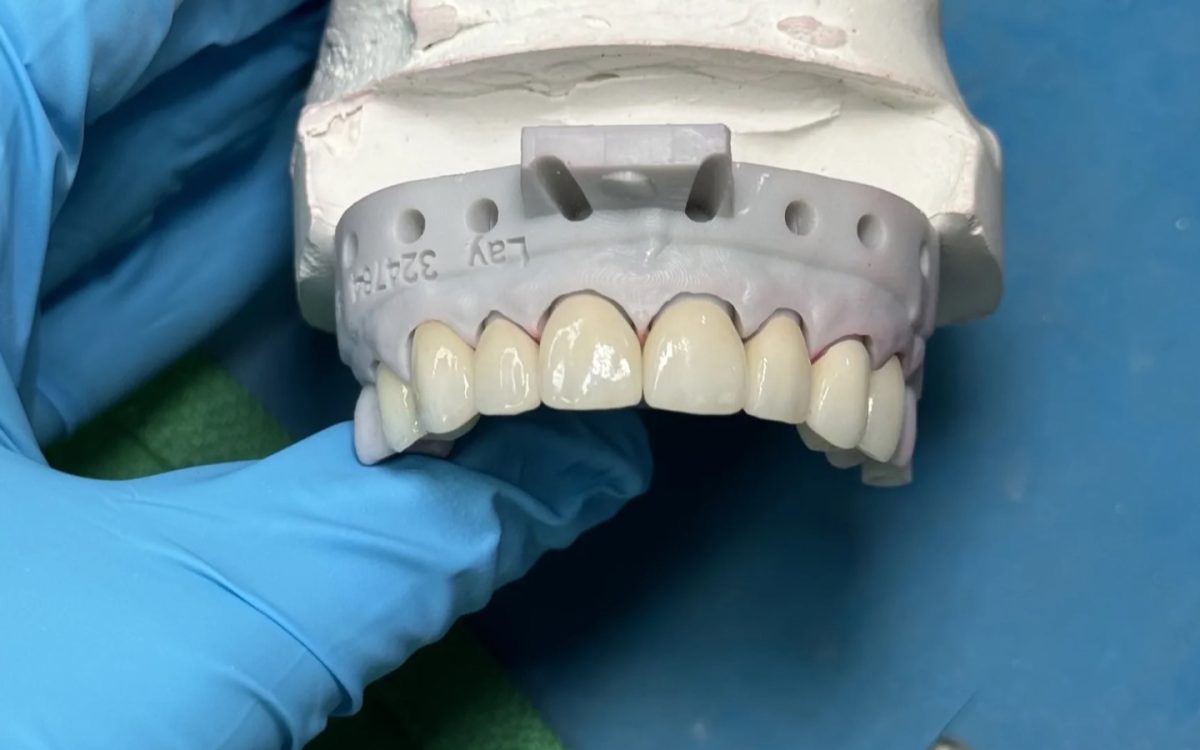
Duraflex is a polyolefin, specifically an ethylene propylene material, and it contains no nylon. Valplast is a polyamide, which is to say a nylon. Both are injected thermoplastics that produce a flexible tissue coloured base with clasps engaging tooth undercuts and no metal on show, so they look like the same product on a shelf. They behave differently at the bench and in the mouth because polyolefins and polyamides are not the same class of polymer.
Two properties follow from that chemistry and they explain almost everything else. Polyamides are hygroscopic, meaning they take up water, and water uptake is what drives staining, odour and dimensional change over years of wear. Polyolefins take up very little water. Second, nylon is tough and gummy under a rotary instrument where polyolefin cuts and polishes more like an acrylic. That is a laboratory concern that becomes your concern the moment a partial needs adjusting in the chair.
Separating the evidence from the sales sheet
This matters and almost nobody says it out loud. The peer reviewed work on flexible partial bases is overwhelmingly work on polyamide. Polyolefin bases have far less independent published data behind them, so the specific advantages claimed for Duraflex are largely manufacturer claims rather than findings from the literature. That does not make them wrong. It means they carry a different weight than a published result, and you should know which is which.
The manufacturer position on Duraflex is that it is easier to adjust, easier to polish, will not gum up rotary instruments, resists water absorption unusually well, is therefore less prone than nylon to taking up stains and odours, contains no BPA, and comes in six gingival shades plus one transparent. Those claims are consistent with what a polyolefin should do and consistent with what we see at the bench. They are still claims.
What the independent literature does establish, on polyamide bases, is worth knowing because it is the material most flexible partials are still made from. Water sorption in polyamide bases runs higher than in conventional acrylic. In vitro work on Candida adherence found the highest adhesion on polyamide, the lowest on chrome cobalt, with a positive correlation between surface roughness and fungal adhesion. That is the mechanism behind the odour complaints, and it is a hygiene conversation to have at delivery rather than a reason to avoid the material.
One more finding that should change how you read the word flexible. Across six polyamide denture base polymers, measured flexural modulus ranged from 611 to 1,783 MPa, which is close to a threefold spread. Flexible is not a specification. Storage conditions move it too, with one study recording 1,360.34 MPa in open air against 1,120.43 MPa after 60 days in a denture cleansing tablet solution. The appliance you deliver is not mechanically identical to the appliance the patient has in a year.
Adjusting and polishing, where the difference shows up first
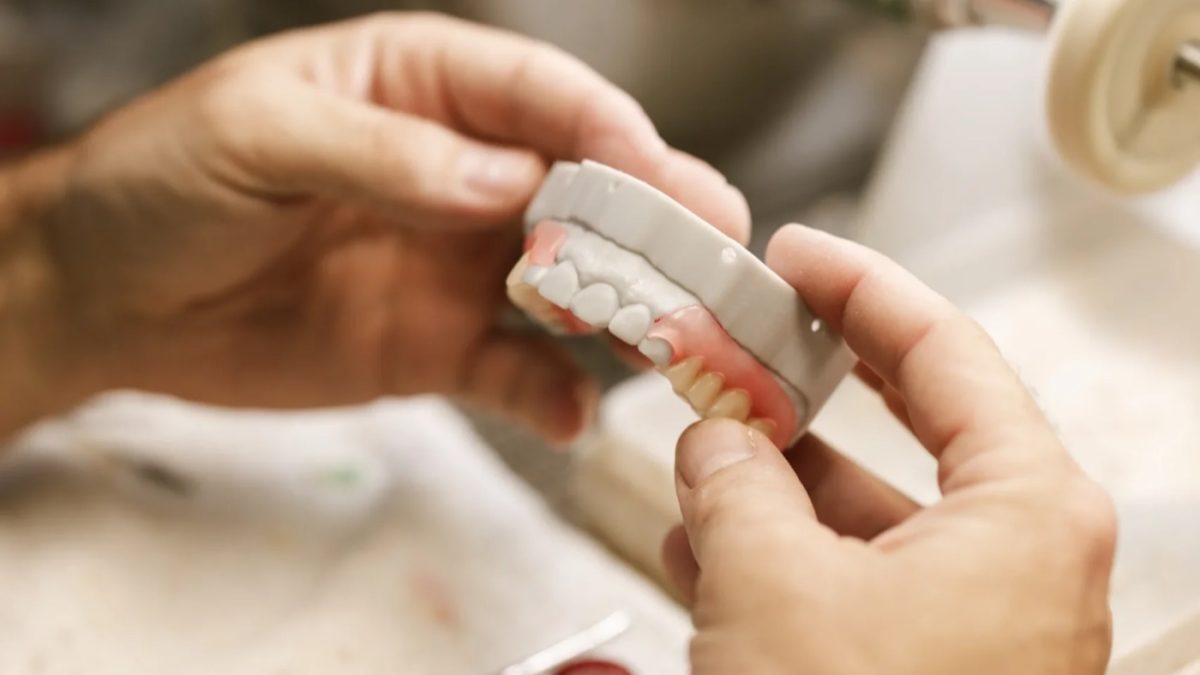
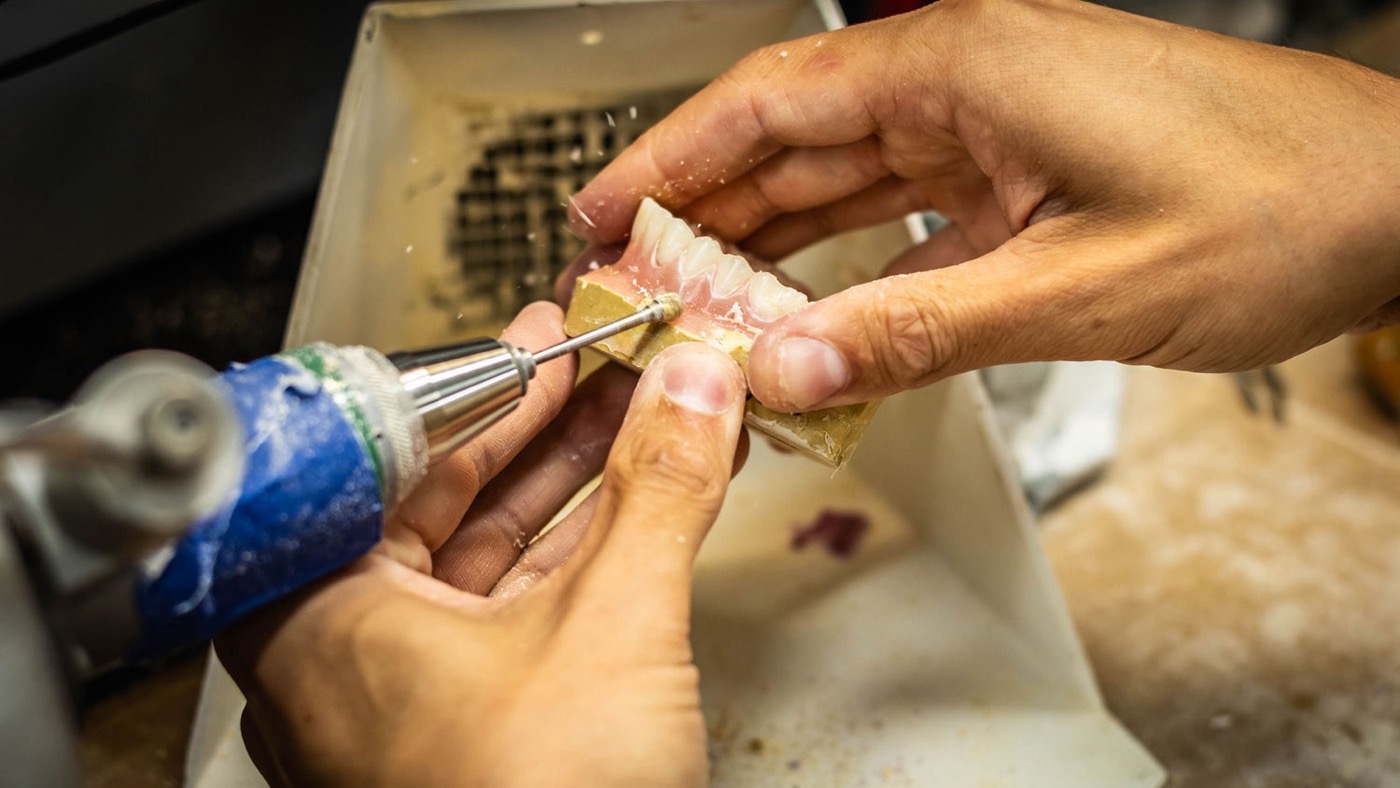
This is the practical reason many laboratories moved to polyolefin. Nylon does not respond to a bur the way acrylic does. It deforms and smears rather than cutting cleanly, it loads up the instrument, and getting a high polish back after an adjustment takes specific wheels and technique. Adjust a nylon partial with ordinary acrylic burs and you get a dull, slightly furred surface that then holds plaque.
Polyolefin cuts closer to acrylic and takes a polish with conventional means. For a general practice that occasionally needs to relieve a clasp or ease a border at the chair, that is a real advantage, and it is the one advantage we would put money on regardless of who is making the claim.
Can you add a tooth to a Duraflex partial?
This is the question we field most, and the honest answer is that it depends on the material and it is never as simple as adding a tooth to an acrylic partial. Thermoplastics do not chemically bond to ordinary self curing acrylic the way an acrylic base does, so an addition is a mechanical and processed repair rather than a chairside patch. Nylon is the harder of the two to work with. Polyolefin is more cooperative and the manufacturer positions repairability as a selling point.
What we would tell you before you promise a patient anything is to send it to us rather than attempt it in the surgery. The addition is D5650, add tooth to existing partial denture, and it is bench work. A failed chairside addition on a thermoplastic base usually turns a repair into a remake, which is a worse conversation than the one where you told the patient it would take a few days.
The wider point for treatment planning is that if you expect to be adding teeth to this appliance as the arch deteriorates, an acrylic partial is designed for exactly that and a flexible base is not. Choose the material for the arch you expect in five years, not merely the arch in front of you.
Relining, and where thermoplastics get awkward
Relining a flexible base is possible and it is not the routine procedure that relining an acrylic denture is. The bond between a new liner and an injected thermoplastic is the weak point, and it is more reliable on some materials than others. The codes are D5740 for a maxillary partial reline and D5741 for a mandibular one, but the code existing does not mean every base takes a reline well.
Send it to us and tell us what the base material is. If the reline is not going to hold on that material we would rather say so than return something that debonds in a month. Where relines are expected to be part of the appliance life, that is another argument for acrylic or for a cast partial with an acrylic saddle.
Where cast metal still wins
- Long term retention. A cast frame holds its clasp adjustment. A thermoplastic clasp relies on the material returning to shape and it does that less well as it ages.
- Load distribution. Rests on a rigid frame transfer force down the long axis of the abutment teeth. A flexible base is largely tissue borne and moves, which is comfortable and is also why it protects abutments less well.
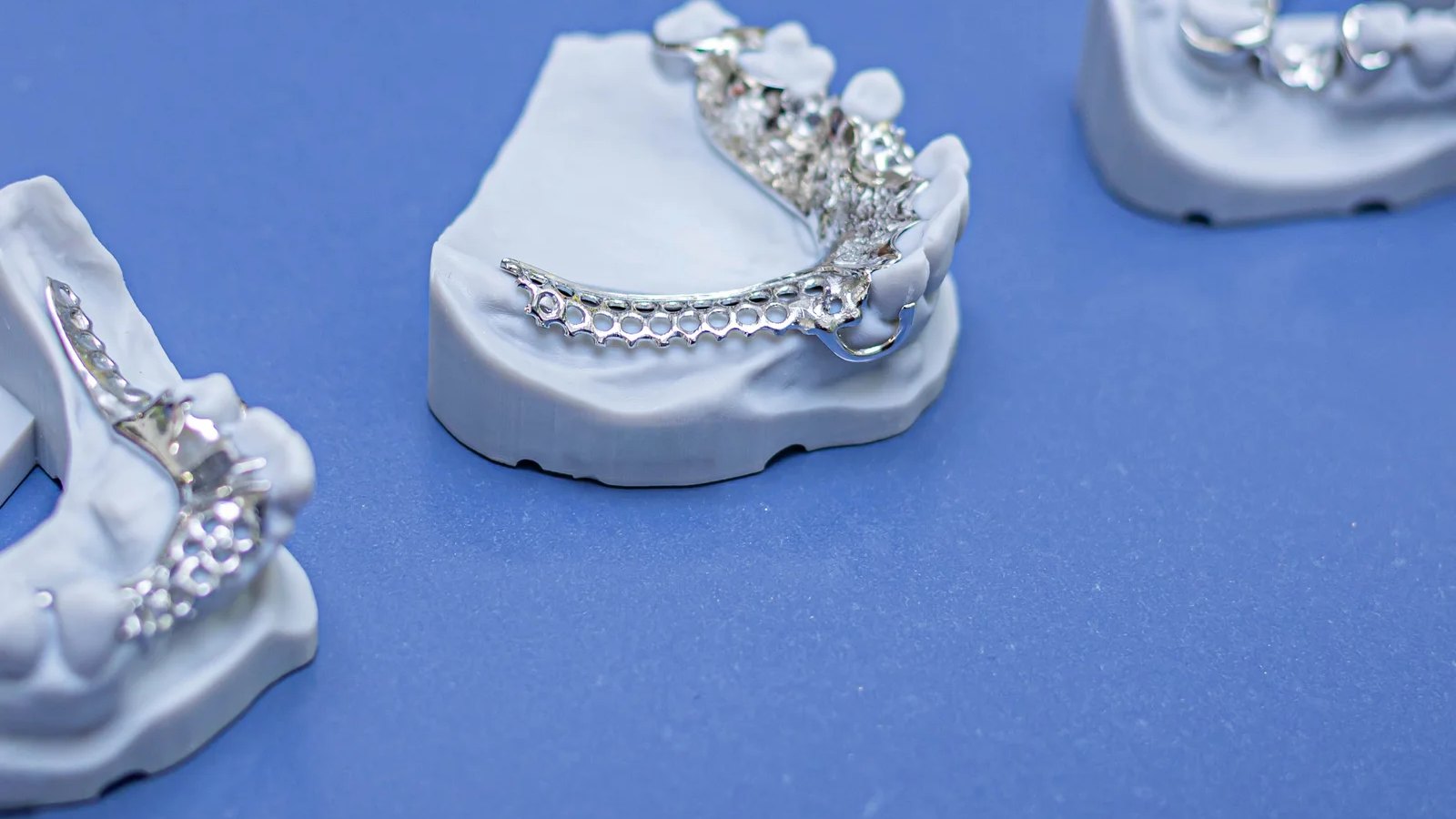
- Parafunction. Heavy occlusal load is the case where flexible bases disappoint fastest.
- Anything expected to last ten to fifteen years or more. Both flexible materials are excellent appliances and neither is the longest lived option available.
- Cases where clasp design is doing the clinical work. Our note on partial denture clasp types covers what a designed clasp actually achieves.
The codes
- D5225 maxillary partial denture, flexible base. Covers both materials.
- D5226 mandibular partial denture, flexible base.
- D5650 add tooth to existing partial denture.
- D5740 reline maxillary partial denture, and D5741 for the mandibular equivalent.
There is no separate code for the brand of thermoplastic, which is worth knowing when a patient asks why one costs more than the other. The code is the same and the laboratory fee is where the material difference sits. Our flex partials page lists the current set. Reference values only, so confirm against current CDT.
What we need on the prescription
- Which material you want, or a note asking us to recommend one. If the field is blank we will call.
- Whether the patient has a metal sensitivity or has specifically asked for no visible metal, because that is usually the reason a flexible base is on the table at all.
- The abutment teeth you consider at risk, so we can design clasp engagement away from them.
- Shade, and whether you want a veined or a plain gingival shade.
- Whether this is a definitive appliance or an interim one while a plan is finalised. It changes what we recommend more than any other single line on the form.
We take scans from the major systems as well as conventional impressions, which is set out on our intraoral scanners page, and case planning is on for dentists. The full removable line sits under dentures and partials.
Questions from the prep
What is the actual difference between Duraflex and Valplast?
Chemistry. Duraflex is a polyolefin and Valplast is a nylon. In practice that means Duraflex takes up less water and is easier to adjust and polish, while Valplast has the longer clinical track record and the larger body of studies behind the material class. Both produce a metal free partial that patients like.
Which one stains less?
Polyolefin should stain less because staining follows water uptake, and the manufacturer claims exactly that. The independent data on water sorption is mostly on polyamide, where sorption runs higher than in conventional acrylic. Treat the direction as well founded and the size of the difference as not yet independently quantified.
Is a flexible partial a definitive appliance or an interim one?
It can be either and the honest answer is that it depends how long you expect it to serve. For an esthetic driven case in a patient who will not accept metal, it is a definitive appliance many patients wear happily for years. For an arch that is still deteriorating, it is better used as an interim while the plan settles.
Can you combine a flexible base with a metal frame?
Yes, and it is underused. A cast frame carrying rests with flexible esthetic clasps in the visible zone gives you load distribution where it matters and no metal show where the patient can see it. Ask us on the planning call, because the design has to be drawn before the frame is cast.
Do you need to tell us which material the existing partial is?
Yes, for any repair, addition or reline. Nylon, polyolefin and acrylic all take a repair differently, and guessing wrong wastes the appliance. If you do not know, send it and we will identify it.
Material selection
Not sure which flexible material fits the case
Tell us the arch, the abutments you are worried about and how long the appliance needs to last, and we will recommend a material and say why. No charge for the planning call.
Written by Carlos Cruz, team leader for removable prosthetics at International Dental Arts. IDA has been a family founded dental laboratory in Tulsa since 1984, working with independent practices across the country. If you want a case reviewed before you commit, get in touch.