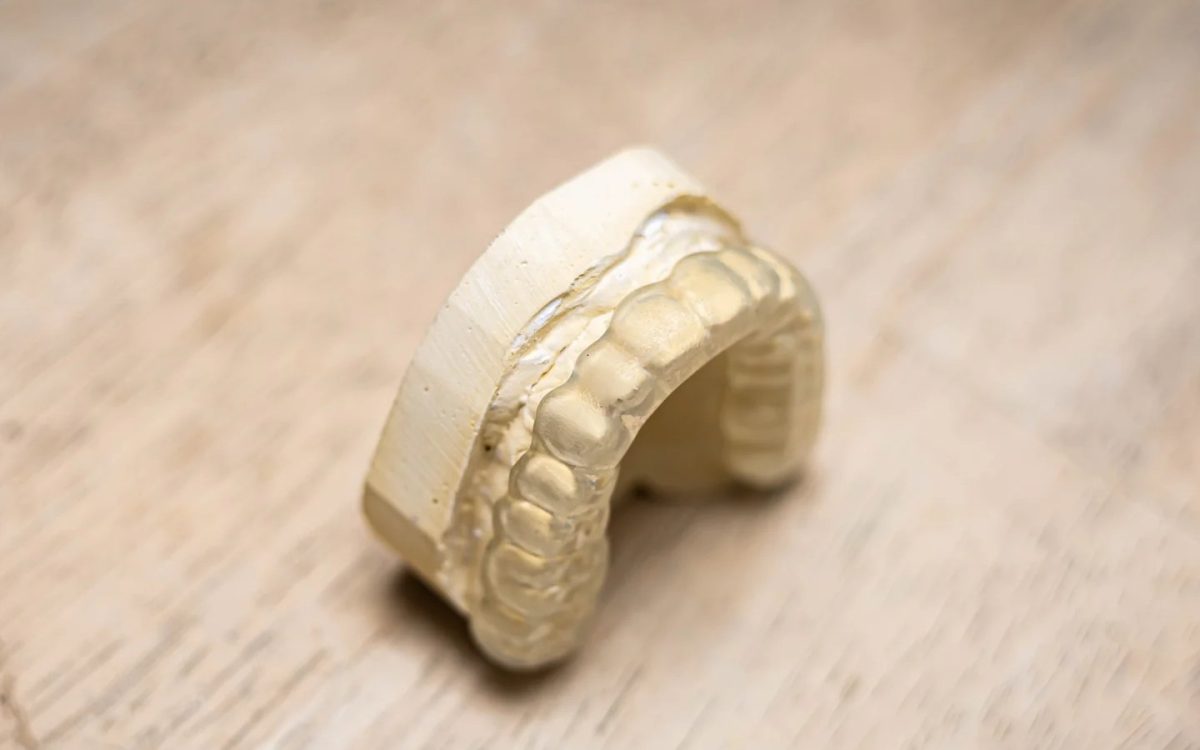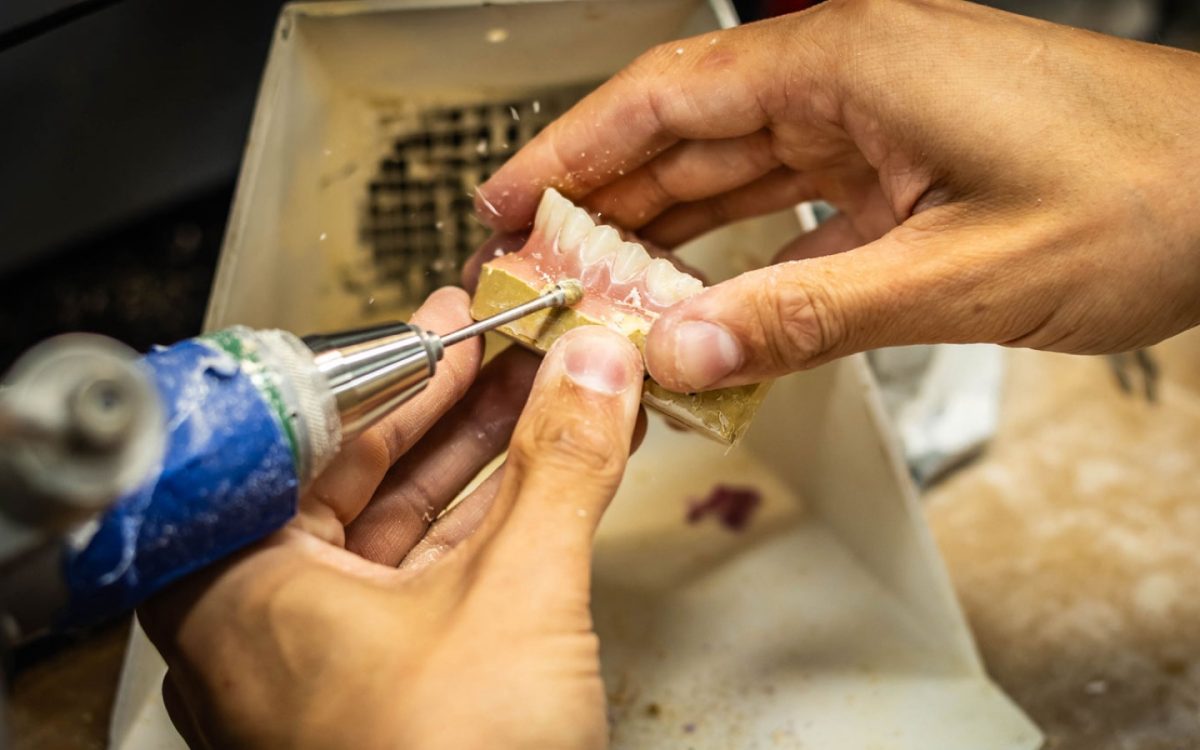
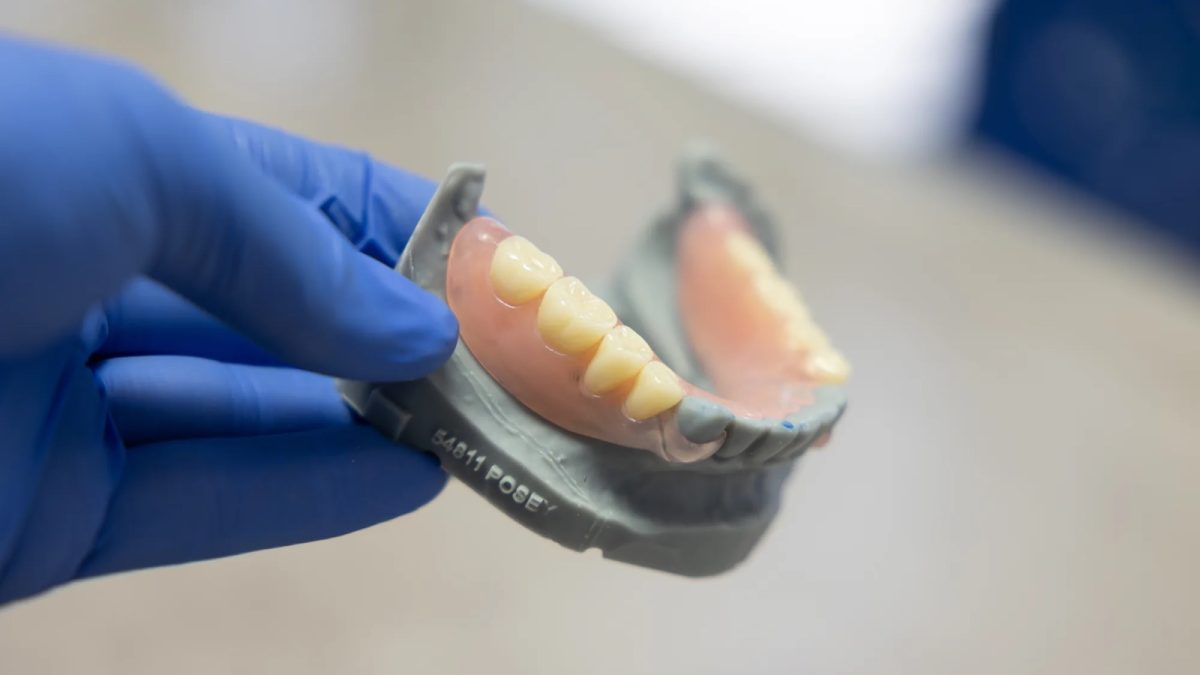
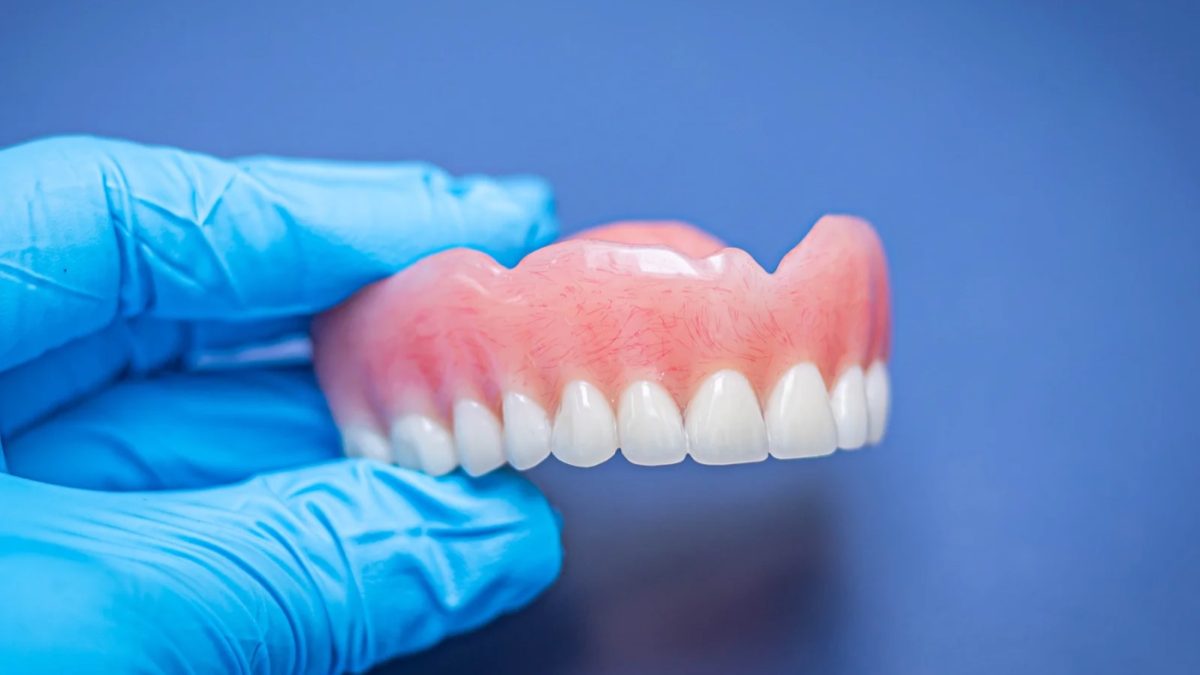
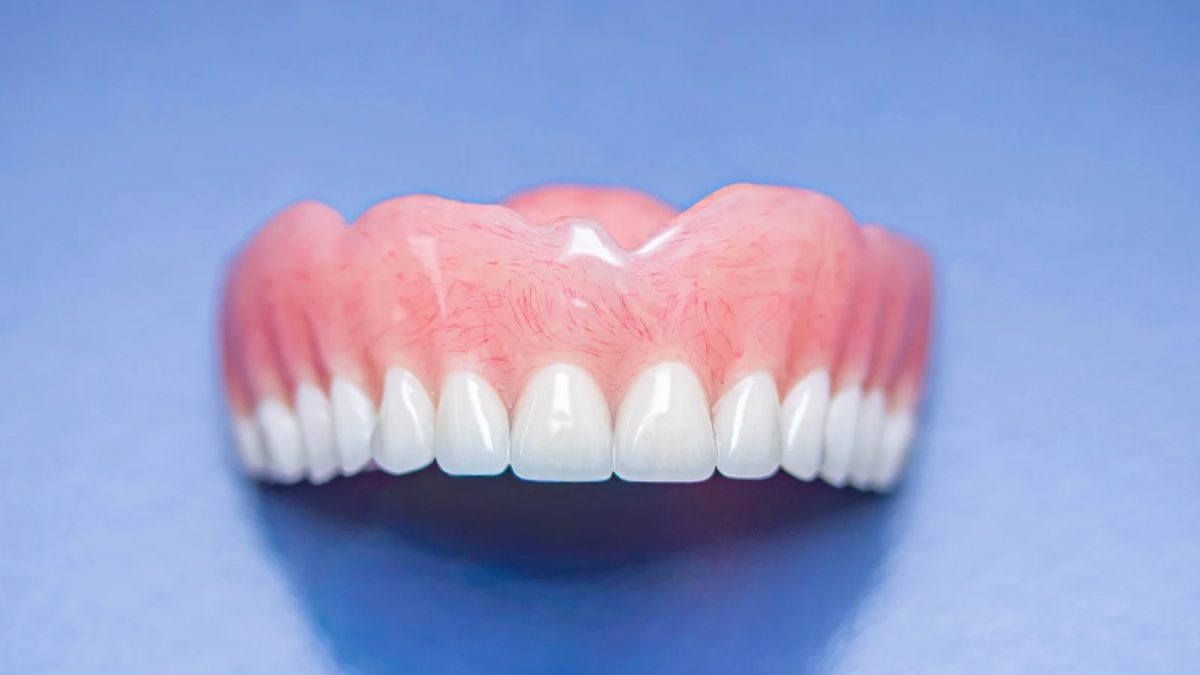
An immediate denture is the only complete denture we make without ever seeing the ridge it will sit on. The teeth are still there when the impression is taken and gone when the patient wears it. Everything in between is an educated prediction, and the quality of that prediction depends almost entirely on what you send us before the extractions.
Here is what changes at the bench, what the resorption literature says about when this appliance will stop fitting, and the six things on the prescription that decide whether delivery day is short or long.
What we are actually doing with an immediate denture
We take your impression, remove the teeth from the cast, and reshape the plaster to approximate how the ridge will look once it has healed enough to carry a denture. That reshaping is a judgement call made by a technician who cannot see the surgical site.
The prosthesis that results is genuinely temporary in fit even though it is permanent in appearance. It will need adjusting and it will need relining, and both are expected rather than a fault.
The resorption timetable, and why it decides everything
This is the part worth quoting to patients, because it converts “it will need adjusting” into something they can plan around.
The bulk of the change happens fast. Most alveolar bone loss occurs in the first 3 to 6 months after extraction, with the most pronounced resorption through the first 3 months, and it continues at a reducing rate through the first year. Reported across multiple studies, bone width loss over that early period runs from about 29% to 63%.
The two arches behave differently. In the maxilla, average vertical reduction is around 1.5 mm to 2 mm in the first six months, with ridge width loss of 40% to 60% over three to five years. In the anterior mandible, height loss can reach 4 mm to 5 mm in the first year, which is why a lower immediate denture often feels loose sooner than the patient was led to expect.
And it never entirely stops. A mixed-longitudinal study following complete denture wearers over 25 years describes continuing reduction of the residual ridge rather than a plateau. Individual variation is substantial, so these are planning figures rather than promises.
The practical consequence: an appliance delivered onto a fresh extraction site is fitting a ridge that will lose a meaningful share of its dimension before the patient’s third recall. Regular prosthetic adjustment through that first year is described across the literature as essential, not optional.
Tell us which teeth are coming out, and when
Obvious, and still the most common omission. We need the specific teeth, not “the uppers”. If extractions are staged, we need to know which sites are already healed, because a healed ridge and a fresh socket get shaped differently on the cast.
We also need to know whether an alveoloplasty is planned. Recontoured bone changes ridge form significantly, and a denture built for an unrecontoured ridge will not seat on one that has been reduced. That single omission accounts for more chairside adjustment at delivery than anything else on this list.
Tooth position is your one free piece of information
The patient’s own teeth are in the impression. Their shade, their shape, their midline, the way the centrals sit against the lip. Once they are extracted that reference is gone permanently.
If the patient likes their teeth, say so and we copy them. If they have always disliked something, this is the only chance to change it and we need to be told which thing. Send photographs. A pre-extraction photograph is worth more to a technician than any written description of shade, and almost nobody sends one.
Before the extractions
Send the photographs while the teeth are still there.
Shade, midline and incisal display are free information right up until the extraction appointment. After that we are guessing, and so are you.
Immediate complete or immediate partial
They are different appliances, different codes and different design problems, and the prescription should say which.
- Immediate complete denture. Whole arch cleared. Tooth position comes from the pre-extraction record and nothing else.
- Immediate partial denture. Remaining teeth stay, so the appliance has to seat around them and clasp them while the extraction sites heal underneath. The interim designs we use are on our acrylic partials page, and the wider material comparison is in types of upper partial dentures.
- Staged clearance. Say so explicitly. We design differently when a second round of extractions is coming.
Plan the immediate denture reline before you deliver
Given the resorption figures above, the first reline is a scheduled stage of treatment rather than a response to a complaint. Book it at the delivery appointment.
- Around 3 to 6 months. The window in which most of the early change has happened. This is the usual first reline point and the literature on resorption timing is the reason.
- Sooner in the anterior mandible. Given reported first-year height loss of 4 mm to 5 mm there, expect the lower to need attention before the upper.
- Hard or soft. Decided by the tissue rather than the calendar. The options and the four cases where relining is the wrong answer are in hard and soft denture relines.
- Then annually, or on symptoms. Resorption reduces in rate without stopping, so this becomes ordinary maintenance.
Booked at delivery, a reline reads as planned care. Booked when the denture loosens, it reads as something having gone wrong. Same appointment, entirely different conversation.
What the delivery appointment usually needs
Plan for it to be longer than a conventional delivery. The prosthesis is going onto tissue that was surgical minutes or days earlier, and adjustment is close to guaranteed.
- Pressure indicating paste and time to use it. The intaglio was shaped against a prediction, so the first seat is where prediction meets reality.
- Written post-operative instructions the patient keeps. Most protocols have the appliance staying in initially. A patient who removes it early and cannot get it back in will phone you.
- A booked review rather than an open invitation. Sore spots at day two are normal. Waiting for the patient to decide whether they are bad enough to call is how a small adjustment becomes an ulcer.
- The reline already in the diary.
Why the immediate denture is worth the trouble
Everything above is a list of ways this appliance is harder than a conventional denture, so it is worth stating the case for it plainly.
- The patient never appears in public without teeth. For most people this is the entire decision and no amount of better fit later competes with it.
- It acts as a surgical dressing. Worn as instructed after extraction it supports the tissue while it heals, which is a clinical benefit rather than a convenience.
- Tooth position is captured rather than invented. The patient’s own midline, shade and incisal display are recorded before they are lost. A conventional denture made months later is reconstructing that from a photograph if you took one, and from a conversation if you did not.
- Adaptation starts earlier. Learning to wear a denture is a skill. Beginning it immediately, while the patient is motivated and the alternative is visible, is easier than beginning it after months without teeth.
Against that, the honest counterweight is the resorption timetable and the adjustment burden it creates. Set both out at the consultation and the patient chooses with their eyes open, which is a better position than discovering the trade at the first reline. Where the longer-term plan involves implants, say so now, because it changes what we build and it is covered in implant supported dentures versus implant retained.
The codes
Reference values, and worth confirming against the current CDT. Carrier language varies.
- D5130 immediate denture, maxillary. D5140 immediate denture, mandibular.
- D5221 immediate maxillary partial denture, resin base. D5222 the mandibular equivalent.
- D5223 and D5224 immediate partial dentures with a cast metal framework.
- Relines are reported separately, and there are distinct codes for chairside and laboratory processed relines. Given that the first one is effectively planned at delivery, it is worth setting the patient’s financial expectation at the same time as the clinical one.
Questions from the prep
How soon after extraction can an immediate denture be relined?
Follow your own protocol for the surgical site. The resorption evidence points at 3 to 6 months as the window in which most early change has occurred, so that is the usual first reline point. What matters more is that it is booked in advance rather than triggered by a complaint.
Can you make an immediate denture from an intraoral scan?
Yes. We accept files from iTero, TRIOS, Medit and Primescan, with detail on our intraoral scanner page. Scanning a dentate arch about to be cleared is straightforward and it leaves a permanent record of the original tooth position, which is genuinely useful later. The wider case for that is in what a digital dental lab changes.
Should an immediate denture have a try-in?
Not usually possible in the conventional sense, because the teeth being replaced are still in the mouth. That absence is exactly why the pre-extraction information matters so much, and it is why this appliance rewards a phone call more than most.
Immediate or conventional, how do you decide?
Mostly whether the patient can be without teeth. If they can tolerate a healing period, a conventional denture made on a healed ridge fits better with less adjustment. If they cannot, and most people cannot, the immediate denture is the right appliance and the reline is the price of it.
How long should an immediate denture last before it is replaced?
Think of it as carrying the patient through healing. Many are relined and kept for years, which is fine. Some are replaced once the ridge settles, typically after the first year when the rate of change has slowed. Deciding which at the outset, and telling the patient, is better than leaving it open.
Why does the lower one always feel worse?
Because it usually is. Reported first-year height loss in the anterior mandible of 4 mm to 5 mm outpaces the maxilla, and the lower has less surface area and no palate to spread load across. Warning the patient in advance turns an expected outcome into evidence you knew what you were doing.
If you have not sent us a case before, becoming a client takes no contract and no minimum, and for dentists sets out how the first case works.
Written by Amanda Elder, Lab Manager and a Certified Dental Technician in removable dentures, certified in the Shipman and Massad technique at International Dental Arts. IDA has been a family founded dental laboratory in Tulsa since 1984, working with independent practices across the country. If you want a case reviewed before you commit, get in touch.