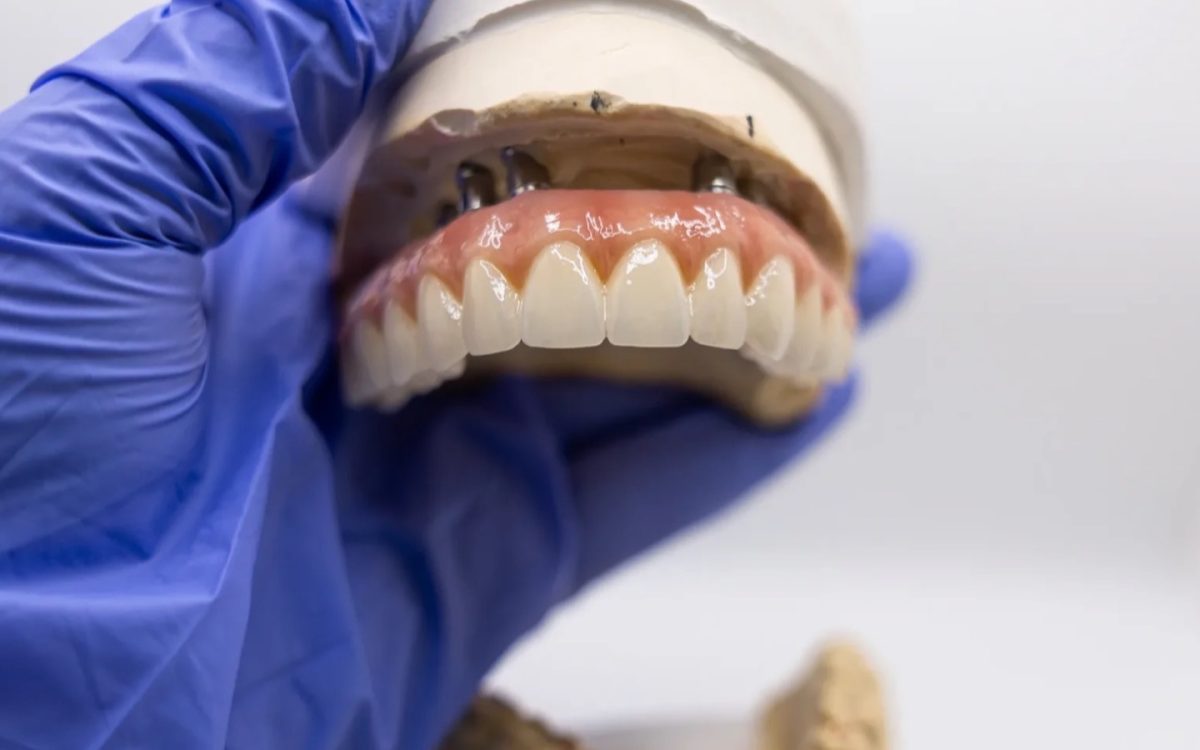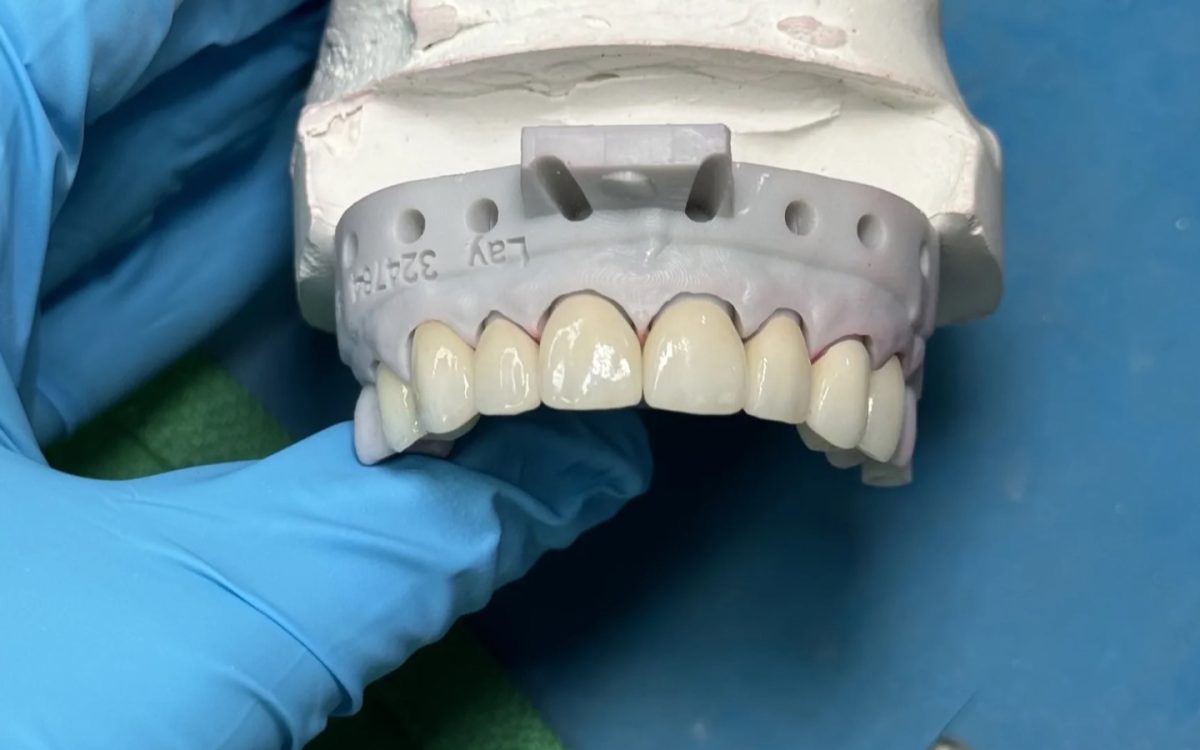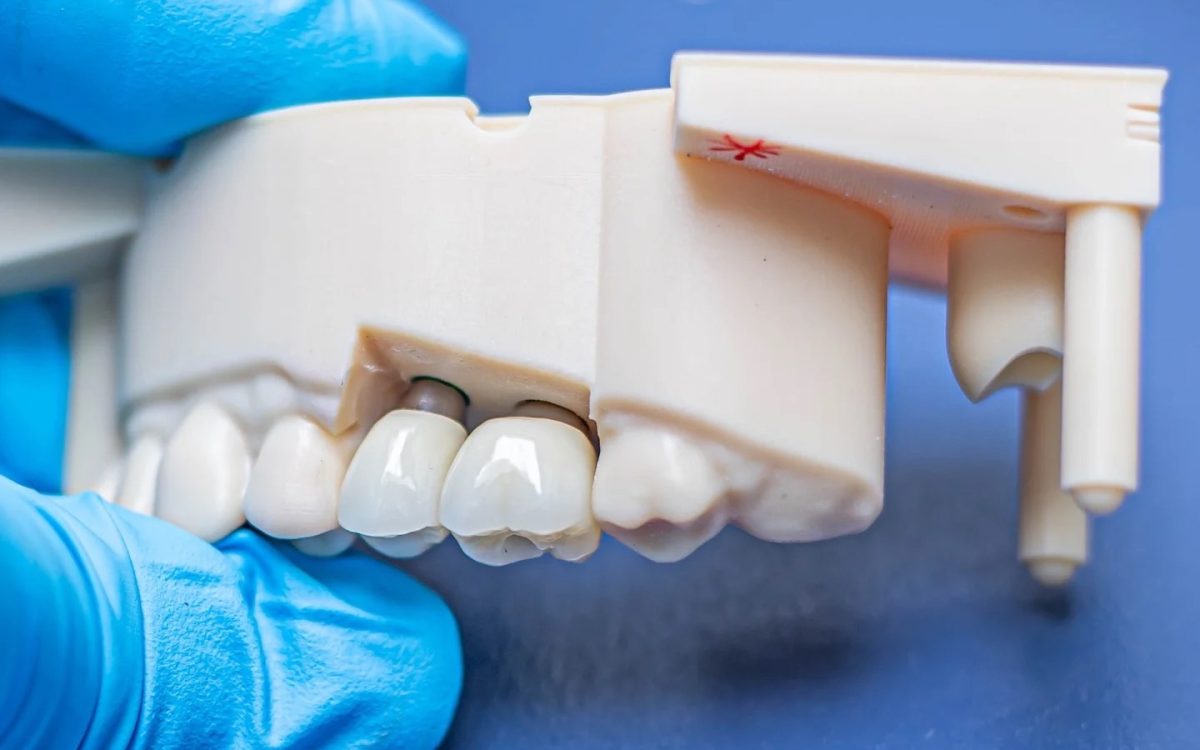
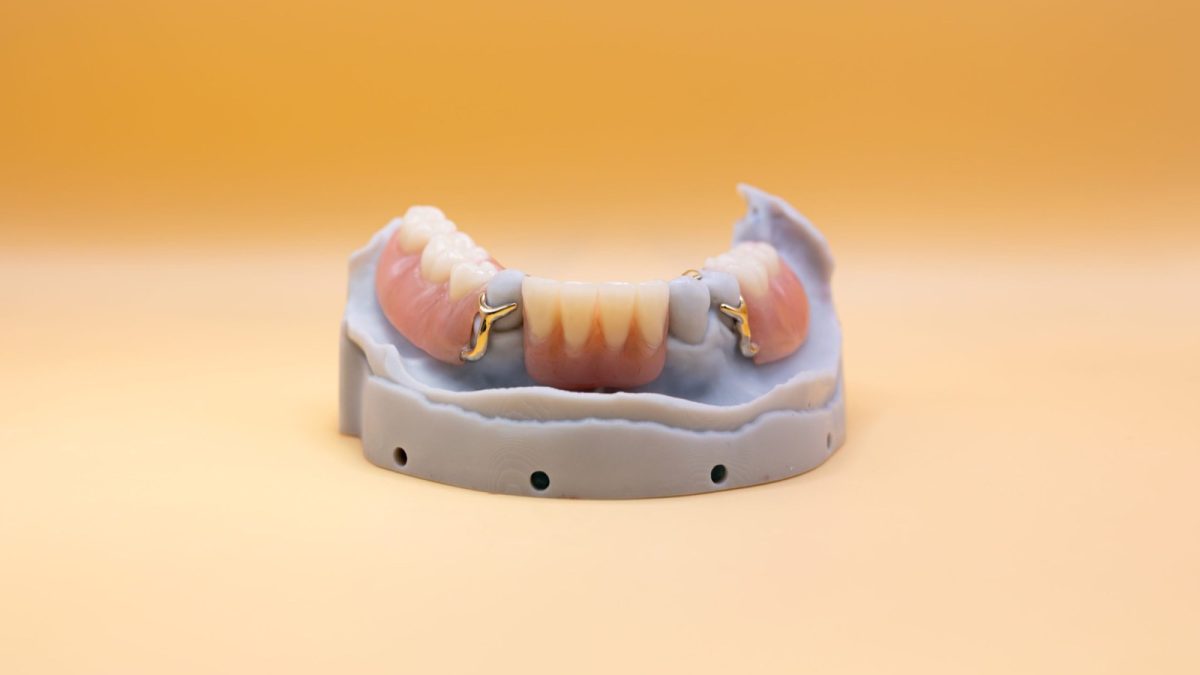
An interim partial denture is the appliance most often built to the wrong specification, because the word interim describes how long it is meant to serve rather than what it is made of. Two appliances can look identical on the bench and belong to completely different treatment plans. One of them has a planned end date. The other does not.
This is the practical version for a general practice. What separates interim from definitive, which code each one takes, how long interim should actually mean, and what happens to the mouth when an interim appliance quietly becomes permanent.
What an interim partial denture is, and what it is not
It is a removable prosthesis intended to restore esthetics, stability or function for a limited period, after which it is replaced by a definitive restoration. That definition is doing real work. The appliance is defined by its intended service life, not by its material, its coverage or its clasping.
The classic indications are the situations where you cannot make the definitive prosthesis yet. Unplanned anterior tooth loss from trauma or avulsion. Extractions where the ridge has to remodel before a definitive appliance can fit it. A staged treatment plan where a larger restorative sequence has not finished. And increasingly, the healing interval during implant treatment, where the protocols commonly require the site to stay unstrained under minimal compression for 2 to 4 months.
What it is not is a cheap partial. An economy appliance intended to serve for years is a definitive prosthesis with a low budget, and it should be designed, coded and reviewed as one. Calling it interim because it is inexpensive is where most of the trouble in this category starts.
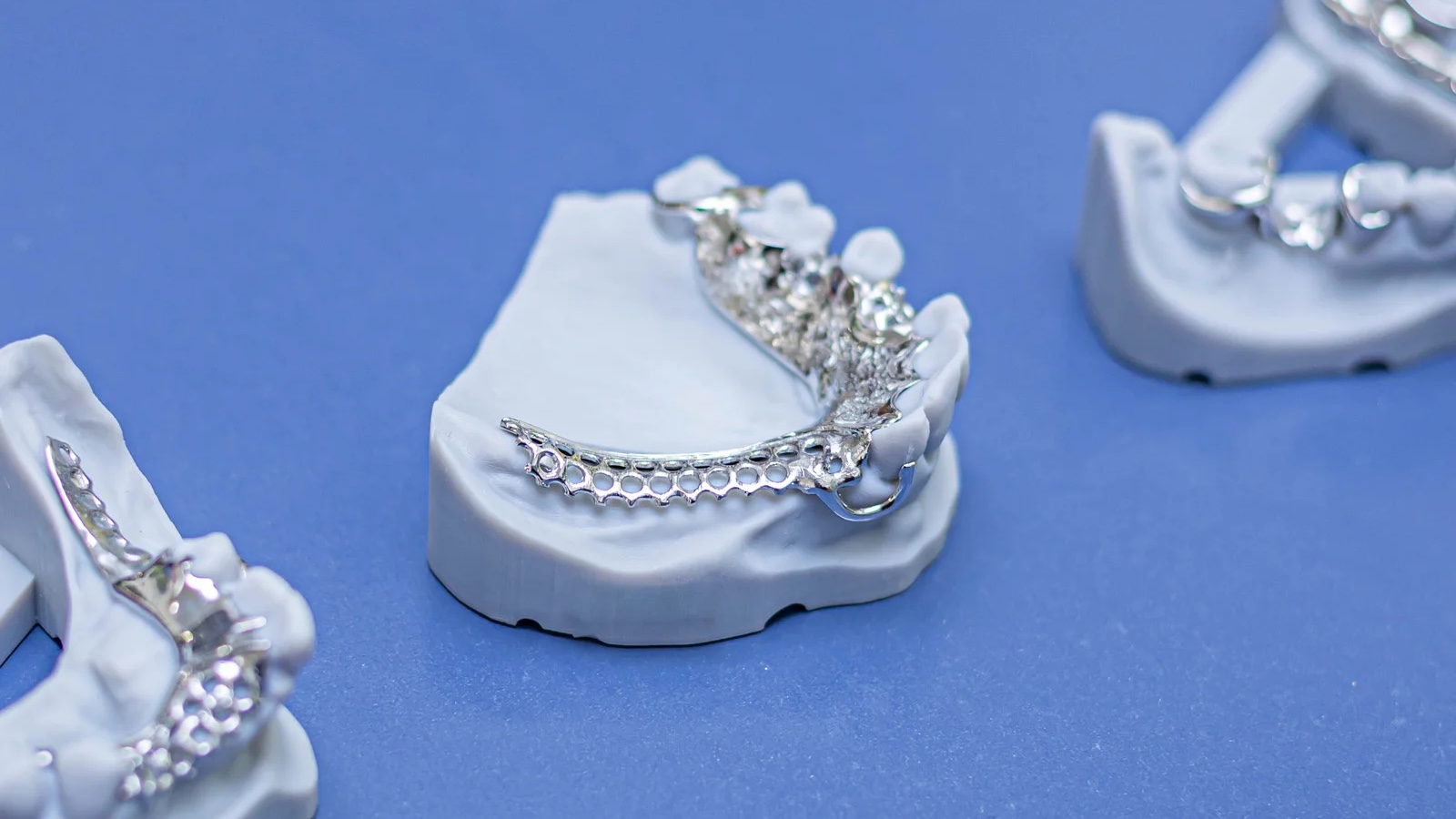
Interim, immediate, transitional, flipper
These words get used interchangeably in practice and they do not all mean the same thing, which matters because the prescription has to say which one you want.
- Interim. Defined by a limited intended service period with a definitive prosthesis planned to follow. Also called a provisional prosthesis in the literature.
- Immediate. Defined by timing. It is inserted at the extraction appointment, built before the teeth come out. An immediate appliance is usually also interim, but the defining feature is that it was made from a pre extraction record. The complete denture version of this is covered in immediate dentures.
- Transitional. Used for an appliance carrying a patient through a staged plan, often with teeth added to it as the arch changes.
- Flipper. Not a technical term, and usually means a small acrylic interim replacing one or two anterior teeth. Patients use this word, so expect it on the phone rather than the chart. A spoon denture is the same family.
If the prescription says temporary partial denture we will build a sensible interim and call you if anything about the case suggests you meant something else. Saying which of the four you mean removes that call.
The coding question, and this one gets denied
An interim partial denture has its own codes. D5820 is the interim maxillary partial denture and D5821 is the interim mandibular one. They exist specifically to distinguish an appliance with a limited service life from a definitive prosthesis, and the complete denture counterparts are D5810 and D5811.
The definitive codes are different. D5211 is a maxillary partial with a resin base and D5212 is the mandibular equivalent, while D5213 and D5214 cover maxillary and mandibular partials with a cast metal framework and resin base. Using D5820 for what is actually a definitive appliance, or billing D5211 for a genuine short term interim, is the error that produces denials and audit attention.
The practical consequence is worth stating plainly, because it cuts both ways. Interim codes usually carry lower benefit, so coding a definitive appliance as interim underpays the practice. Coding an interim as definitive can exhaust a patient benefit that was going to be needed for the real prosthesis in a few months, which is a much worse conversation. Related modification codes are D5650 to add a tooth and D5660 to add a clasp. Our acrylic partials page lists the current set. Reference values only, so confirm against current CDT and your carrier.
How long interim should actually mean
The honest answer is that it is set by what you are waiting for, and in most cases that is ridge healing. The systematic review data on post extraction dimensional change is the useful anchor here. Horizontal ridge change is reported at around 32 percent by 3 months, and horizontal reduction runs considerably deeper than vertical, at roughly 3.79 mm against 1.24 mm on the buccal at 6 months. Vertical change sits around 11 to 22 percent at 6 months. The pattern is rapid early loss that slows, rather than a steady decline.
So an interim appliance delivered at extraction is sitting on a ridge that will be a materially different shape within a quarter. That is the argument both for the interim existing at all and for it having an end date. Where the plan involves implants, the healing interval is the constraint instead, and the surrounding decisions are on our implant restorations page.
Where the appliance has to serve longer than planned, a reline is the correct intervention rather than tolerating a loose fit. That decision is covered in denture reline, hard, soft or remake.
Design, and the harm an interim can do
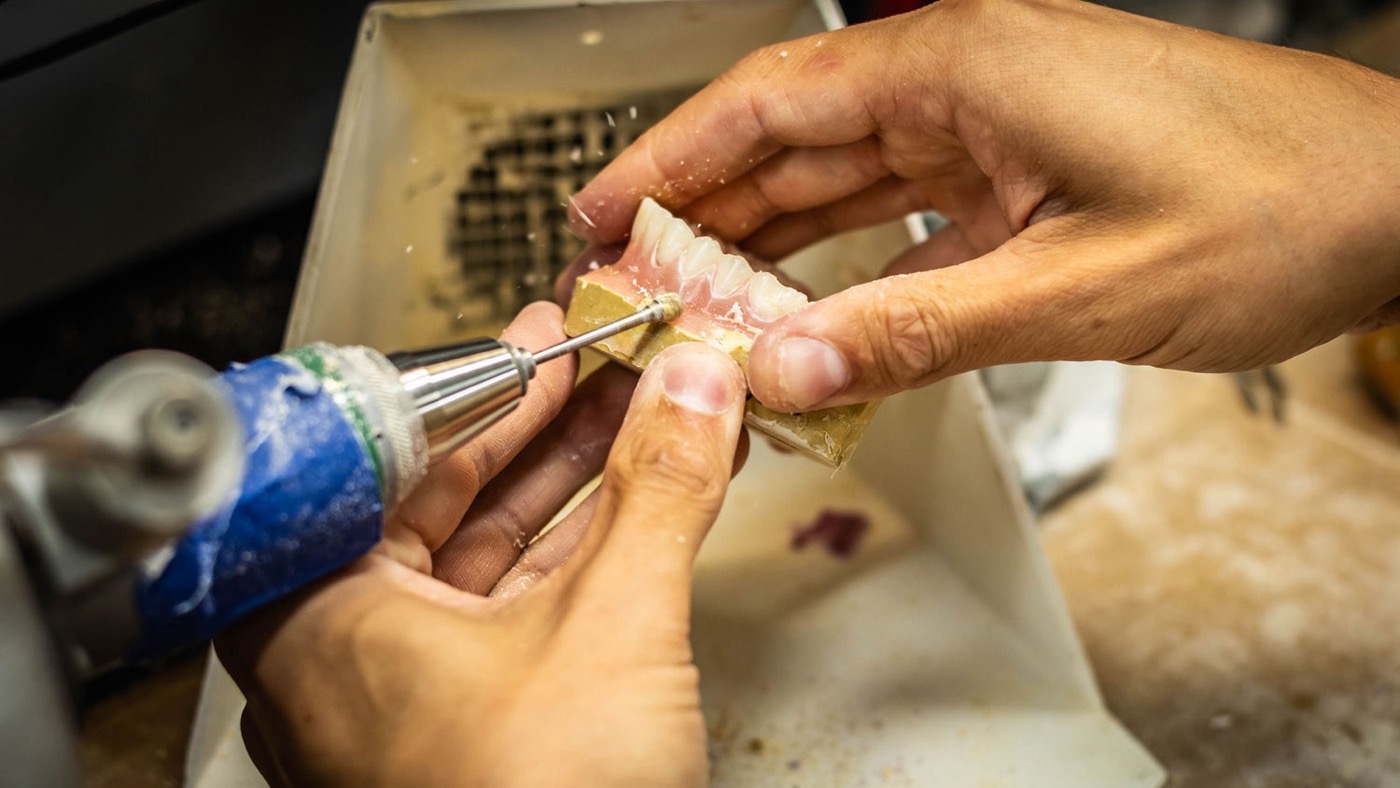
This is the part that gets skipped because the appliance is temporary. An interim prosthesis can jeopardise the integrity of the adjacent teeth and the health of the supporting tissue if it is worn for an extended period without supportive care. The literature is direct about it. The appliance has to be carefully designed, properly made, and kept clean during its intended service.
- Most interim partials are tissue borne with minimal or no rests, so load goes into the mucosa rather than down the long axis of the abutment teeth. Over months that is tolerable. Over years it is not.
- Teeth that are not held can move. An interim that covers some teeth and leaves others free is an orthodontic appliance nobody prescribed, and the bite you get back is not the bite you sent.
- Coverage against a healing extraction site needs relieving deliberately. Tell us where, because we cannot see the surgical site from a cast taken before it existed.
- A rough or unpolished fitting surface causes tissue trauma quickly. Interim is not a reason to finish an appliance badly, and we do not.
- Hygiene instructions matter more on an interim than a definitive, because the design usually covers more tissue with less support.
When an interim partial denture becomes definitive by accident
This is the single most common failure in this category and it is an administrative failure rather than a clinical one. The appliance works well enough, the patient stops complaining, the next appointment never gets booked, and three years later a tissue borne acrylic appliance with no rests has been carrying a case that needed a cast framework.
- Put the review date on the prescription and in the patient record at delivery, not afterwards.
- Tell the patient the appliance has an end date, in those words. A patient who thinks they own a finished denture will not come back for a better one.
- If the plan changes and the interim is now the long term appliance, say so and remake it properly. A cast partial designed with rests protects the abutments in a way an interim never will.
- Where the patient will not accept visible metal in the long term, the flexible route is a legitimate definitive option and the material choice is set out in Duraflex or Valplast, with the line on our flex partials page.
- For the full comparison of what a definitive partial should be in a given arch, see types of upper partial dentures.
What we need on the prescription
- The word interim, and the intended service period. Weeks, months, or until a named next step.
- What you are waiting for. Healing, a staged restorative plan, implant integration, or a decision the patient has not made yet. Each one changes the design.
- Which teeth are being replaced and which are staying, with any you consider at risk marked.
- Whether teeth will be added later. If the answer is yes, we build it so that is straightforward rather than a remake.
- Where to relieve for a surgical site, if the impression predates the extraction.
- Shade and midline, because an anterior interim is the appliance the patient judges you on even though it is the one nobody designed for esthetics.
We take scans from the major systems as well as conventional impressions, which is on our intraoral scanners page, case planning is on for dentists, and the removable line sits under dentures and partials.
Questions from the prep
What is the difference between interim and immediate dentures?
Interim describes intended service life. Immediate describes timing of insertion. An immediate appliance is built from a pre extraction record and delivered at the surgical appointment, and it is usually also interim. An interim appliance made six weeks after healing began is interim but not immediate.
Is an interim partial denture a flipper?
Usually, in the way patients mean it. Flipper is not a technical term and generally describes a small acrylic interim replacing one or two anterior teeth. If you write flipper on a prescription we will know what you mean, and we will still ask how long it needs to last.
Can a patient eat with one?
Soft foods, cut small, and not on the interim if it can be avoided. Most interim partials have little or no rest support, so chewing load goes into healing tissue. This is worth saying to the patient at delivery rather than letting them discover it.
Should an interim have clasps?
It depends how long it needs to serve and what the abutments look like. Minimal clasping is kinder to the teeth over a short period and less retentive. Tell us the service period and we will design to it.
Can you add teeth to an interim as more come out?
Yes, and acrylic is the material that takes additions most easily, which is often the reason to choose it for a staged case. Say at the outset that additions are expected, because it changes how we build the base.
Case planning
Tell us how long it needs to last
The service period changes the design, the material and the code. Send the case with an end date and we will build to it, or call and we will talk it through first.
Written by Carlos Cruz, team leader for removable prosthetics at International Dental Arts. IDA has been a family founded dental laboratory in Tulsa since 1984, working with independent practices across the country. If you want a case reviewed before you commit, get in touch.