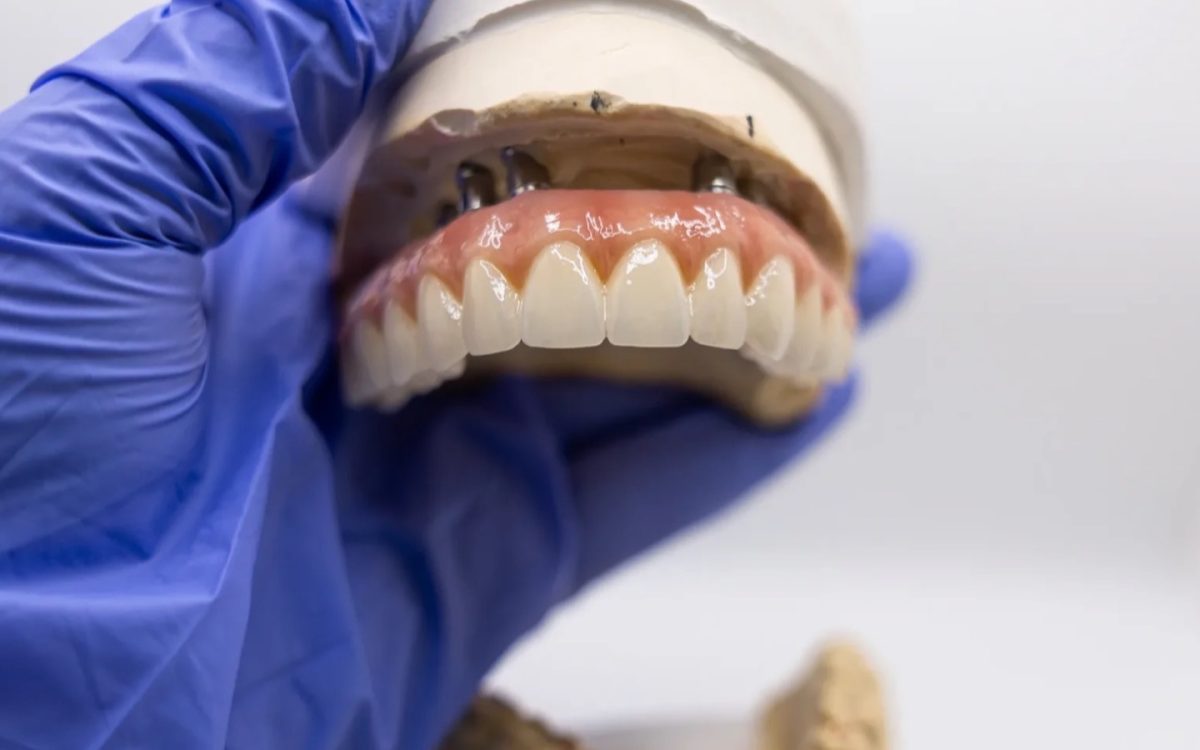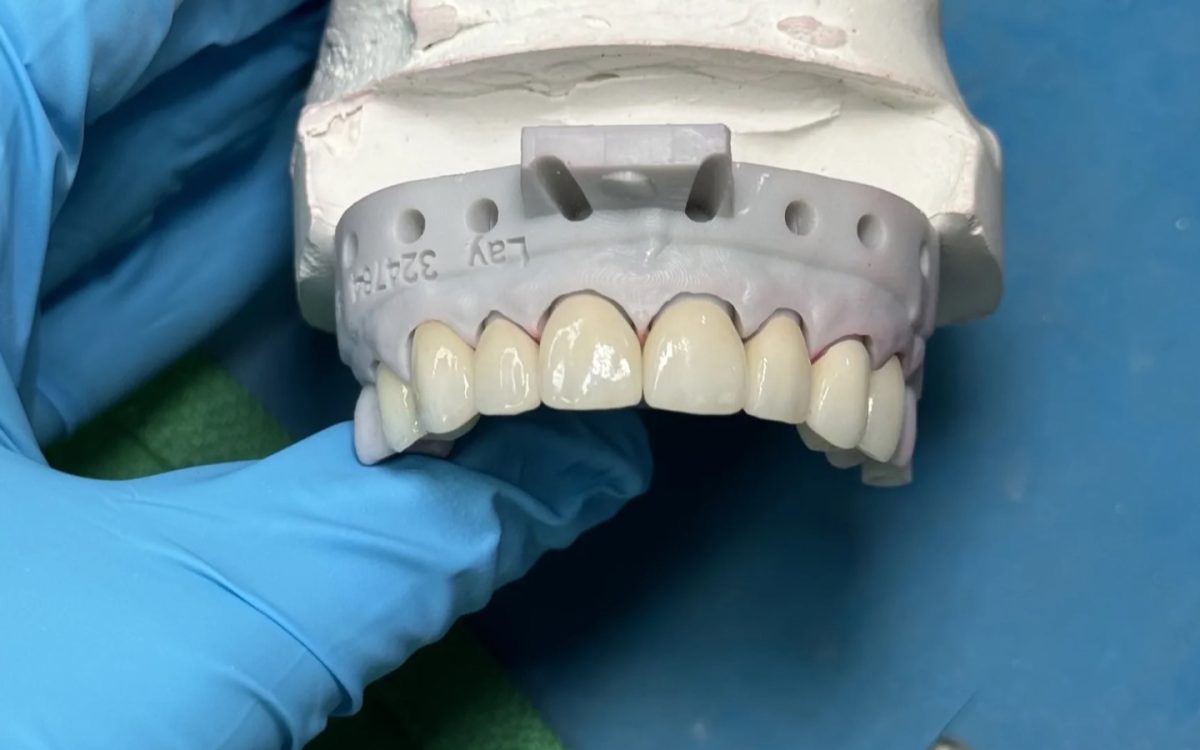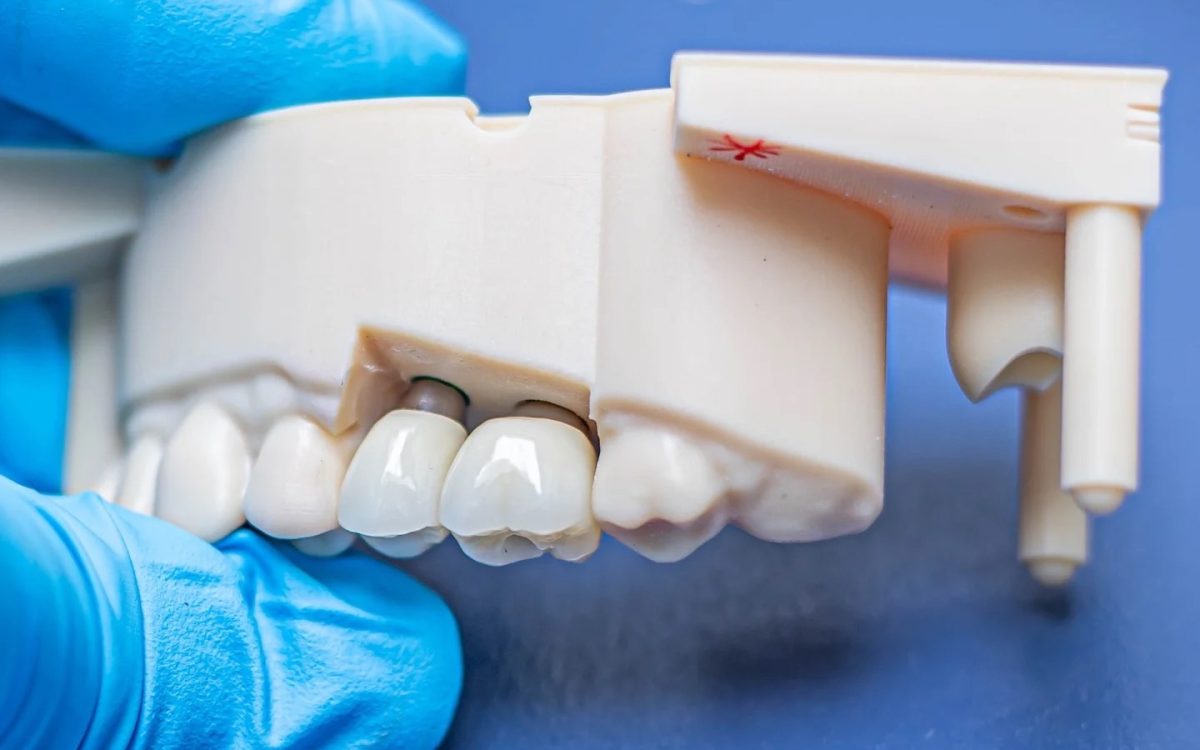
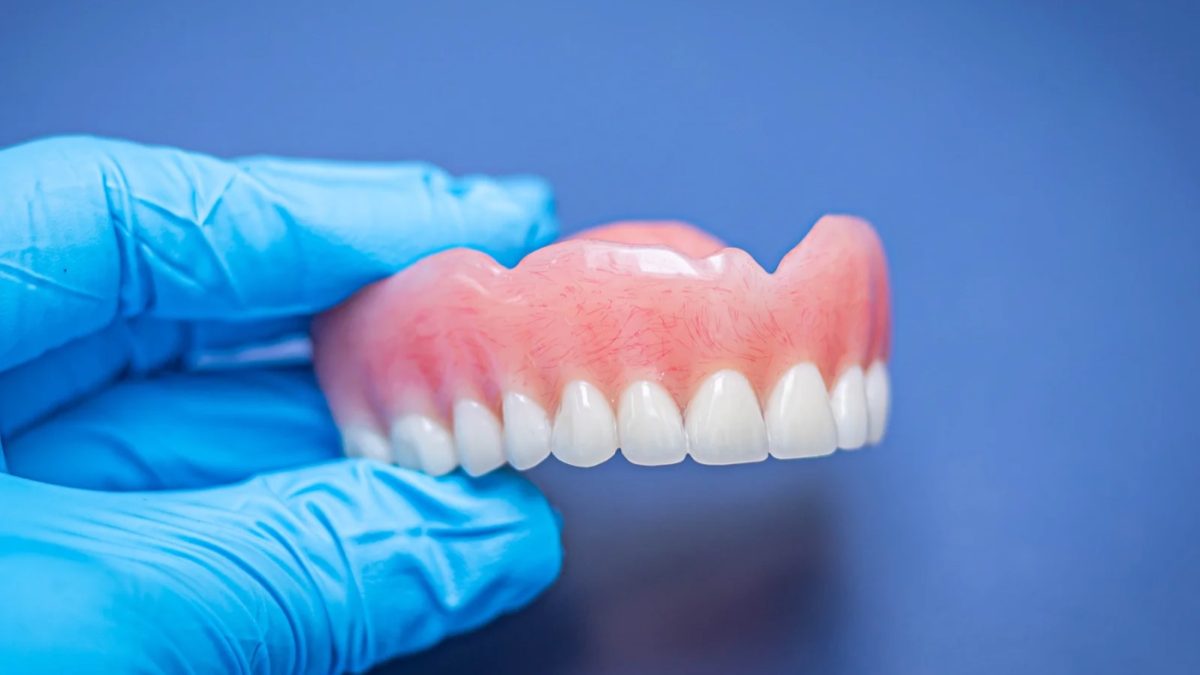
Mini implants reach the laboratory in one of two ways. Either the overdenture was planned around them and we get a case we can build, or the fixtures are already in the mouth and somebody has to make a denture fit over whatever is there. The second version is the one that comes back. This is what we look at when a case like that lands on the bench, and what we need from you before it does.
The question of whether to place narrow diameter implants in a given ridge belongs to you and the surgeon. What follows is the restorative half of it, because the prosthesis is where these cases are won or lost. For the separate question of how a retained overdenture differs from a fixed prosthesis, see our breakdown of implant supported and implant retained dentures.
What mini implants are, and what the survival data actually shows
A mini implant is a narrow diameter implant below 3.0 mm, usually a one piece titanium fixture between 1.8 and 2.9 mm with an integral ball or abutment head. There is no separate abutment connection, which is the whole design idea and also the source of most of the restorative constraint.
The survival numbers are reasonable and worse than standard fixtures at the same time. Systematic review data puts mean survival for these sub 3.0 mm implants at 94.7 percent plus or minus 5 percent, and a separate pooled figure for one piece titanium minis at 94.3 percent over a mean follow up of 3.9 years. The same meta-analysis found survival statistically significantly lower than standard diameter implants. A randomised trial comparing four immediately loaded minis against two standard implants recorded 89 percent survival against 99 percent at 12 months.
The part that matters for treatment planning is what patients said in those same trials. Four mini implants scored better on satisfaction than two standard implants, and a two year randomised study using one piece titanium zirconium minis recorded no failures at all with the quality of life gain holding across the full two years. So the fixtures are less predictable individually and the patient is often happier. Both things are true.
One limit worth knowing before you quote a case. The literature for this diameter covers the edentulous arch and single tooth non load bearing sites. It does not cover posterior load bearing or long span work, and the studies rarely record bruxism or restoration type as risk factors. If a plan uses mini implants for dentures in the mandible you are on documented ground. Further than that you are ahead of the evidence.
Prosthetic space decides the case before anything else
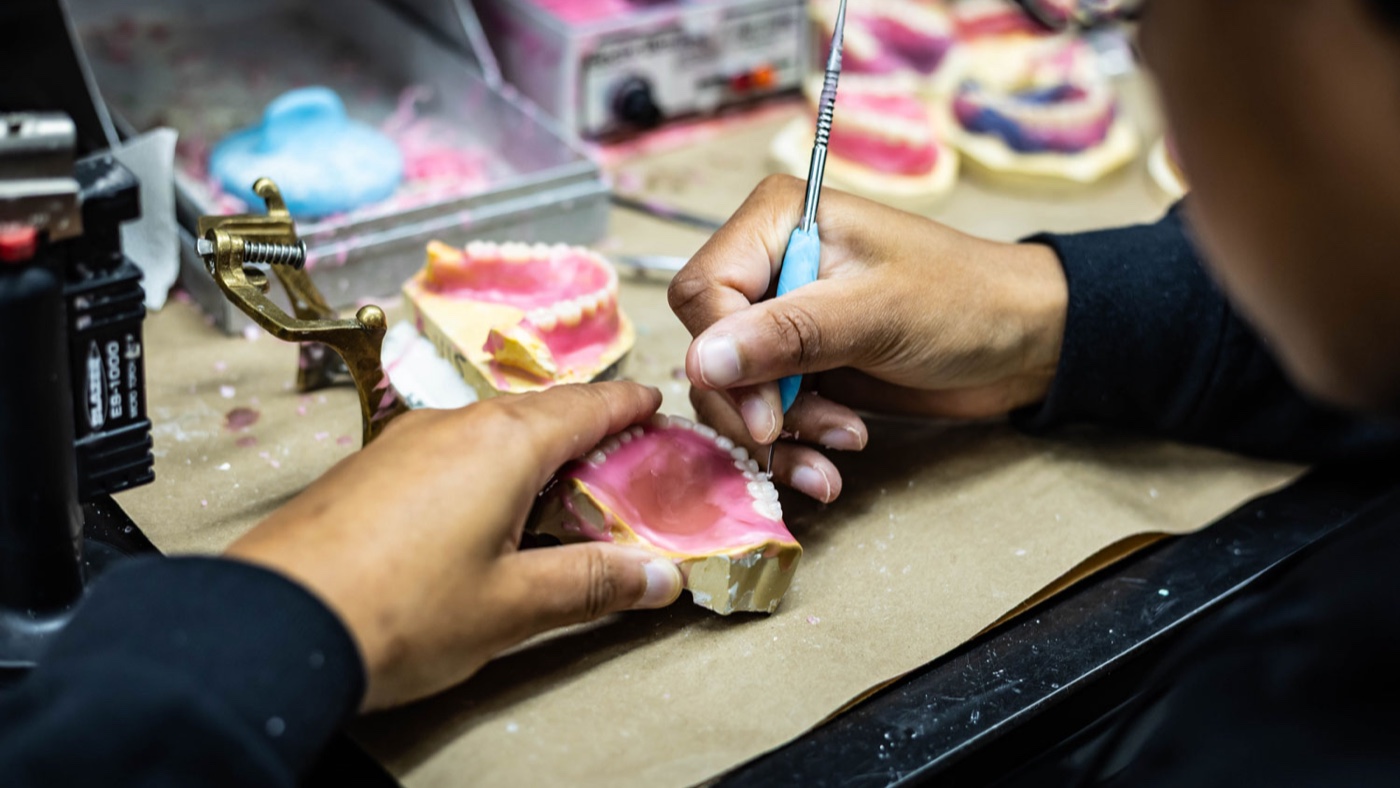
This is the single most common reason a case stalls. The vertical dimension between the ridge and the opposing arch has to carry the denture base, the teeth, the metal housings and, if the case needs one, a reinforcing framework. The working minimum for a base plus teeth plus framework is about 8 mm, and housings sit on top of that because they stand proud of the mucosa.
When the space is short something has to give. Either the teeth get ground thin from underneath, or the acrylic over the housing gets thin, or the housing gets left out and the case delivers with no retention. All three come back. We would rather tell you the number does not work while the ridge is still healing than build the compromise and watch it fracture.
- Measure at the planned vertical, not at the existing worn denture, because an old prosthesis has usually lost height.
- Send the measurement with an opposing model so we can check it rather than take it on trust.
- If a wax try in already exists, tell us where the incisal edge needs to sit and we will work the space backwards from there.
- Where space is genuinely tight, a milled or printed base carries more strength in less bulk than a packed one, which is covered on our digital dentures page.
Chairside pickup versus laboratory pickup
Housings can be picked up in the mouth with autopolymerising acrylic while the patient closes, or processed into the base here on an implant level master cast. Direct pickup is faster and the patient keeps the denture the same day. The trade is that the patient closes during the set, so occlusal force drives the housing position, and any error is locked into the base.
Laboratory pickup takes the denture out of service for a visit and needs an accurate implant level impression. What you get back is a housing seated at a position we chose rather than one the bite chose, with proper acrylic thickness around it and no voids. On a case where the space is already tight, that difference is the case.
Two codes cover the mechanics. D5875 is the modification of a removable prosthesis following implant surgery, which is the conversion of an existing denture. D6191 covers the semi precision abutment placement and D6192 the semi precision attachment placement. For a new prosthesis built for the fixtures from the start, the arch codes are D6110 for maxillary and D6111 for mandibular, and the surgical placement of the fixture itself is D6013 rather than the standard endosteal code.
Denture base fracture is the complication we see most
Prosthesis fracture is the recurring mechanical failure on implant retained overdentures, and the explanation in the literature is straightforward. The base is too thin at the fulcrum. Add a housing that displaces acrylic and a ridge that flexes against a rigid attachment point and the base cracks across the midline or around the housing itself.
Metal reinforcement substantially reduces the incidence. Studies on reinforced bases show reduced maximum stress in the denture under lateral occlusal load, locally improved fracture resistance at the base, and a lower rate of implant neck fracture as a secondary effect. There is also an in vitro finding worth carrying into planning, which is that minis distribute and transmit chewing stress less favourably than standard diameter fixtures. The prosthesis is absorbing more of the load, so the prosthesis needs to be built for it.
The catch is circular and unavoidable. A framework needs vertical space, and vertical space is exactly what is short on the cases that most need reinforcement. That is why the measurement in the previous section has to happen before placement rather than after.
Attachment wear is a scheduled cost, not a failure
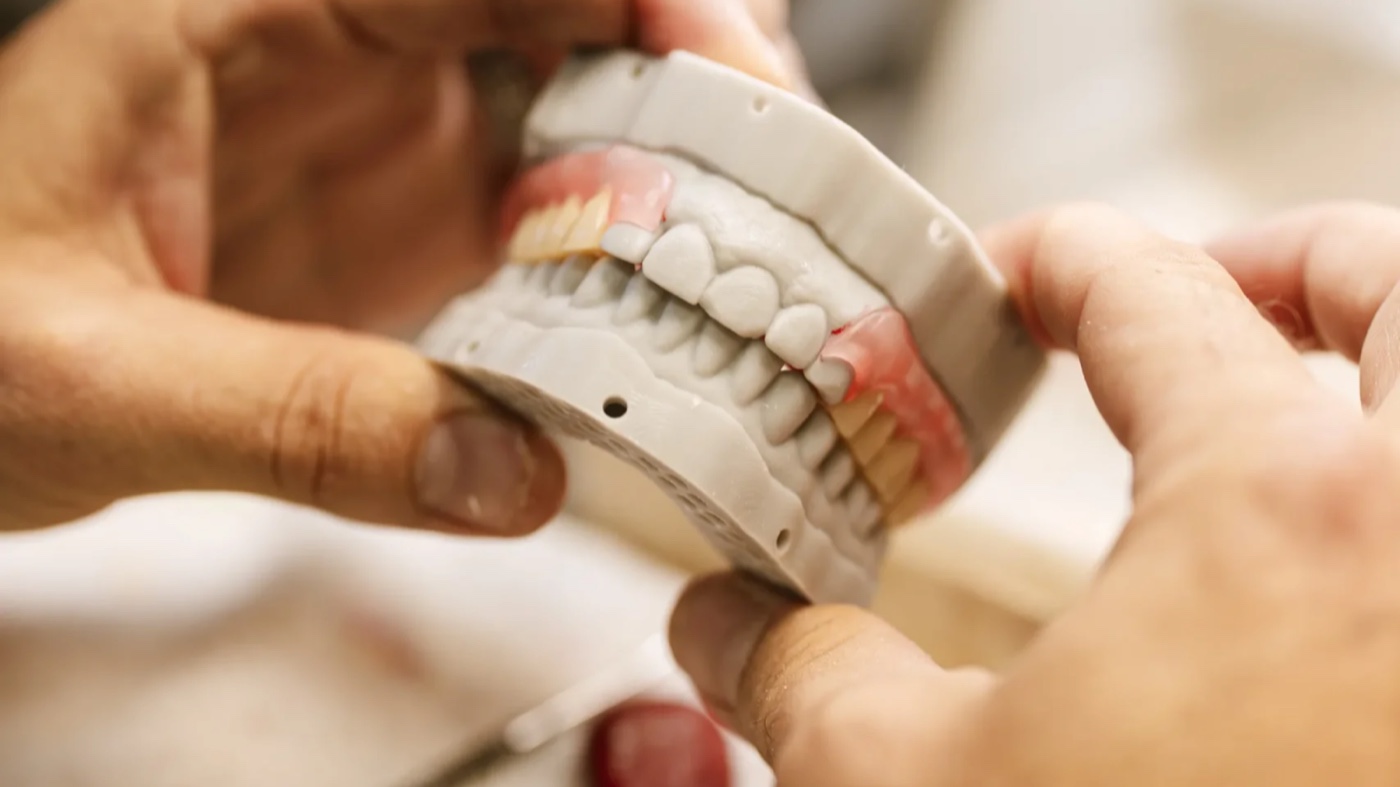
Retention inserts are consumable and patients need to be told so at delivery, because otherwise the first replacement visit reads as a complaint. Both nylon and PEEK inserts show significant loss of retention by six months in service, at which point the insert has to be replaced to hold reliable grip. One in vitro series measured a mean 50.89 percent loss of retention on a Locator system after 14,600 insertion cycles. PEEK inserts showed no measurable loss at 10,000 cycles in a comparison where nylon did, so the material choice buys longer intervals rather than a permanent fix.
Home care changes the number more than most people expect. Over a 12 month test of denture cleansing solutions, sodium hypochlorite produced the highest retention loss at 61.87 percent while plain water produced 16.13 percent. That is a conversation at delivery, not a laboratory problem, but it decides how often the patient is back in the chair.
The replacement itself is D6091, the replaceable part of a semi precision or precision attachment, billed per attachment. Four fixtures means four units. Quote the recall as part of the case from the start.
Relining an overdenture that sits on mini implants
The fixtures do not stop the ridge resorbing underneath the base. On a mini implant overdenture the consequence is specific rather than cosmetic, because as the ridge drops the prosthesis rotates and the attachments start taking load they were never intended to carry. Retention then fails at the housing and the housing gets blamed.
Indirect relines are D5750 maxillary and D5751 mandibular, and a soft liner is D5765. A soft liner over housings is a compromise we will do and will tell you about first, because the liner has to be thick enough to function and the housing has already taken the room. Our note on choosing between a hard reline, a soft reline and a remake covers where the line sits.
When we call before we build
- Vertical space below the working minimum once the housing height is added. We will send the numbers rather than an opinion.
- Divergent fixtures. One piece minis have no angle correction available, so divergence beyond what the insert can absorb means the insert wears out early or the patient cannot seat the prosthesis.
- A plan that reads as implant support rather than retention. These are retention fixtures and the ridge is still carrying the case.
- Maxillary cases where the plan also removes palatal coverage. The evidence base at this diameter is thinner in the maxilla, and taking away the palate at the same time removes the surface that was sharing the load.
What to send us
- An implant level impression or scan that captures every fixture head and the full ridge, not a pickup of the old denture alone.
- An opposing model and the vertical measurement, so we can check space before we start.
- The system and the head diameter in writing. Mini systems are not cross compatible and the housing has to match.
- Whether you want chairside or laboratory pickup, so we build the base to suit.
- A shade and a midline, and the existing denture if the patient likes it, because copying something that already works is faster than starting over.
If you are scanning rather than impressing, the scanner side of this is on our intraoral scanners page, and what changes when a case runs digitally start to finish is covered in what a digital dental lab actually changes.
Where this sits against the alternatives
Restoring mini implants is one route to a retained lower prosthesis and not automatically the right one. If the ridge and the budget carry standard fixtures, two of those in the mandible remain the better documented option, and the comparison is laid out on our overdentures page. If the case is heading toward something fixed instead, full arch dental implants, fixed or removable is the decision in more detail, and acrylic against zirconia on a hybrid covers the material side. Where a conventional prosthesis is still the answer, our traditional dentures and complete and partial denture lines cover it, and if extractions are part of the sequence then immediate dentures sets out the timing.
Where narrow fixtures do earn their place is the atrophic mandible in a patient who cannot face grafting, is managing cost, or wants retention improved without a surgical episode they will not tolerate. That is a real group of people and mini dental implants serve them. The prosthesis just has to be built knowing it is doing more of the work. Component questions belong on our custom abutments page and the wider line is on implant restorations.
Case planning
Send us the case before the fixtures go in
We will check prosthetic space, flag divergence and tell you whether the plan builds. No charge for the review and no obligation to send the case.
Written by Carlos Cruz, team leader for removable prosthetics at International Dental Arts. IDA has been a family founded dental laboratory in Tulsa since 1984, working with independent practices across the country. If you want a case reviewed before you commit, get in touch.